

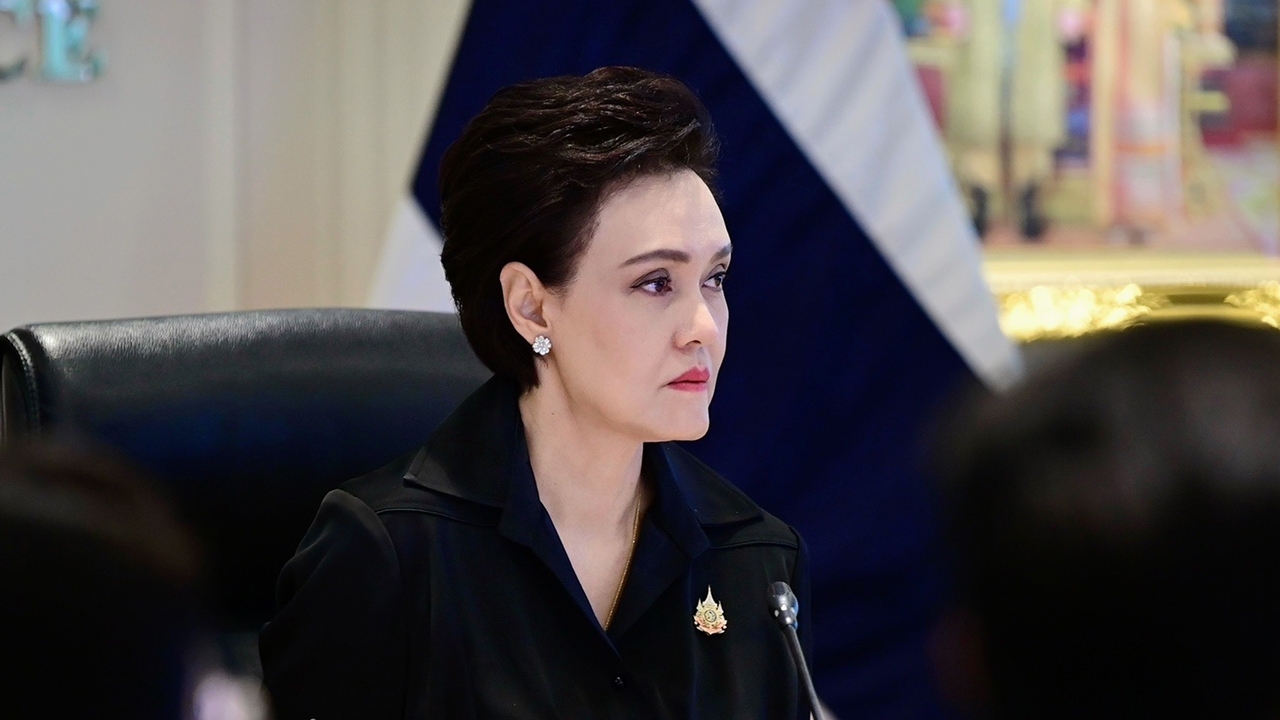
Supaporn is accelerating the assessment of the US position, closely monitoring the Supreme Court ruling, while Thailand continues to advance trade negotiations and is prepared to manage any potential impact on Thai business operators.
Ms. Supaporn Sutthumpun, Minister of Commerce She revealed that Thailand continues to pursue trade negotiations with the United States to maintain stability in trade and investment relations, reduce risks from trade policy fluctuations, and manage any potential impacts on Thai operators. The Ministry of Commerce is closely following developments in US trade policy.

The Minister of Commerce stated that although the recent US Supreme Court ruling affects the direction of US tariff measures, there remain many issues requiring clarification, both legally and in practice. Therefore, the Ministry has tasked the International Trade Negotiations Department to conduct a comprehensive assessment of the situation, including its impact on Thai businesses.
This ruling followed President Donald Trump’s use of authority under the International Emergency Economic Powers Act (IEEPA) to impose retaliatory customs tariffs on various countries. On 20 February 2026 US time, the US Supreme Court ruled 6 to 3 to uphold the lower court’s decision that the president’s authority under IEEPA to impose tariffs was unlawful, as IEEPA does not grant power to levy taxes, which is a constitutional power of Congress.
Ms. Supaporn said the core of this ruling reflects the principle of checks and balances. The court noted that although IEEPA grants the executive broad authority to control international economic transactions during emergencies, imposing customs tariffs requires explicit delegation of authority from the legislature.
Regarding tax refunds, importers involved in the case have the right to file refund claims. However, since this involves large sums and multiple parties,the processis likely to be complex and requires clear guidance from the US government.

Meanwhile, Thailand must closely monitor the US government’s stance after the US president signed an order imposing an additional 10% tariff on imports worldwide for 150 days under Section 122 of the Trade Act 1974 to address balance of payments issues. This measure will take effect on 24 February 2026, replacing the now-invalid retaliatory tariffs.
Ms. Supaporn added that the 10% tariff under Section 122 is lower than the previous retaliatory tariff rate of 19% applied to Thai products. The Ministry of Commerce will continue to closely monitor the trends and developments of US trade measures.
Additionally, the US may use other measures such as Section 232 under the Trade Expansion Act 1962 concerning national security threats, as it has previously imposed additional tariffs on some products like steel and aluminum (50%), copper (50%), automotive vehicles and parts (25%), and certain semiconductors (25%). The US has also used Section 301 under the Trade Act 1974 against some countries in response to trade practices deemed unfair, as well as Section 338 under the Trade Act 1930 allowing additional tariffs against countries that discriminate against US trade.
Initially, with no retaliatory tariffs under IEEPA, the US will impose tariffs under Section 122 at a 10% rate. This means Thai exporters to the US will pay the normal Most Favored Nation (MFN) tariff for their products plus the 10% tariff under Section 122, plus any other fees or anti-dumping/countervailing duties (AD/CVD), if applicable. This will take effect from 00:01 on 24 February 2026 for goods intended for consumption or removal from US warehouses for consumption, lasting 150 days until 23 July 2026 at 24:00, or until altered or extended by the US Congress.
Subsequently, Trump addressed the issue by announcing a new 10% import tariff under Section 122 of the Trade Act 1974, which authorizes tariffs up to 15% for no more than 150 days, effective from 24 February onwards, pending Congressional action.

Ms. Supaporn stated that the Ministry of Commerce prioritizes managing potential impacts on Thai operators proactively, including trade negotiations, risk assessment, and providing information to the business sector to enable Thai exports and investments to adapt appropriately within the evolving international trade context.
For operators seeking more detailed information, the Ministry of Commerce has opened a consultation channel via the International Trade Negotiations Department hotline at 0-2507-7555.
Read the news " Government Policy " More