

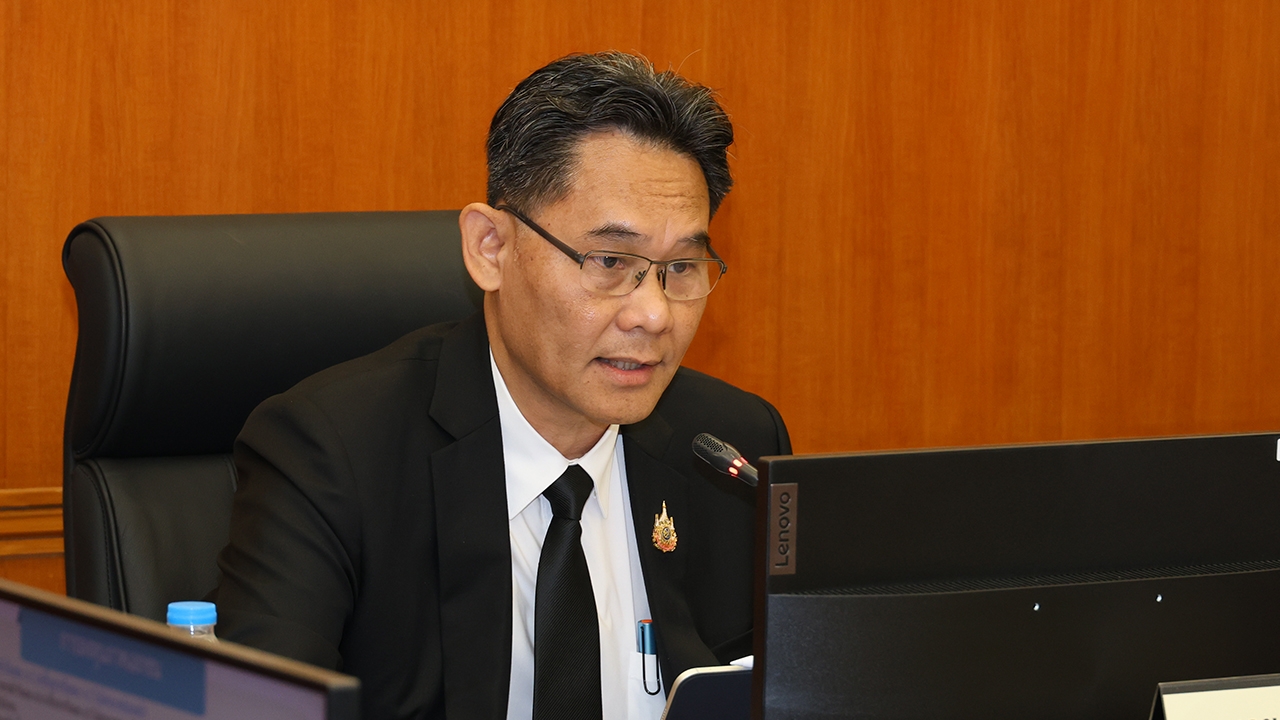
Danucha revealed that the economic team held an urgent meeting to address U.S. tariffs, noting that data is still limited. They are rushing to assess the situation to prepare phased countermeasures, acknowledging the headache and unpredictability of managing the policy. There is concern that the U.S. may shift to imposing tariffs targeted at specific products. Thai entrepreneurs and exporters are warned to prepare for prolonged risks throughout the year.
Danucha Pichayanan, Secretary-General of the National Economic and Social Development Council (NESDC), disclosed that on the afternoon of 22 Feb 2023 GMT+7, the economic team held an informal meeting to assess the situation and find ways to cope with uncertainties surrounding U.S. import tariffs. The discussion included Deputy Prime Minister and Minister of Finance Akniti Nitithanprapas, Minister of Commerce Supachai Sutthumpun, and Minister of Foreign Affairs Sihasak Puangketkaew. The meeting agreed that current information is very limited since the situation is just beginning, so immediate assistance measures cannot yet be issued. The government must urgently evaluate possible scenarios to prepare in advance and gradually introduce measures aligned with the evolving situation.
"The U.S. import tariff situation has only just begun two days ago, so all parties are still in a learning phase to observe the actual impact. Initially, the U.S.'s uniform 15% tariff rate makes the situation appear better at first glance. Positively viewed, Thailand benefits from a 4% tariff margin increase compared to the previous 19%, while competitors like Vietnam gain 5%. With tariffs equalized, tariffs cease to be a primary competitive factor. Instead, exporters must compete based on their industry's fundamentals and capabilities. Thailand's exports to the U.S. market have also been steadily improving."
However, there is high uncertainty about the measure, as the 15% tariff is only a temporary policy effective for 150 days. After this period, no one knows whether the rate will change to 10%, 15%, or 20%. The situation could become more challenging if the U.S. shifts from country-based tariffs to targeting specific products or industries, such as aluminum or steel sectors. This development is difficult to assess, unpredictable, and requires close intelligence gathering.
For countries that previously negotiated a 19% tariff rate or are still in negotiations, there is still no clarity on which rate will apply. Although there have been statements from Donald Trump indicating that countries with completed negotiations can use that rate, in practice, court rulings could provoke legal disputes from other countries. Whether retroactive tariff rate reductions will be considered for outstanding duties is highly uncertain.
Regarding business adjustments amid this uncertainty, Danucha advised focusing on marketing efforts to ensure products continue to sell. Concerning previously paid tariffs, there is a strong likelihood of lawsuits in U.S. courts seeking tax refunds, since exporters and importers have shared the tariff burden. The outcome of the first court case will set a precedent, granting all operators equal rights.
Danucha acknowledged that managing government policy under current conditions is "more headache-inducing than before" due to total uncertainty. Moreover, economic risks this year extend beyond tariffs to include military and geopolitical risks, such as the U.S. aircraft carrier fleet movements with uncertain consequences. Therefore, when asked about economic risks in the first or second half of the year, the answer is that risks persist throughout the year, as major countries remain highly uncertain in policy, requiring constant preparedness.
/ Government Policy Additional