

The national board of Thailand Zero Dropout (TZD) has approved converting ID cards into a credit account system to create a flexible learning system, continuing the success of reducing school dropouts from over 1 million in 2023 to 600,000.
The National Steering Committee for Solving the Problem of Out-of-School Children and Youth (Thailand Zero Dropout - TZD) approved the policy for flexible learning and launched the ‘Learning Passport’ project, turning ID cards into Individual Learning Accounts (ILA). They reported nearly halving the number of children returning to school and plan to enhance the 2026 plan by linking government databases and expanding support to cover children in learning centers under Section 12 and those at crisis risk (Crisis PLUS).

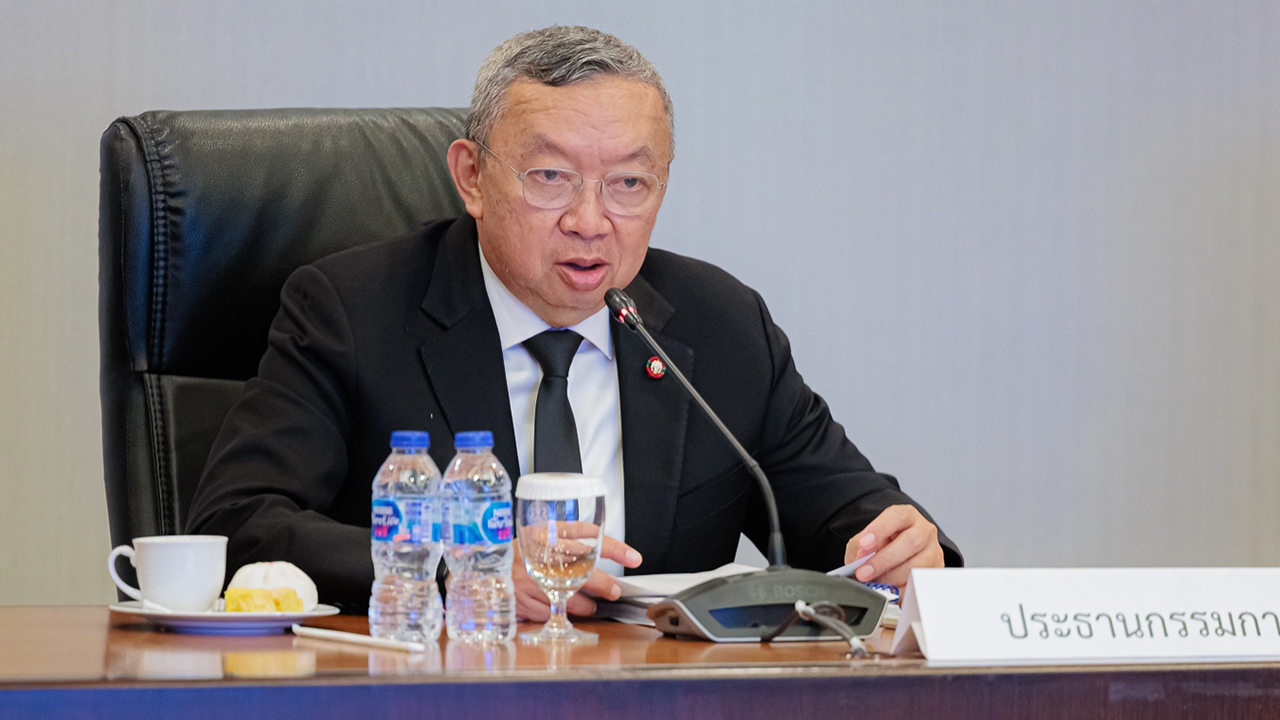
Pol. Gen. Permpoon Chidchob, chair of the steering committee meeting, said addressing the problem of school dropouts remains a crucial agenda continuously promoted by the government. Collaboration across sectors has reduced the number of out-of-school children significantly, from 1.02 million in 2023 to 603,095 as of November 2025. To build on this success, the meeting approved Flexible Learning and Learning Passport policies to develop a new learning ecosystem beyond classrooms, focusing on foundational life skills identified by the Equitable Education Fund’s research in three main areas: digital skills, emotional and social skills, and entrepreneurial skills.

“This initiative will be implemented by developing Individual Learning Accounts (ILA) using a single ID card as a Learning Passport, which acts as a credit accumulation system. The tangible outcome is that credits can be transferred for further study at various levels, including higher education, in cooperation with the Ministry of Higher Education, Science, Research and Innovation (MHESI). This will reduce study time and costs, and can immediately be used for job applications since competency data will be certified as a skill profile recognized by employers. Additionally, support will be provided via online platforms such as Mobile School (EEF) and the EWE platform (DPA) to enable learning anywhere, anytime,” Pol. Gen. Permpoon said.

At the meeting, examples of provinces addressing out-of-school children were highlighted. Buriram Province, led by the Learning Promotion Office (LPO), operates the BURIRAM ZERO DROPOUT (BZDM) project to sustainably solve out-of-school youth issues locally, aiming to reduce dropouts to zero. The approach uses four main strategies: prevention, correction, referral, and follow-up to reach 17,401 children aged 3-18. It also involves proactive local networks including community leaders, village health volunteers, and social development volunteers to investigate the living conditions and root causes of dropout, with support from partner agencies for learning materials, basic needs, healthcare, and career guidance tailored to individual circumstances.

Meanwhile, Songkhla Province’s provincial and subdistrict committees have driven the "Thailand Zero Dropout or Songkhla Model 2026" strategy, coordinating efforts among the Songkhla Provincial Education Office, local administrative organizations, the Volunteer Happiness Association, and the Equitable Education Fund (EEF). This strategy focuses on reintegrating children and youth into education or promoting flexible learning systems covering all areas. It operates through integrated mechanisms of 16 district committees and 127 subdistrict operational committees to closely reach and monitor children.

The core of this work is the "Search-Assist-Care-Refer" strategy, producing concrete results through the “Sathing Phra Model,” a pilot area successfully reintegrating children into appropriate learning pathways. This success stems from shifting the mindset to “turn communities into classrooms” by organizing three learning bases: life skills, academics, and vocational skills. Lessons are designed to reflect real-life conditions and generate income, such as learning traditional toddy palm sugar making and Nora dance arts. The province also expands this through the "One School, Three Models" policy, encouraging both public and private schools to adapt toward flexible, seamless education that truly accommodates all learner diversity.
Similarly, Phitsanulok Province, through collaboration between the Secondary Educational Service Area Office Phitsanulok-Uttaradit, Phitsanulok Education Office, the Sukpunya Association, and EEF, has tracked 7,178 children on the TZD list—representing 99.61%—using flexible, integrated approaches. These include the “One School, Three Models” mechanism to tailor teaching to individual students’ issues to prevent at-risk groups from dropping out, and a One Stop Service for rapid reception, support, and referral of children.

They also employ a three-layered “Education Safety Net” strategy: Layer 1 adjusts schools for flexibility; Layer 2 supports dropouts through “Section 12 Learning Centers” and mobile schools; and Layer 3 drives subdistrict-level efforts using community-based learning aligned with local lifestyles. Additionally, they integrate networks from all sectors within the province—government, private sector, and civil society—to collaboratively solve problems.
The strategy integrates networks across all sectors in the province—public, private, and civil society—to collaboratively address the dropout problem.

Moreover, the TZD steering committee set the direction for 2026 operations to eliminate redundancies and close system gaps through three key measures:
1. Linking welfare entitlement data across ministries: Integrating data from the Ministry of Education, Ministry of Interior, Ministry of Foreign Affairs, Ministry of Justice, Ministry of Social Development and Human Security, Ministry of Labor, and Ministry of Digital Economy and Society to design individualized child support plans (Case Management).
2. Expanding protection targets to hidden vulnerable groups: Developing databases for groups lacking support systems, such as youth in the justice system, informal laborers, and especially children in Section 12 learning centers, to ensure access to subsidies, milk, and school lunch programs.
3. Caring for the 'Crisis PLUS' group (temporarily out-of-system): Preventing children and youth facing crises such as flooding in central and southern regions, epidemics, or war from permanently dropping out of the education system.
To honor agencies involved in advancing Thailand Zero Dropout into its third year robustly, the committee approved the Prime Minister TZD+ Awards in 2026. These prestigious awards from the Prime Minister will recognize exemplary agencies with outstanding achievements in creating safety nets for Thai children, ensuring no one falls through the cracks of the education system again.
Read more news \ Government policies\ additional information