

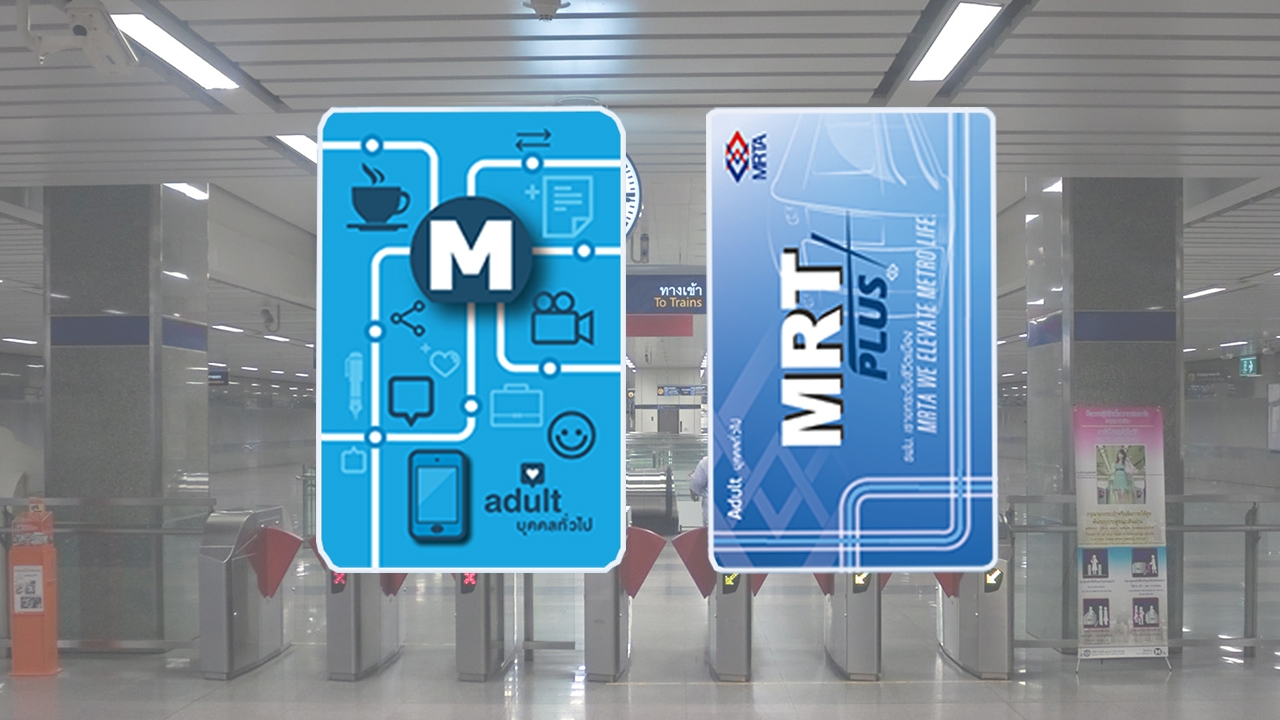
Phiphat announced the transition of the MRT Blue and Purple Line ticketing systems, discontinuing prepaid cards and tokens, advancing toward EMV and QR Code standards. The policy includes free refunds of remaining balances and supports the use of joint ticketing cards.
Deputy Prime Minister and Minister of Transport Phiphat Ratchakitprakarn revealed that from 1 June 2026 onwards, fare payment with MRT and MRT Plus cards will be terminated on the MRT Blue and Purple Lines at all stations. The last day these cards can be used at automatic gates will be 30 May 2026. After that date, these card types will no longer be valid for passenger use.

The BEM company will facilitate passengers who have remaining balances on their cards to request refunds at ticketing offices in all stations without fees for issuing new EMV system cards. This service will be available from 1 March 2026 to 31 December 2026. Passengers who choose not to switch cards can request cash refunds until 31 December 2027.
This initiative is part of the Ticketing System Transition plan aimed at migrating user data from the old prepaid card system to international standards of EMV and QR Code. The goal is to establish a unified travel standard and enhance service efficiency in line with leading countries' practices.

During the transition, MRT and MRT Plus cards will be officially discontinued. The token system for single-ride tickets will be gradually phased out by the end of 2026, replaced entirely by QR Code systems. Passengers with smartphones can purchase tickets via applications and scan to enter the system immediately. Those without smartphones can buy tickets at machines, which will print QR codes on paper for scanning at automatic gates.
A key objective of eliminating tokens is to reduce costs related to cash and coin management, speed up gate access, and ease congestion during peak hours. Current passenger statistics show that 60% use fare cards—about 30% use EMV cards and 30% use MRT Plus cards—while 40% use single-ride tickets primarily paid with tokens. This transition is crucial for shifting passenger behavior, especially among those who prefer not to preload funds, encouraging greater adoption of EMV systems.

Regarding infrastructure upgrades, current automatic gate readers on the Blue and Purple Lines already support EMV but will receive additional software updates. QR Code readers will be installed on all entry points by the end of 2026 to fully support the token phase-out.

Additionally, under the EMV system, passengers with insufficient balance can still travel once per day. The system will record the outstanding amount and collect payment during the midnight billing cycle. If passengers do not top up the next day, access will be blocked until the balance is settled.

Phiphat stated that the Pink and Yellow Lines currently support EMV only at some gates. Plans to expand full EMV support like the Blue and Purple Lines are under consideration, including hardware upgrades and joint ticketing policies. He confirmed that this ticketing transition is a vital step toward elevating the country's mass transit system to international standards, improving flexibility, reducing long-term costs, and building an efficient joint ticketing system to sustainably support future network expansions.
/Read more news " Government Policy " updates