

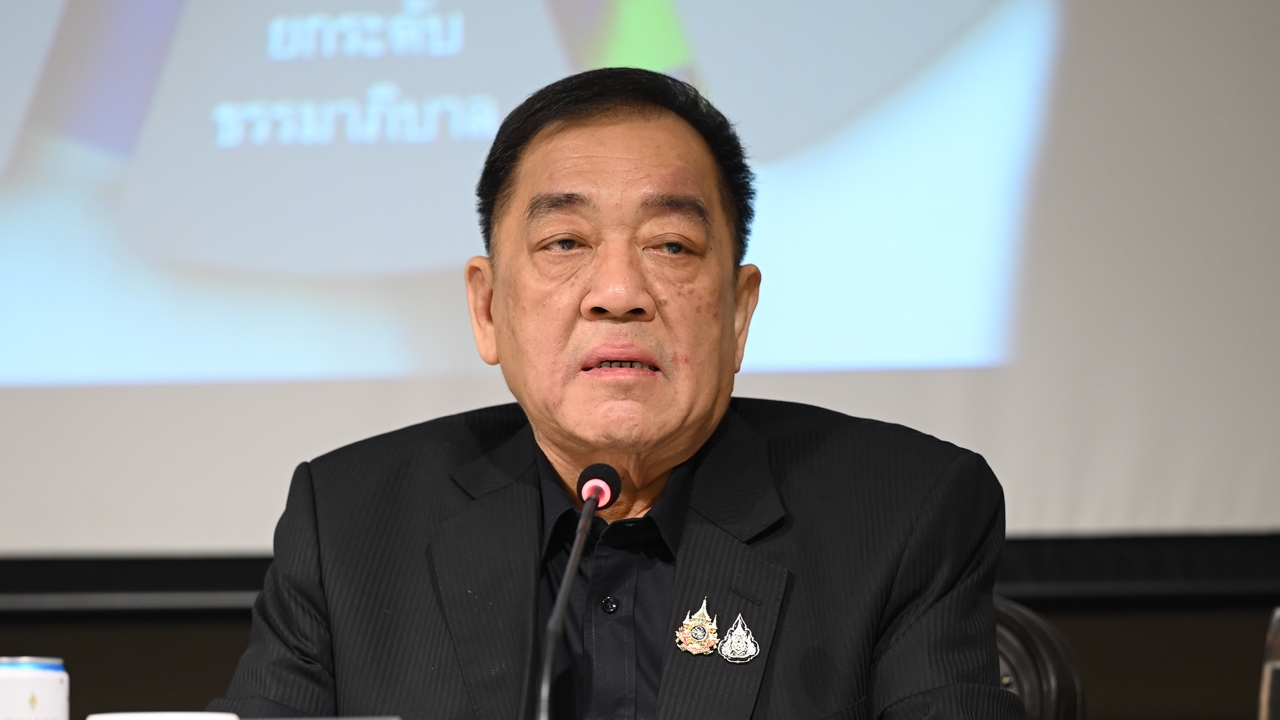
Mr. Phot Aramwattananon, Chairman of the Thai Chamber of Commerce and the Council of Thai Chambers of Commerce, revealed about the meeting with the Prime Minister this afternoon (2Mar 2024 GMT+7.The purpose is to assess the impact of the Middle East situation. This situation poses risks to global economic stability, especially regarding energy prices, transportation costs, and financial market confidence, which could affect Thailand’s economy both directly and indirectly. The Prime Minister invited security agencies, economic bodies, and the private sector, including the Thai Chamber of Commerce, to discuss an overall impact assessment and establish comprehensive measures to mitigate effects on citizens and Thai businesses.
Regarding risks from the Strait of Hormuz, it is a strategic route supporting the transport of approximately 14–20 million barrels of crude oil daily, or about 20% of global maritime oil trade. It is also a key route for liquefied natural gas (LNG) to Asian markets. Any restrictions on navigation—whether closure or security risks causing energy companies and oil tankers to delay shipments—would immediately tighten energy supply. Oil prices are likely to rise rapidly, potentially increasing inflation pressures in several countries.
Asian countries such as China, India, Japan, and South Korea are major oil importers using this route, especially China, which heavily depends on oil through Hormuz. A sharp rise in energy prices would clearly impact the Asian region. For Thailand, as a net energy importer, volatility in oil and natural gas prices will reflect in production costs, electricity prices, transportation expenses, and the cost of living for the public, which must be closely monitored.
Mr. Phot added that, based on assessments with the business sector and logistics providers, the current situation is likely to cause significant operational impacts as follows:
1. Oil prices will inevitably rise. The elevated geopolitical risks have caused crude oil prices to increase immediately and are expected to remain volatile, reflecting in rising shipping costs by sea, air, and land worldwide, broadly increasing logistics costs.
2. Shipping goods to the Persian Gulf faces a War Risk Premium. Exporters with destinations in the Persian Gulf region will face additional war risk insurance premiums from shipping lines and insurers, significantly increasing per-voyage costs. Initial reports indicate about a 50% increase.
3. Exports to the Middle East may slow or temporarily halt. In the short term, some shipping lines may delay container bookings to risky areas or adjust schedules. If shipments proceed, operators will face higher costs and longer transit times, affecting inventory management and cash flow.
4. Exports to Europe continue to face rising costs. Although many routes to Europe and the U.S. East Coast already detour around the Cape of Good Hope due to tensions in the Red Sea, further oil price increases will add shipping costs, affecting final product prices and Thai exporters’ competitiveness. Detours not only increase costs but alsoaffecttransittimes, which, including round trips, are no less than one month, impacting container shipment planning.This includes the impact on planning container shipments for round trips.
If energy prices rise along with freight rates simultaneously, it will exert a dual pressure on global trade systems and harm Thai exporters’ competitiveness. Thai operators should urgently review transport contracts, insurance terms, and energy costs, while preparing contingency plans for multiple scenarios to maintain business continuity and reduce short-term volatility risks.
Many international airlines have rerouted flights to avoid risky airspace, not only over the Middle Eastbut alsoaffecting routes to Europe and the U.S. East Coast, causing longer travel times and higher costs. Businesses with ties to these regions should carefully monitor safety announcements and manage risks. This period is also Europe’s peak travel season,which willaffect travel for both businesspeople and tourists.
Regarding government measures, economic agencies including Deputy Prime Minister Ekniti and Ms. Supachai, Minister of Commerce, are closely monitoring the situation and preparing measures addressing energy, finance, and trade to maintain overall economic stability. They continue cooperation with the private sector. Today, the private sector is likely to propose that the government expedite concrete measures such asexistingmeasuresto enhance liquidity for SMEs viathe Government Savings Bank throughcommercial banks,Reinvent Thailand initiatives, and effective government teamwork such as monetary policiesand fiscal policies,includingcollaborationamong economic ministries,including Finance,Agriculture, Commerce, and others,supported by the Ministry of Foreign Affairsfocusing on economic diplomacy as previously discussed with the private sector.
Mr. Phot added that amid high uncertainty, businesses should carefully manage risks related to energy costs, logistics, and exchange rates, prepare multiple scenario plans, and maintain sufficient financial liquidity. Despite the uncertainty, Thailand still has opportunities in some sectors, especially agricultural products, food, processed foods, and consumer goods, which may see increased demand.
“The Thai Chamber of Commerce is ready to work closely with the government to conduct in-depth impact assessments by business sector and propose assistance measures, especially for SMEs, to help them manage risks and maintain business continuity effectively amid volatile global economic conditions,” Dr. Phot said.
The Thai Chamber of Commerce urges businesses and the public to closely follow official information, conduct business prudently, and collectively preserve Thailand’s economic stability during these times of high global uncertainty.
Read more news " government policies " here.