

The Ministry of Commerce has approved 8 measures to manage fruit products in 2026, expecting a bumper harvest of 6.91 million tons. Durian production is particularly concerning, rising to 1.89 million tons. The ministry is accelerating export and domestic consumption efforts, confident that farmers will receive no less than 100 baht per kilogram despite stiff competition from Vietnam and Laos in the Chinese market. The price of coconuts has reached 4 baht per fruit.

Mr. Witthayakorn Maneenet, Director-General of the Department of Internal Trade, revealed the results of the meeting on "Driving Fruit Management Measures for 2026," attended by agencies from the Ministry of Commerce, Ministry of Agriculture and Cooperatives, the Tourism Authority of Thailand, and the private sector. This prepares for the upcoming fruit season with a large market supply of 6.91 million tons, a 5.8% increase or 379,000 tons more than the 6.531 million tons in 2024. The 8 measures include 2 related to production, 2 on processing and transportation, and 3 on marketing. The goal is to absorb 1.1 to 1.2 million tons of the output.

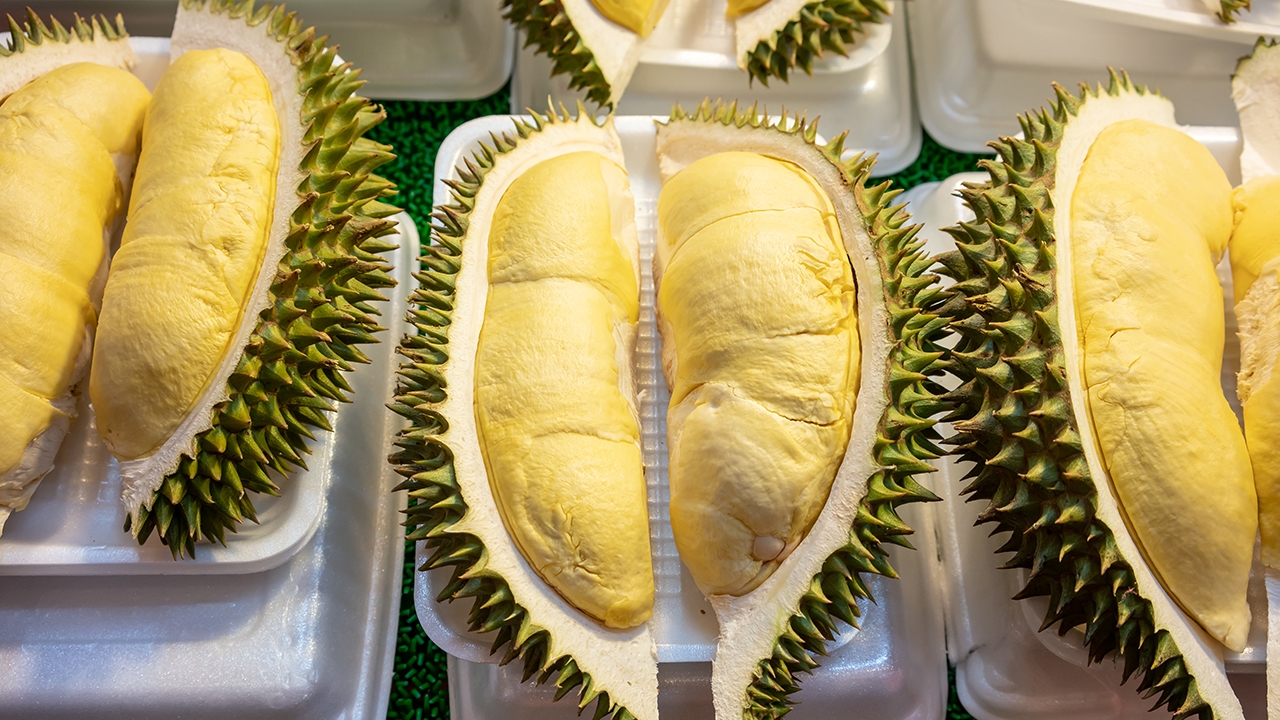
The fruit of greatest concern this year is durian, with production rising to 1.89 million tons, an increase of over 300,000 tons compared to 1.55 million tons in 2025. The department aims to promote exports of 1.2 to 1.3 million tons, particularly to China, by targeting specific provinces based on durian consumption preferences, competitor presence, and identifying cities to increase exports to. The remaining 550,000 tons will be consumed domestically. Plans also include distributing the output, finding new markets, and processing. Another fruit is mangosteen, whose production has dropped by 15.04% to 288,000 tons, but remains under watch due to the seasonal transition between eastern and southern regions in June 2026.
Other fruit production estimates for this year include longan at 1.47 million tons, down 3.09%; pineapple at 1.37 million tons, up 10.44%; mango at 1.301 million tons, down 0.38%; tangerine at 284,000 tons, up 0.71%; rambutan at 216,000 tons, up 0.47%; langsat at 49,000 tons, up 81.48%; and lychee at 29,000 tons, down 19.44%.

"We are confident that these measures will help maintain good fruit prices this year, especially durian, which is expected not to fall below 100 baht per kilogram, despite competition from durians from Vietnam and Laos in the Chinese export market. For aromatic coconuts, which have faced issues recently, the department has continuously opened purchase points. The price has now passed its lowest point, rising from 2 baht to 4 baht per fruit, and is expected to increase further."
The measures to support durian include expediting GAP certification inspections, strict control of BY2 residue, preparing trained labor skilled in harvesting and sorting, arranging containers for export, and increasing rail export options in addition to road and sea routes. Negotiations with import checkpoints are planned to facilitate Thai fruit exports and domestic buyers, including fresh markets and modern trade outlets. The ministry also plans to invite Prime Minister Anutin Charnvirakul to preside over the Thai Durian Festival kickoff in late March or early April 2026, and collaborate with the Tourism Authority of Thailand to promote the fruit to tourists.

Ms. Banjongjit Angsusingh, Advisor to the Minister of Commerce, stated that beyond urgent measures to manage fruit entering the market, a 5-year plan has been developed to manage fruit systematically. This includes promoting precision agriculture, adopting technology in production, encouraging delayed selling via chilling, freezing, processing, and using fruits as raw materials for other products—especially lower-grade fruits facing price challenges. The plan also pushes for developing fruit varieties that meet market demands.
." Government Policy Additional