

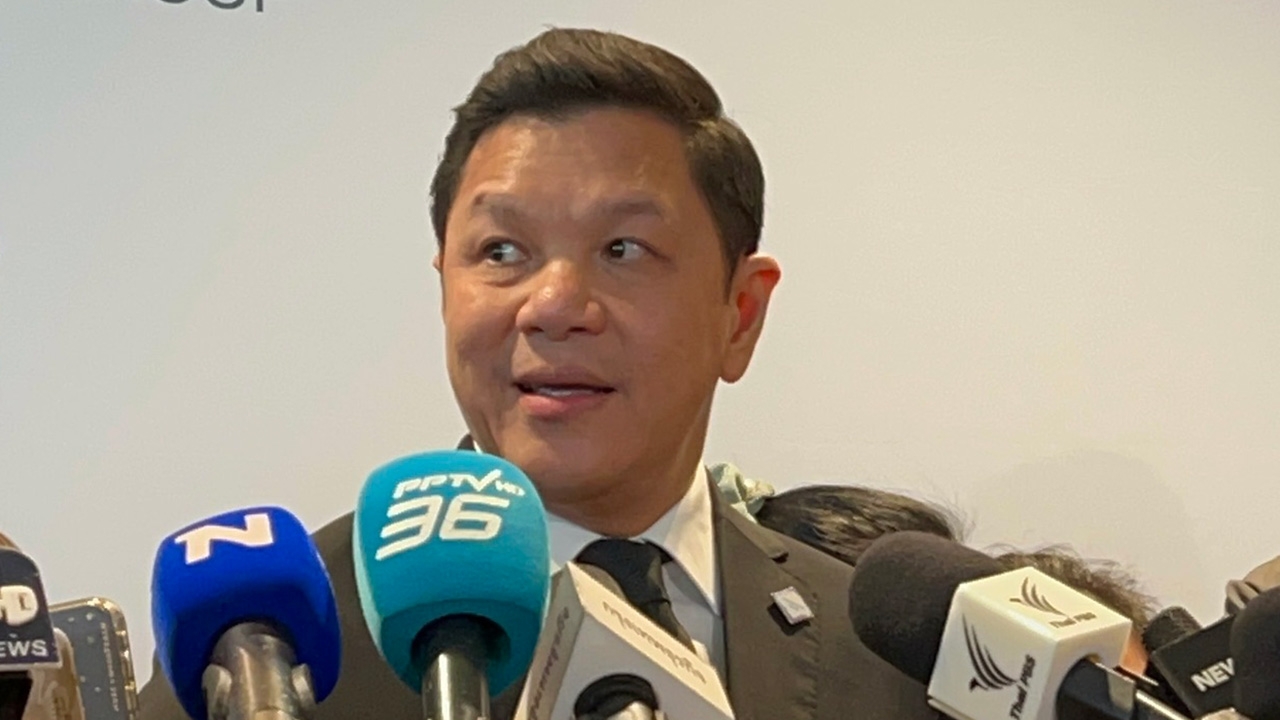
The Bank of Thailand (BoT) estimates the Middle East conflict will reduce Thailand's GDP by only 0.1-0.2%, affirming that Thailand's economic fundamentals remain strong with low inflation and high reserves, though the situation requires close, hourly monitoring.
Mr. Vithi Ratanakorn, Governor of the Bank of Thailand. He spoke about the impact of the Middle East conflict, stating that the Bank of Thailand is closely monitoring the rapidly changing situation, which evolves hourly and daily, requiring a thorough assessment of its effects on the Thai economy.
The BoT Governor. He said that if the conflict prolongs and disrupts global oil supply for an extended period, oil prices would continue to rise, increasing economic impact. However, initial assessments indicate that the effect on Thailand's economy remains limited, despite Thailand being a net oil importer heavily reliant on imports.
It is expected to reduce the economic growth rate (GDP) by about 0.1-0.2%, which is not severe, and the overall Thai economy remains resilient. Continuous monitoring is necessary to see if the conflict escalates.
Regarding inflation, the BoT Governor acknowledged that it might be more affected because oil prices make up about 13% of the inflation basket and indirectly influence other goods' prices. Nevertheless, current Thai inflation is very low.
“Our inflation is currently very low, estimated at about 0.2-0.3% this year, so even if oil prices rise, we still have the capacity to manage it.”
On currency stability and capital flows, the BoT Governor noted that Thailand has strong macroeconomic stability, high foreign reserves, and low external debt, providing a buffer against external volatility, with no particular concerns at present.
Regarding concerns about the 60-day oil reserve, the Governor explained that although the reserve level is at that figure, in practice Thailand imports oil from multiple sources and has alternative energy options, so there is no need for alarm.
As for oil price trends, if prices rise above 120 dollars per barrel, the Governor said assessment would depend on the situation and how long prices remain high. Typically, prices spike short-term and then gradually decline. Before the conflict, oil prices were about 70-72 dollars per barrel, currently over 80 dollars.
. Regarding monetary policy, the BoT Governor. stated there is currently no need to hold an emergency Monetary Policy Committee meeting, but if the situation worsens or additional measures are needed, the BoT is ready to act immediately. The policy rate was recently cut in advance last week to mitigate potential risks.
Meanwhile, the BoT has been in continuous discussions with commercial banks to support customers potentially affected, especially businesses linked to the Middle East and the energy sector, with each bank having assistance measures in place.
The BoT Governor emphasized that while financial markets may be volatile short-term, Thailand has experienced similar events before and believes that if the situation does not escalate, the impact will be manageable. Close monitoring will continue over the next 4-5 weeks.
Read more news " Government Policy " here.