

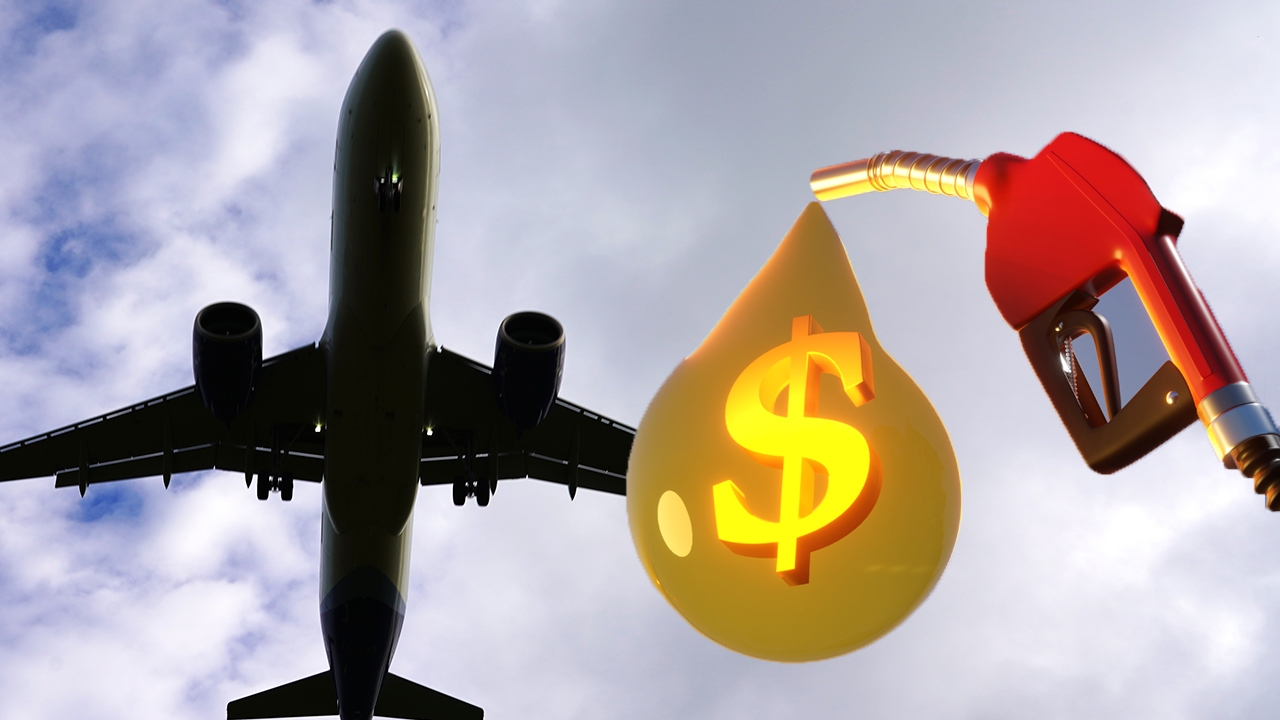
The Civil Aviation Authority of Thailand (CAAT) stated that the Middle East war impacts flights in some zones and causes significant jet fuel price fluctuations. Concerned about a prolonged situation, it plans to meet with airlines to start sourcing new fuel supplies and is preparing to negotiate with the Finance Ministry and Airports of Thailand (AOT) to reduce excise taxes and airport service fees to lower costs for airlines.
Air Chief Marshal Manat ChavanaprayoonAir Chief Marshal Manat Chavanaprayoon, Director-General of the Civil Aviation Authority of Thailand (CAAT), spoke about the current situation in Thailand's aviation industry, saying the sector now faces external challenges, especially the conflict in the Middle East, which affects flight structures and reduces flights on certain routes.However,relevant agencies have been closely monitoring the situation, adjusting management plans, and reassessing growth forecasts to align with the continuously changing circumstances.

Due to the Middle East war's impact, flights in some zones, particularly those connecting to countries in that region, have declined because of safety restrictions and airspace closures or limitations imposed by some nations. Airlines have had to revise flight plans and reduce flights on certain routes, leading to considerations for changing flight paths or increasing direct flights from Bangkok to other destinations. This presents an opportunity to attract more passengers to Thailand to offset decreases caused by geopolitical factors.
However, regardingairfare prices, it was confirmed that fares remain within legally set price ceilings. Passengers who purchased tickets but cannot travel due to unrest are entitled to assistance from airlines in accordance with CAAT regulations, such as providing accommodation or related expenses under CAAT Announcement 101 issued last year. This requires airlines to care for passengers in cases of delays or canceled flights. Currently, these rules apply to both Thai and foreign airlines operating in Thailand. Most passengers prefer to return home quickly rather than seek compensation, as no one wants to be stranded abroad for extended periods.
Air Chief Marshal Manatsaid that despite negative factors from the Middle East conflict, the summer flight schedule (Summer Slot) is expected to grow by about 5-8% compared to last year, especially with strong returns from the Chinese and Indian markets. Currently, Suvarnabhumi Airport is nearly congested around the clock, with no non-peak periods, as Thailand is seen asa safe areacompared to other conflict zones, encouraging tourists to continue choosing Thailand as their destination.
Nevertheless, although the Middle East conflict affects some flight routes, such as those using the region as a refueling stop before continuing to Europe, the impact on Thailand remains limited. Thailand's aviation system can still support steady growth in international travel.
Regarding aviation fuel costs, he acknowledged that global fuel prices have been highly volatile. At the conflict's onset, prices nearly tripled from about 70-80 US dollars per barrel to over 200 dollars. CAAT has sought to prevent fuel suppliers from exploiting existing stock to raise prices and is preparing to discuss with the Finance Ministry possible excise tax reductions or request cooperation from Airports of Thailand Public Company Limited (AOT) to lower airport fees. These efforts aim to keep ticket prices from rising excessively and adversely affecting the public if the situation prolongs. He added that it is difficult to predict when the war will end, even with his military background, as war situations are inherently unpredictable.
Read more news " State Policy "