

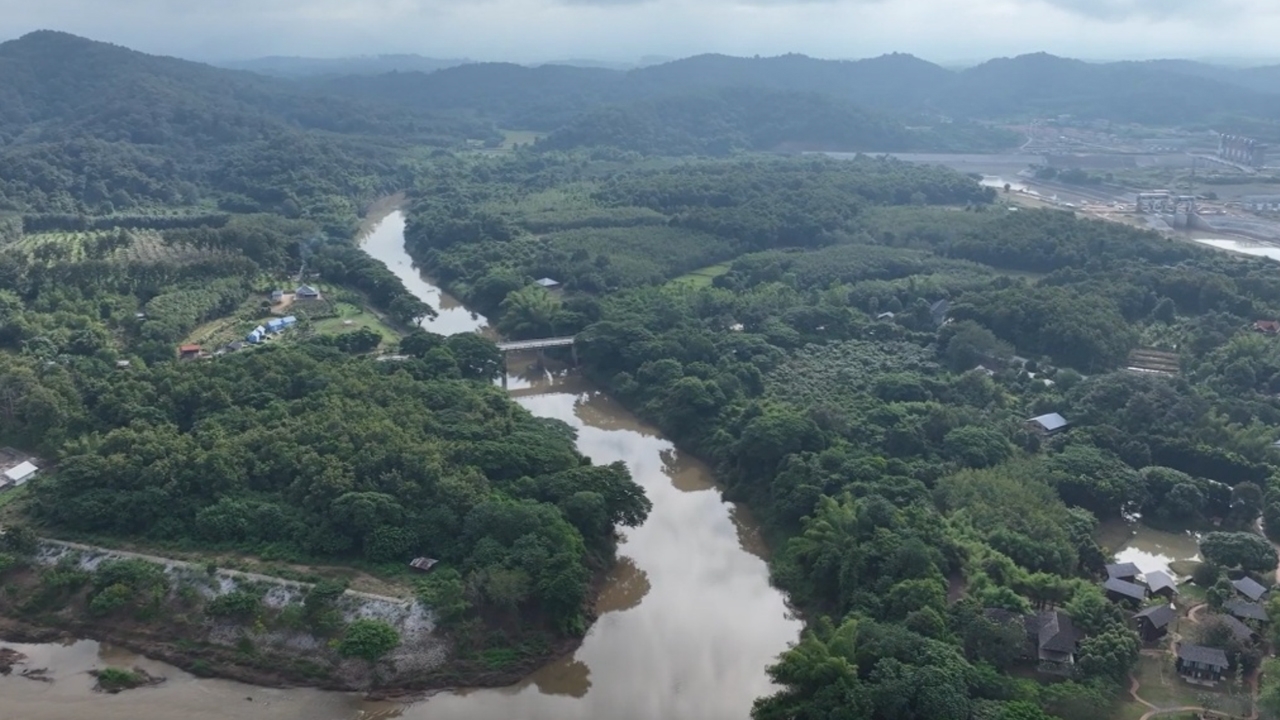
Amid the familiar landscapes of Isan marked by droughts and seasonal floods, Khon Kaen province has become a focal point of new hope as the Royal Irrigation Department unveiled progress on the "Mekong-Loei-Chi-Mun Water Management Project, Phase 1 (Headworks and Water Diversion)". This project is laying the foundation for a significant transformation in the Northeast region.

This mega project aims to resolve recurring drought and flood problems through a straightforward yet powerful concept: using Earth's gravity to allow water to flow naturally, reducing long-term reliance on electric pumps and minimizing land expropriation. Tunnel systems will be used only where water must pass under mountains or densely populated areas to maintain water pressure and overcome natural obstacles.
Phase 1 covers water diversion from the mouth of the Loei River in Chiang Khan district, Loei province, through Nong Bua Lamphu and Udon Thani provinces, ending at Ubolratana district, Khon Kaen province. The project is designed to divert 160 cubic meters per second, with an estimated annual water volume exceeding 2,664.29 million cubic meters.
More meaningful than the water volume are the "benefited areas," totaling over 1,333,512 rai. This includes 11,680 rai of water pumping areas in Nong Bua Lamphu, 60,600 rai of dry-season cultivation around Ubolratana Reservoir, and more than 1.26 million rai irrigated from the Phong River continuing to the Chi River.

Pichit Rattanaprasatkul, Director of the Engineering and Architectural Design Office at the Royal Irrigation Department, stated that this project will transform water-scarce areas in Isan into modern agricultural zones, ensuring year-round water security and serving as a crucial foundation for sustainable regional economic growth.
"The Mekong-Loei-Chi-Mun Project represents an effort to establish sustainable water security for the Northeast, turning areas that have repeatedly suffered drought into zones capable of year-round agricultural planning. With sufficient water, farmers can increase cropping cycles, raise incomes, and tangibly reduce debt pressures."

"A key feature is using gravity to let water flow naturally, saving electricity costs for pumping. Tunnel systems are used only where water must pass under mountains or dense communities to maintain pressure and cross natural barriers, thus reducing land expropriation. Some sections are designed as open canals due to terrain and geological conditions, cutting construction costs compared to full tunneling. This enables rapid and comprehensive water delivery to agricultural areas."

Currently, the project is in the detailed survey and design phase, with no construction or land expropriation underway yet. We prioritize transparency at every step and focus on public benefit," he added.

From an energy perspective, Channarong Chantamongkol, Director of the Northeast Hydropower Plant, from the Electricity Generating Authority of Thailand, noted that sufficient water resources will enhance hydropower generation capacity, support peak electricity demand periods, and increase flexibility in managing Ubolratana Dam's water for power production, irrigation, and flood control.

However, the clearest glimpse into the future may not be the tunnel structures beneath mountains but the voices from a small community in Nakham subdistrict, Ubolratana district, Khon Kaen, where 38 families live. Currently, only about five families can farm to full potential due to water scarcity in the dry season.

Porntip Khamkon, head of Village 6 in Nakham subdistrict, expressed hope that with sufficient water sources, villagers could plan agriculture year-round, reduce labor migration, and build long-term family stability.

Similarly, Jetsada Tantibanchaichai, Mayor of Ubolratana Subdistrict Municipality, views Phase 1 of the project as a beacon of water security that will lead to economic stability and improved quality of life sustainably for local residents.

On the Isan map, this new water route is still in the design and system layout stage, but for many families, it represents a clearer future — one where “water” is no longer a concern but a foundation for a more secure life and opportunity.
Read more news " State Policy " Additional