

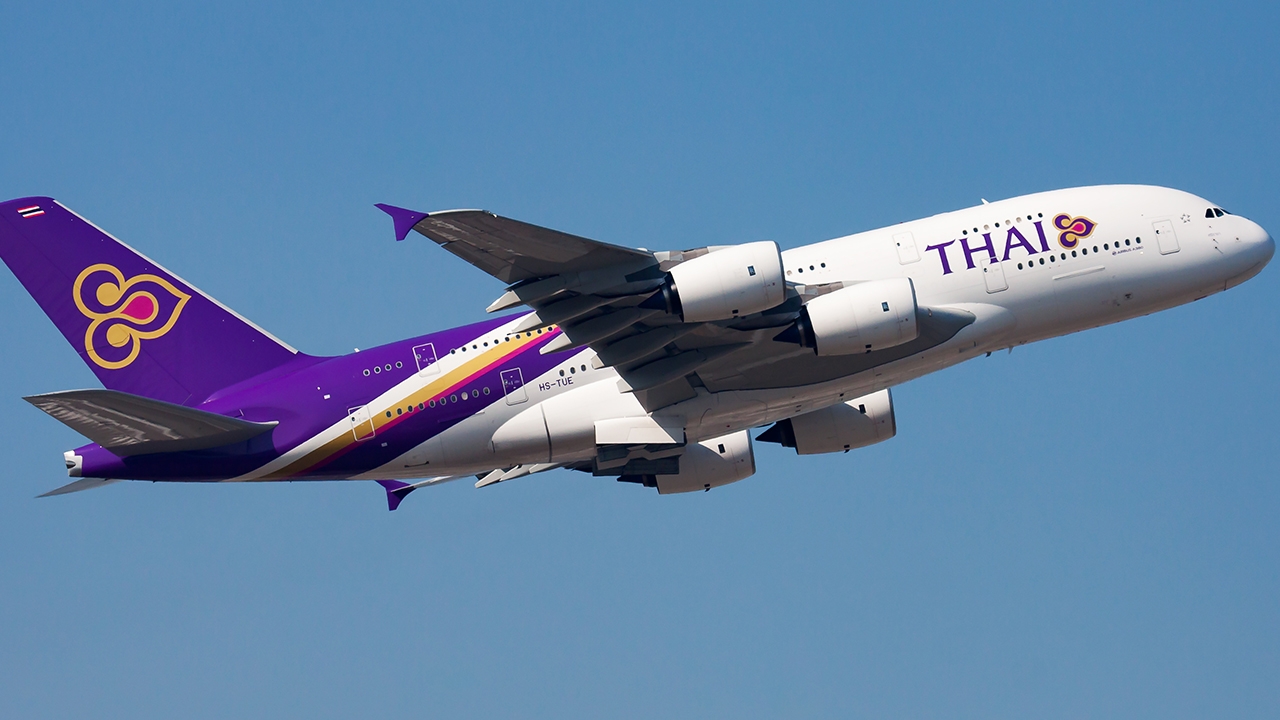
Thai Airways revealed it has started increasing ticket prices by 10–15% on certain routes to reflect higher oil costs stemming from the Middle East crisis. The airline affirmed that travel demand remains unaffected, with European routes to Thailand still showing high passenger load factors. It is also moving forward with fleet expansion and launching new routes across Europe, Asia, and Oceania.
Mrs. Cherdchom Therdsteerasak, Chief Financial and Accounting Officer of Thai Airways Public Company Limited, disclosed that the company has begun raising ticket prices by about 10–15% to reflect the rising fuel costs due to tensions in the Middle East. Typically, airlines adjust prices through fuel surcharges, which must comply with caps set by the Civil Aviation Authority of Thailand (CAAT).. . .Currently, the surcharge cap remains at a manageable level for the company. However, if fuel cost volatility increases significantly, the company can consult with regulatory authorities to adjust the surcharge cap as needed.
. . .. . .She stated that despite cost pressures from the Middle East situation, the company has yet to observe any signs of slowing travel demand or flight cancellations related to the events. Advance ticket bookings for March remain strong, particularly on direct flights from Europe to Thailand, which have passenger load factors of approximately 80–90%.

Moreover, over the past two weeks, tickets on many routes have become increasingly scarce, not only on European routes but others as well, due to sustained high travel demand. At the same time, some passengers have begun shifting their preference toward direct flights to reduce risks associated with layovers at Middle Eastern hub airports.
“Operationally, the company has rerouted some flights to avoid conflict zones, such as bypassing Iranian airspace. While this may slightly increase fuel consumption, it is not considered a significant factor affecting overall airline operations. The company believes it is too early to assess impacts for the upcoming quarters, especially Q2 and Q3, as passengers and markets continue to closely monitor developments.”. . .. . .
However,this year, Thai Airwaysplans to take delivery of a substantial number of new aircraft, both wide-body and narrow-body types, alongside launching new routes, reinstating previous routes, and increasing flight frequencies on high-demand routes. These efforts are expected to help improve the company’s financial performance. Amid global uncertainties, the company prioritizes managing financial liquidity and currently has no plans to secure additional loans. Meanwhile, its credit rating application is under review by relevant agencies.
Mr. Rat Rak-Samruay, Corporate Finance Director of Thai Airways, stated the company plans to expand its fleet from about 80 aircraft currently to 102 by 2026, comprising 67 wide-body and 35 narrow-body planes. This year, the airline will receive new aircraft models, including 14 Boeing 787-9 wide-body jets and 14 Airbus A321neo narrow-body jets, to enhance service efficiency and support route expansion.
Furthermore, the company intends to continue growing its fleet, anticipating 112 aircraft by 2027 and 129 by 2028. It aims for a wide-body to narrow-body aircraft ratio of 2 to 1 to support its strategy of developing Thailand into an aviation hub that attracts global passengers to connect through Thailand to various regional destinations.
. . .. . .By 2026, Thai Airways plans to launch new routes and expand its network. In Europe, it will open the Bangkok–Amsterdam route in Q3 and Bangkok–Auckland, New Zealand, during the same quarter. In Asia, the focus is on adding destinations in China with narrow-body aircraft, such as Changsha, Xiamen, and Chongqing between Q2 and Q3, along with launching routes to Busan, South Korea, in Q2, and Da Nang, Vietnam, in Q4.
Mr. Rat added,In the short term, disruptions at Middle Eastern aviation hubs have led some passengers to prefer direct flights, which benefits airlines offering such services. However, the company views this impact as potentially short-lived. It continues to closely monitor advance booking numbers, which in March still show year-on-year growth and positive trends. Should negative signals appear in the future, the company is prepared to adjust its business plans accordingly.
Read more news " Government Policy " here