

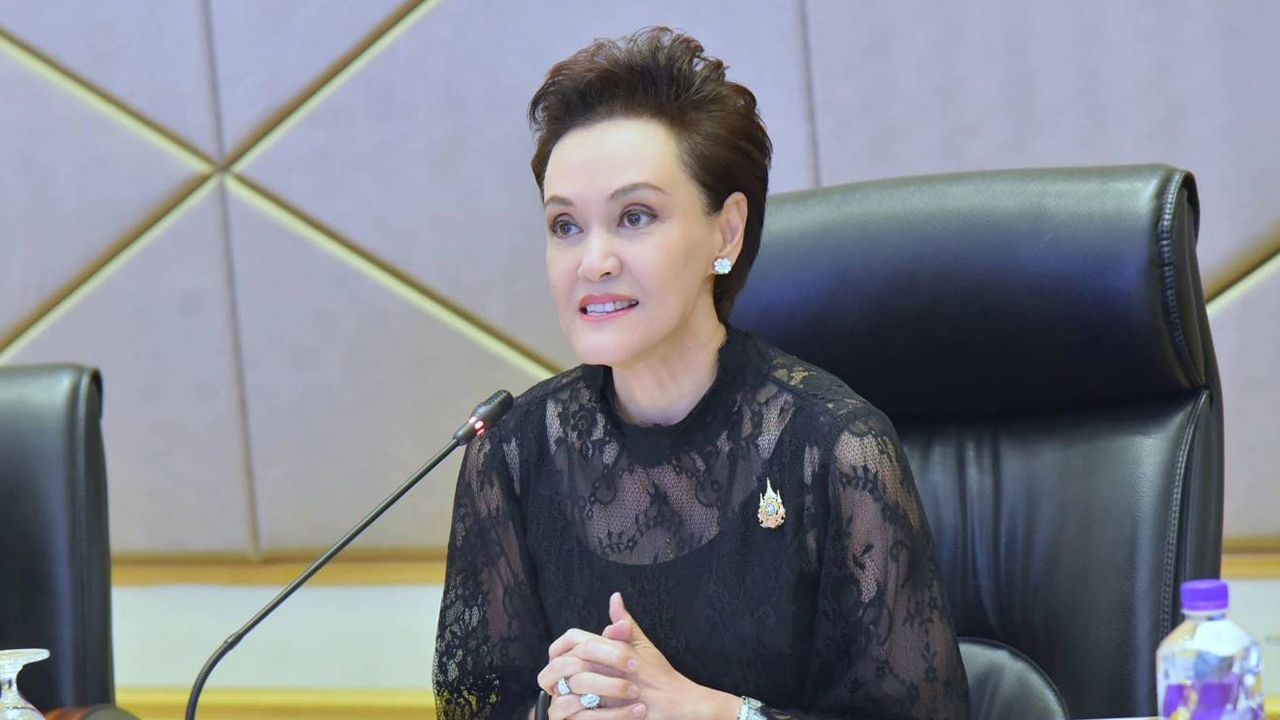
Supachai revealed a timeline to explain to the U.S. Trade Representative (USTR) regarding the Section 301 investigation, highlighting three troubled products: automotive, machinery, and rubber, and announced the establishment of a special task force to monitor the situation.
Ms. Supachai Sutthumpun, Minister of Commerce, disclosed that the U.S. has begun the process of investigating trading partners, including Thailand, under Section 301 of the 1974 Trade Act concerning structural excess production capacity.in the industrial sector.She said she has ordered the formation of a special task force at the Ministry of Commerce to closely monitor the U.S. situation and find ways to respond to the allegations. Mr. Wutikrai Leewiraphan, Permanent Secretary of Commerce, chairs the task force, which includes the directors-general of all departments within the ministry. The group will meet to analyze sector-specific impacts and developexplanationsto prevent Thai products from facing additional tariffs beyond the current levels.
Meanwhile, the U.S. Trade Representative(USTR)has initiated investigations of trading partners, including Thailand, under Section 301 of the 1974 Trade Act regarding structural excess capacity in industry. This could lead to trade retaliation measures if policies are found unfair or discriminatory, which the U.S. views as obstacles to reshoring production bases and affecting American employment.
The reasons cited by the U.S. include Thailand’s high trade surplus with the U.S., reaching 51 billion dollars in 2025, up from 46 billion dollars in 2024. Additionally, Thailand’s manufacturing sector has operated at below 60% capacity utilization for two consecutive years, with only one-third of industries recovering to pre-COVID-19 levels.
The U.S. also identified industries under review, including automotive and parts, machinery, and rubber, which are seen as product groups with significant global trade surpluses.
However, Thailand differs from some other investigated countries as it is not accused of currency intervention to gain trade advantages, unlike Switzerland, Norway, and Vietnam, nor does it have direct cash export subsidies like Bangladesh.
Underthe Section 301 process, if the U.S. finds a country’s policies “unreasonable or discriminatory,” the USTR has the authority to impose trade countermeasures such as increased tariffs or import restrictions to compensate for harm to the U.S.
Ms. Supachai said Thailand can still participate in the process by submitting written comments to the USTR by 15 April and filing requests to join the public hearing scheduled for 5 May 2026 in Washington, D.C. Afterwards, there will be a seven-day period to submit additional rebuttals.
“Section 301 does not have a tariff cap, but in the past, the U.S.has usedSection 301 against China, imposing tariffs as high as100%.However, we are not overly concerned about the reasonableness issue. We have points to clarify, especially regarding the use of local content,” Ms. Supachai added.