

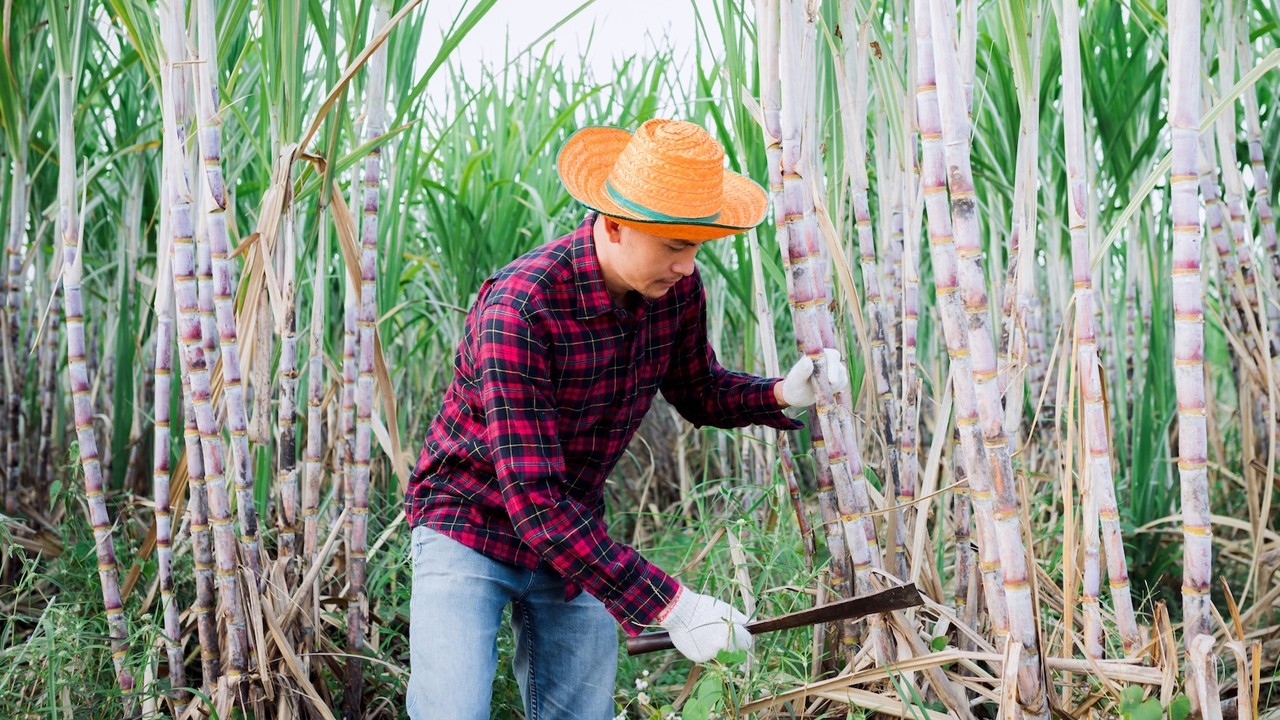
Three sugar factory associations urge the government to accelerate the promotion of E20 as the main fuel to reduce the oil import crisis and navigate energy volatility. They also propose plans to support agricultural and energy production from sugarcane as a national agenda, aiming to boost farmers' income and the economy in the Net Zero era.
Bangkok, 16 Mar 2026 GMT+7 – The three sugar factory associations, known as TSMC, have recommended the government elevate renewable energy from agriculture to a national priority. This aims to address global energy market volatility and reduce risks from high energy import dependency, which stands at 60–70%. They highlight the green economy model by promoting E20 gasohol as the country's main fuel, which could reduce crude oil imports by 2.9 million liters per day, or nearly 1,058 million liters annually. Concurrently, they propose expanding biomass electricity production from sugarcane leaves and agricultural residues to a full capacity of 650 megawatts (MW) to replace natural gas. This approach could return tens of billions of baht to the economy, secure income for over 420,000 sugarcane farming households, reduce open burning that causes PM 2.5 pollution, and support Thailand's long-term Net Zero goals.

Dr. Somchai Harnhirun, Chairman of the Coordination Committee of the Three Sugar Factory Associations, stated that Thailand still relies heavily on imported energy. This includes crude oil imports for refining into finished fuels for transport and industry, as well as natural gas used as the primary fuel for electricity generation at levels as high as 60–70% of total energy demand. These factors make Thailand vulnerable to global energy market fluctuations and pose long-term risks to economic and energy security.
At the same time, Thailand possesses strong agricultural resources that can be developed into renewable energy, especially within the sugarcane and sugar industries, which are key energy mechanisms for the country. In the 2024/2025 production year, Thailand had over 11 million rai of sugarcane plantations, producing about 92 million tons of sugarcane annually and around 10 million tons of sugar. This demonstrates the industry's potential to efficiently produce bioenergy such as ethanol and biomass electricity. Agricultural GDP data shows Thailand's agricultural sector is valued at approximately 1.62 trillion baht, with the sugarcane and sugar industry contributing about 123 billion baht, roughly 8% of the agricultural GDP. This sector plays an important role in both grassroots economy and national energy security, especially as a key raw material source for biofuel and renewable energy development in Thailand.

"A critical focus for the sugarcane and sugar industry is to promote processing agricultural products into renewable energy to add value through ethanol production. Currently, the gasoline and gasohol group, which contains ethanol blends, uses about 32 million liters daily nationwide from a total of 124–154 million liters of finished fuels. However, ethanol use in Thailand is only about 3.5 million liters per day, mostly blended as E10 in gasohol 95 and 91. If the government seriously promotes a transition to E20 gasohol as the main fuel, ethanol demand would surge to 6.4 million liters per day, an immediate increase of 2.9 million liters daily. This increase would significantly reduce crude oil import dependency by about 1,058 million liters annually. Tens of billions of baht previously lost to energy imports would circulate back as stable income directly to sugarcane farmers, raising sugarcane market prices, supporting the grassroots economy, and helping over 420,000 farming households break free from volatile crop price cycles."

Dr. Somchai added that while many global powers are rapidly investing and setting serious renewable energy policies, Thailand should not wait for an energy crisis to impact its economy. Instead, it should accelerate development and utilization of domestic renewable energy potential, especially from agriculture, which should be elevated to a national agenda. Thailand's sugarcane and sugar industry is a highly capable sector that can shield the country's energy system, as sugarcane can be processed into ethanol and biomass electricity—renewable energies that reduce reliance on imported oil. This will facilitate Thailand's transition to a green economy and reduce external dependency. Successful models include Brazil, which has mandated a minimum E27 ethanol blend for decades, significantly reducing oil import reliance, and India, with a similar agricultural structure to Thailand, which has officially targeted E20 and is progressing toward that goal. This proves that promoting bioenergy from sugarcane is a globally validated model, and Thailand, as a top 3-4 global sugarcane producer, is ready to move forward similarly.

Beyond ethanol promotion, the benefits of using sugarcane in the energy sector also extend to biomass electricity generation, which uses agricultural residues like bagasse, sugarcane leaves, and tops as alternative fuel. Currently, sugar factories have the capacity to produce and sell 650 megawatts (MW) of biomass electricity to the grid, effectively replacing natural gas power generation, which has volatile prices. Supporting biomass power not only addresses clean energy goals but also is key to solving national environmental issues. Factories buy sugarcane leaves from farmers as fuel, providing farmers with an additional income stream of about 1.2 billion baht annually. Crucially, this creates positive incentives to reduce sugarcane leaf burning, a major source of air pollution and PM 2.5 particulate matter. Developing a systematic sugarcane leaf purchase system for biomass power plants would increase farmers' income, reduce pollution, and increase renewable energy production—a win-win scenario for all parties.

Dr. Somchai further noted that promoting renewable energy from sugarcane aligns with Thailand's long-term bioeconomy development goals. Sugarcane can also serve as raw material for many high-value industries such as bioplastics, biochemical products, and green construction materials. This matches the government's announced national agenda of the Bio-Circular-Green (BCG) Economy and supports Thailand's Net Zero targets declared internationally. Success in renewable energy development from sugarcane will not only reduce short-term import dependency but also lay a foundation for long-term energy security and national competitiveness.

"Positive signals from the government are becoming clearer. The Energy Policy Committee (EPC) resolved to increase the biodiesel blend (B100) in diesel fuel from 5% to 7%, effective from 14 Mar 2026, and plans to increase price subsidies for E20 and E85 fuels from 2 baht to 3 baht per liter to encourage consumer adoption of biofuels. The sugarcane and sugar industry views these measures as a correct first step but calls for long-term policy clarity and legally binding measures to sustainably incentivize investment and capacity development. The Three Sugar Factory Associations Coordination Committee is ready to work closely with the government by providing technical data, supporting capacity expansion, and promoting sustainable farming practices among sugarcane farmers to reduce burning and increase yield per rai. Collaboration among the government, industry, and farmers would be a key driver enabling Thailand to reduce import dependency, increase farmers' income, and develop a sustainable economy simultaneously. Renewable energy from agriculture is not just an option but a necessary path Thailand must choose for its future benefit," Dr. Somchai concluded.
/Read more news " Government policy /" additional