

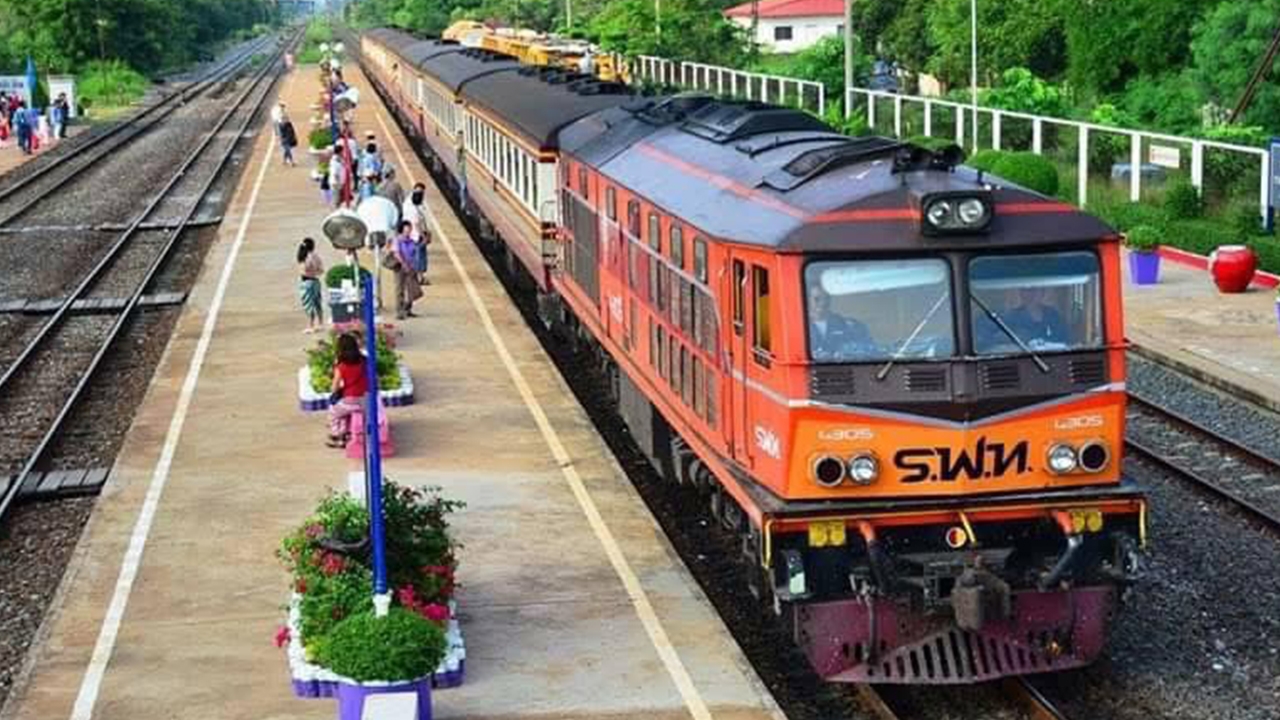
The State Railway of Thailand acknowledges that fluctuating global oil prices have impacted train services, as it consumes over 8 to 9 million liters of diesel each month. It emphasizes having sufficient fuel reserves to maintain operations, while the Department of Rail Transport is preparing to set new fare ceilings that reflect the current situation.
Anan Phonimdaeng, Deputy Governor of the State Railway of Thailand (SRT) and acting Governor, revealed that the fuel price crisis has directly affected SRT's operational costs, as fuel is a primary expense in train operations. Meanwhile, income from passenger fares and freight remains unchanged, creating an imbalance between the organization's revenue and expenditures.

Analysis of costs and revenues shows that SRT's main expenses comprise three parts: personnel costs, infrastructure costs, and fuel costs. Recently, the proportion of fuel expenses has steadily increased, rapidly raising overall expenditures. Financial forecasts made before the energy price crisis estimated losses around 18 billion baht. However, this figure may need revision due to the ongoing rise in energy costs.
Anan explained that SRT currently uses B7 diesel for nationwide train operations, averaging about 8 to 9 million liters per month, which amounts to approximately 270 million baht monthly. Fuel is procured directly through monthly supply contracts with PTT Public Company Limited, with payments made monthly based on actual usage. Purchase prices reference market rates, and although special discounts from pump prices are received to some extent, SRT remains affected by global oil price increases. Nonetheless, fuel stock management ensures adequate reserves, preventing shortages in train operations.

Regarding train service management, SRT applies a principle of adjusting schedules to match passenger demand, using approaches previously employed during the COVID-19 pandemic. For example, if passenger numbers rise, additional trains or carriages are added to meet demand. Conversely, if passenger numbers decrease, the number of carriages may be reduced or some services suspended to control operational costs.
However, during major holidays such as Songkran, when many people travel home or tour, passenger volumes surge significantly. Currently, advance ticket bookings on many routes are nearly fully booked, consistent with typical tourist season patterns. In practice, though, operating trains at full capacity does not increase profits, as rising fuel costs mean operational expenses exceed fare revenues, resulting in a situation described as "the more we run, the more we lose."
Anan stated that the Department of Rail Transport is preparing to announce new fare and freight rate ceilings for the railway system, allowing SRT to adjust fares and freight charges more closely aligned with actual costs. However, this process requires time for consideration and implementation, so it may not immediately resolve the impact of soaring fuel prices.
He added that SRT must urgently seek ways to increase income and improve financial flexibility to accommodate rising costs not originally budgeted. One key approach is maximizing the management of organizational assets, such as developing commercial areas at train stations or other potential sites, to generate revenue that helps offset expenses and organizational debt.
Currently, a significant factor influencing oil prices is global conflicts and wars in various regions, external factors beyond SRT's control that cause energy price volatility. Therefore, SRT must closely monitor the situation and consider financial measures, new business models, and additional government support to ensure the ongoing, stable provision of public transportation services to the public over the long term.
." Government Policy ." Additional