

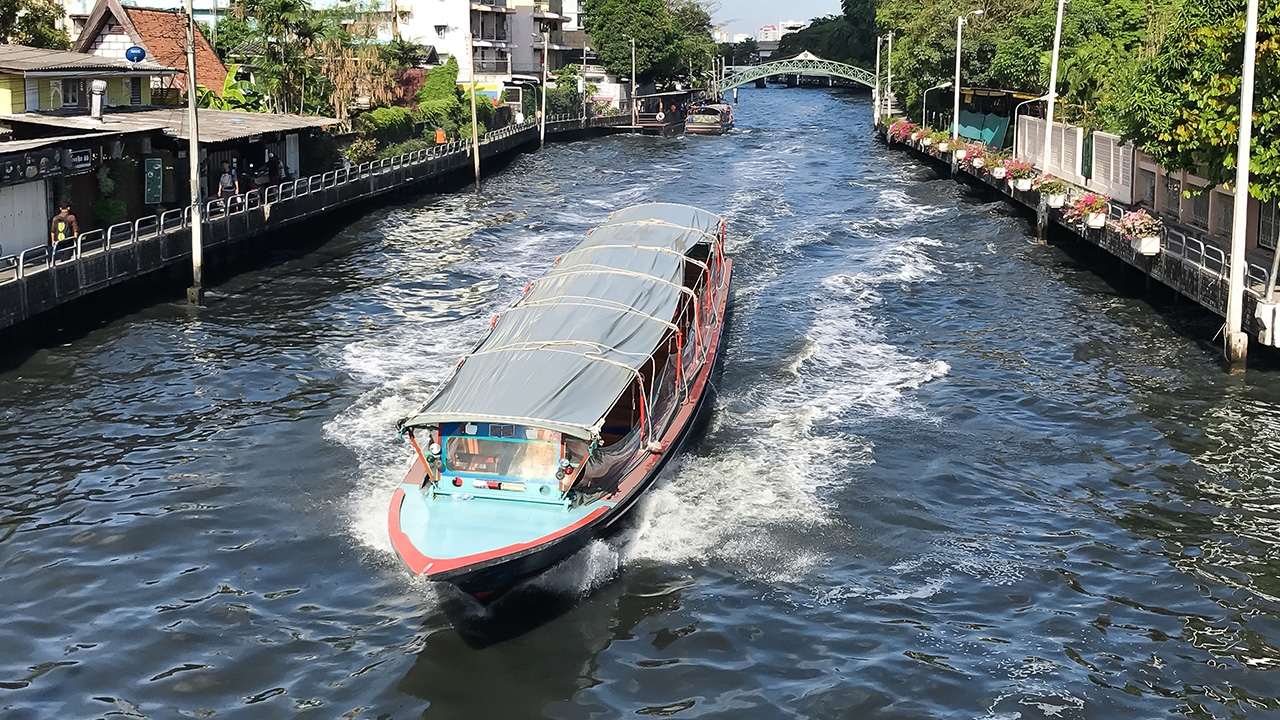
The Marine Department and Khlong Saen Saeb boat operators confirm that fares have not been increased. They are closely monitoring diesel prices again and continue to apply the step-rate fare formula. Private operators want to track the oil price situation before any changes. They report passenger numbers have dropped from 40,000 to 30,000 per day and appeal to the government for cost support, especially since they bear the responsibility of managing over 200 employees.
Mr. Kritphet Chaichuay, Director-General of the Marine Department (MD). He revealed that the Marine Department has followed the Ministry of Transport's policy to control fares amid global energy volatility to protect the public. They have discussed with Mr. Methaya Prapas, Managing Director of Khropkhrua Khonsong (2002) Co., Ltd., the Khlong Saen Saeb boat service provider, and confirmed that there has been no fare increase so far. Current fares remain at the previously set rates despite ongoing fuel price fluctuations.
Regarding future fare adjustments, these must follow the established mechanism or the "step-rate fuel price formula." A key condition is that retail fuel prices at the pump must remain within a specified range for at least 10 consecutive days before any fare change can be considered. This is to prevent inappropriate fare hikes and reduce the cost of living burden on the public. This guideline applies to boat services both in Bangkok and other regions. Operators cannot increase fares independently unless fuel prices meet the defined ceiling conditions, and pump prices serve as the main reference to ensure fairness for both passengers and providers.
Meanwhile, Mr. Chaowalit Methaya Prapas, Managing Director of Khropkhrua Khonsong (2002) Co., Ltd. said that in the short term, especially this week, there will definitely be no fare increase despite rising energy costs. A one-baht fare increase would only occur if diesel prices exceed 33 baht per liter. If fuel prices rise while fares remain unchanged, operators must bear labor costs, which are a significant burden not adequately reflected in the fare structure. Currently, the company employs over 250 staff.
Mr. Chaowalit added that due to fuel price conditions, passenger numbers have declined from about 40,000 to around 30,000 daily. This is mainly due to changed travel behaviors, increased private car use, and work-from-home policies, all directly impacting operator revenues.
He noted that the private sector faces limitations in bearing losses compared to government agencies and requests that the government comprehensively review cost structures, including energy and labor, to sustain business operations. They are closely monitoring fuel prices and will consider fare adjustments aligned with actual costs if prices reach the set thresholds, assuring advance communication to minimize public impact.
Read more news " State Policy " updates