

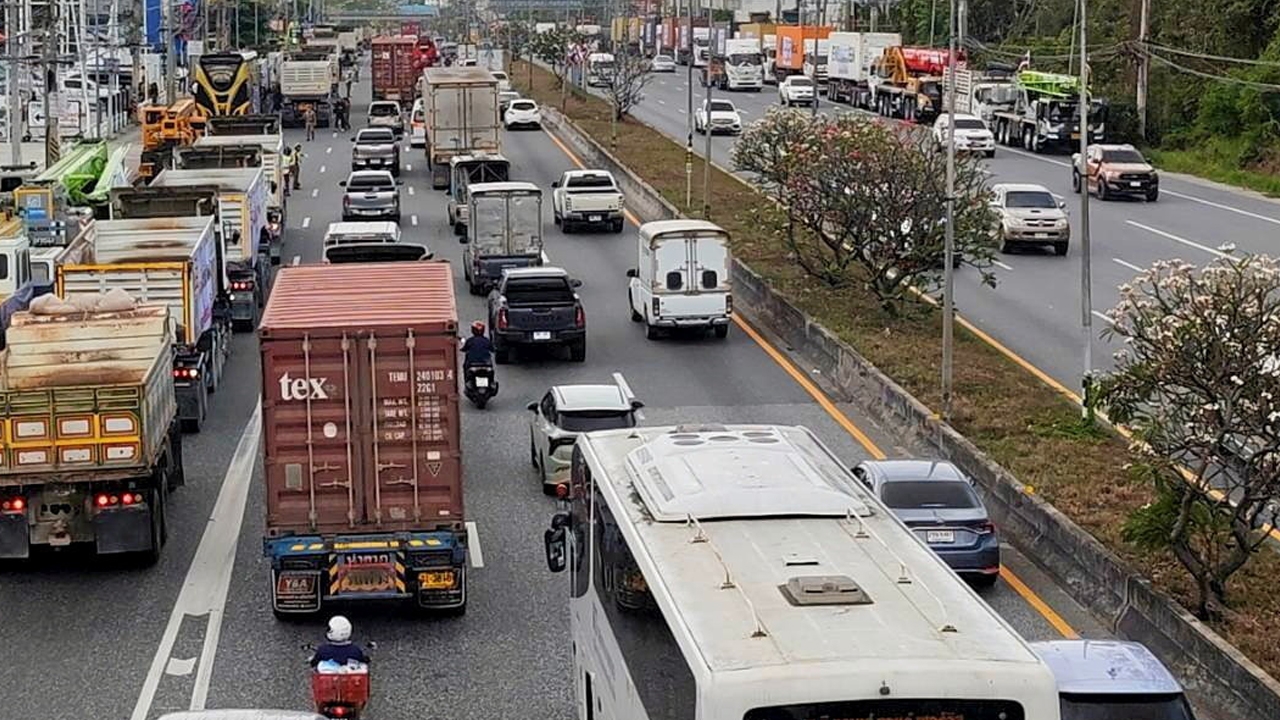
The Land Transport Federation analyzes the diesel crisis after the government raised fuel prices by 6 baht at once, severely impacting transport costs which have surged nearly 20%. It insists it can no longer bear these prices and is preparing to discuss with members a transport fare increase to reflect market dynamics, criticizing the B20 fuel formula for neglect and potential engine damage.
Thongyu Kongkan, president of the Land Transport Federation of Thailand, revealed that following the government's diesel price increase, the transport sector has been severely affected. The 6-baht per liter jump is a shocking figure for both the public and transport operators.
Meanwhile, tomorrow (27 March 2026), the Land Transport Federation plans to hold a member meeting to consider adjusting transport fares to reflect actual costs, as it can no longer bear the burden.. (Fragment - no additional content to translate)The meeting's resolutions and the way forward will be officially communicated to the public.
Currently, fuel costs account for 45-50% of total transport expenses. According to standards, every 1-baht increase in fuel price raises transport costs by approximately 3%.
“Therefore, this 6-baht price hike immediately raises transport sector costs by about 18-20%, an unbearable burden,” said Thongyu.
Considering actual costs including the fuel fund subsidy of about 27 baht, the real diesel price has surged to over 66 baht per liter.
Regarding government support measures, the federation agrees with direct compensation transfers via PromptPay to operators, similar to the Co-Payment Plus scheme, which is more transparent and verifiable.
Thongyu added that on the issue of promoting the use ofB20 fuel,which is about 5 baht cheaper per liter than B7, he believes this policy may not be attractive or genuinely reduce transport costs because B20 contains palm oil, which is expensive.Mixingan expensive ingredient with another costly one is unlikely to sustainably lower prices.
There are also technical engine limitations. B20 may be suitable for older Euro 1 or Euro 2 vehicles, but newer trucks, especially Euro 5 standard, cannot use it as it affects internal combustion and causes engine damage.
“Thus, B20 may only benefit some industrial, agricultural, or commercial sectors, but for land transport, it is not a sustainable solution to the current energy crisis,” said Thongyu.
Read more news " State Policies " here.