

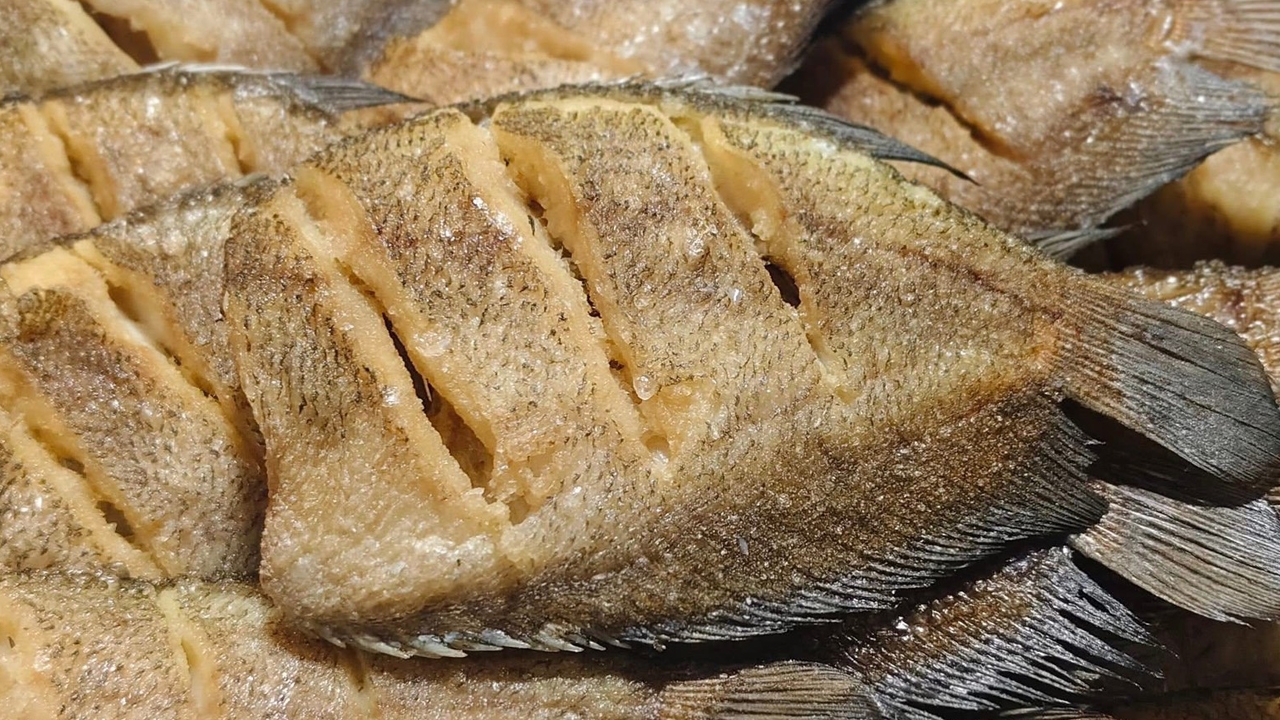
The Department of Intellectual Property has announced the registration of "Ban Phaeo Snakehead Fish" as a new GI product of Samut Sakhon province, aiming to add value to agricultural products and extend this to community tourism.
The Department of Intellectual Property is advancing policies to upgrade Thailand's production base toward the Ministry of Commerce's goal of high-value agriculture. It recently registered the Geographical Indication (GI) "Ban Phaeo Snakehead Fish," the fourth GI product from Samut Sakhon after Ban Phaeo's Puang Thong longan, aromatic coconut, and coconut blossom drink. This registration reinforces the quality of agricultural and processed goods derived from distinctive local wisdom, elevating them to premium GI products that sustainably generate income for communities.

Oramon Thapthaveetham, Director-General of the Department of Intellectual Property, said the "Ban Phaeo Snakehead Fish" differs from other snakehead fish due to Samut Sakhon's coastal plain with comprehensive irrigation, consistently good water quality year-round, and nutrient-rich brackish water containing natural food sources like aquatic grasses. Coupled with traditional breeding wisdom passed down through generations, which includes digging ponds deep enough to block sunlight, maintaining cooler water temperatures, the fresh snakehead fish has a light gray color lighter than fish from other areas. Its flesh is fine, tender, firm, not crumbly, and free of muddy odors. When fried fresh, the fish tastes sweet. Through careful processing—selecting appropriately sized fish, cleaning, properly salting, and sun-drying by traditional community methods—the resulting sun-dried and aromatic snakehead fish have firm, dry flesh that is not crumbly or muddy smelling. When cooked, the fish is tender with a balanced salty flavor and a distinctive aroma. Currently, annual production reaches 8 million kilograms, generating an economic value of up to 740 million baht per year for the province.

Oramon added that the GI registration of "Ban Phaeo Snakehead Fish" aligns with the Ministry of Commerce’s policy to systematically add value to agricultural and community-identity products. The department promotes comprehensive product enhancement, including quality control systems to build consumer confidence, marketing knowledge support for producers, and developing modern packaging that reflects GI identity suitable for premium markets. Marketing channels are expanded both online and offline, such as participation in domestic and international trade fairs, placement in department stores, retail and wholesale outlets nationwide, and leading online platforms. Thanks to its quality, taste, and unique identity, "Ban Phaeo Snakehead Fish" has potential for product diversification into processed foods, ready-to-eat meals, and high-quality souvenirs, which will increase value and expand sustainable market opportunities.

Additionally, the department is committed to promoting the development of GI production areas into community tourism destinations, linking local identity products with tourism experiences. This supports the "365 Days of Wonderful Thailand, Travel Every Day" policy by Deputy Prime Minister and Minister of Commerce Supachai Sutthapan, aiming to upgrade products and services toward high-value tourism by leveraging local product quality and identity to generate year-round income for local entrepreneurs. Currently, Thailand has 256 registered GI products, generating over 115.979 billion baht in economic value for communities.

The Department of Intellectual Property believes that GI registration will help promote "Ban Phaeo Snakehead Fish" more widely, encouraging producers and entrepreneurs in Samut Sakhon to maintain production standards and continuously develop GI products. This growth will span high-value agricultural products and Thai food soft power, alongside developing production areas into learning centers and community tourism sites. These efforts will create income, distribute economic opportunities, and sustainably improve local quality of life in the long term.
." Government Policy . Additional