

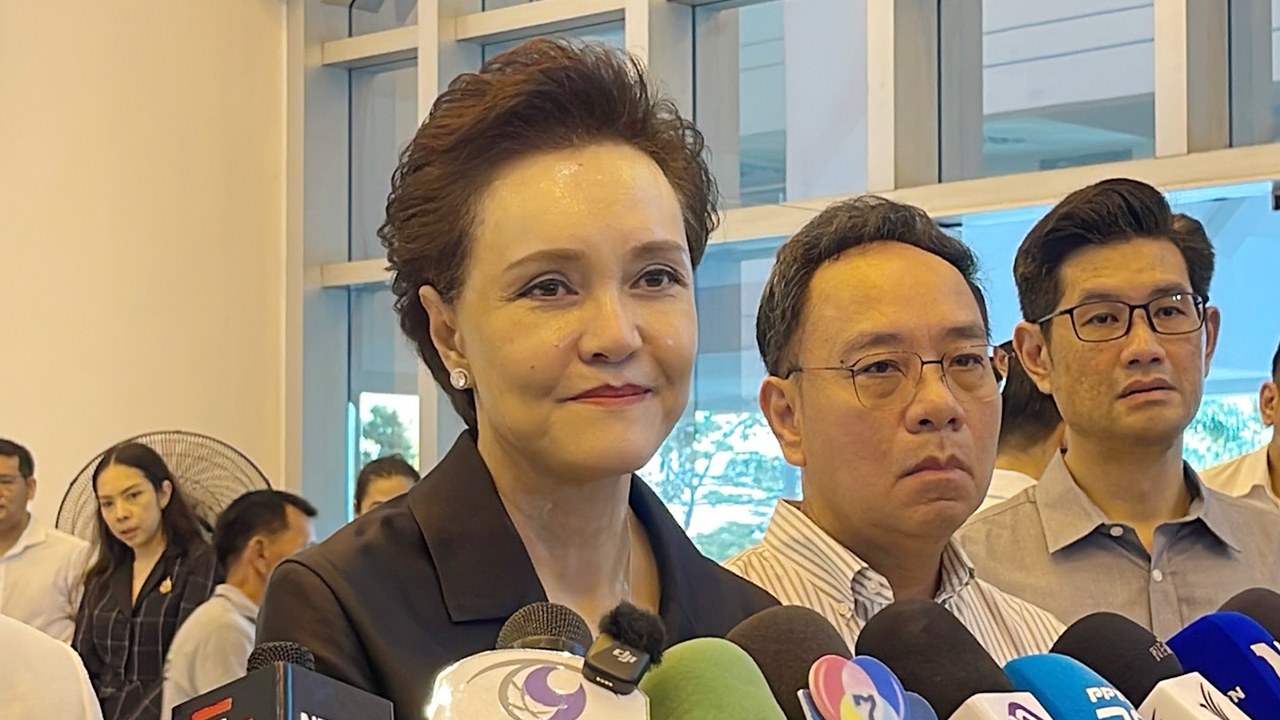
Supachai admitted that her return this time is unlike before, facing overlapping crises. She is reshuffling the Commerce Ministry to respond, especially strengthening the Department of Internal Trade, aiming to best manage product prices and citizens' cost of living. She affirmed she is "not discouraged" and will work fully, with all efforts dedicated to the public's best interest.

Supachai Suthempan, Deputy Prime Minister and Minister of Commerce, said after paying respects to the ministry's sacred symbols upon assuming office in the Anutin 2 government at 07:30 on 16 Apr 2026 at the Commerce Ministry that the situation now is different. Thailand is facing overlapping crises: first, an economy with limited growth, compounded by geopolitical conflicts triggering an energy price crisis.They worsenthe situation further, so the ministry is restructuring its operations by bringing in experts to assist. Regarding product prices and cost of living, the ministry has added inspectors to strengthen the Department of Internal Trade's work.

As for geopolitical issues affecting Thailand's production and exports, an advisory team has been formed to support the Department of International Trade Promotion, including economists specializing in markets such as China, ASEAN, the U.S., and Europe. They will develop strategies and respond as needed, applying a cluster-basedapproachto coordinate with relevant ministries, the private sector at all levels, and farmers to address issues related to product prices, cost of living, production, and exports.
She added she is not discouraged but rather motivated to work harder. She understands that late last year the Thai economy improved due to theQuick Bik Winmeasures, giving people more hope. However, in the first quarter this year, the Middle East crisis worsened the situation, affecting public hopes with uncontrollable factors. Anxiety could turn into anger, but the government understands and will do its best to manage consumer goods prices.
"I believe everyone is working fully and sincerely. I ask the public to trust the government. We are working hard, leaving the final judgment to the people. We will definitely not be discouraged. Everything we do is for the best of the people."
Regarding chemical fertilizer prices, there are two concerns: price and shortage. This is another issue to manage. For prices, fertilizer is a controlled product, and currently,there is norequest to increase prices. The Department of Internal Trade reports that fertilizer supply is sufficient until mid-May. However, new fertilizer imports from Malaysia and Brunei come at higher import costs and will require price adjustments.

For fertilizer imports from the Middle East, planned to arrive via five ships but not yet delivered, the Deputy Prime Minister and Minister of Foreign Affairs traveled to Oman to negotiate opening shipping routes through the Strait of Hormuz, which is difficult due to additional U.S. factors. Meanwhile, the Minister of Agriculture and Cooperatives is negotiating fertilizer purchases from Russia. As new raw materials arrive, the Commerce Ministry will assess prices carefully and gradually adjust.The Commerce Ministrywill consider pricing carefully and implement gradual increases.
"It must be acknowledged that new fertilizer prices will rise following raw material costs, but the Commerce Ministry will review prices thoroughly to align with costs. Simultaneously, there will be programs to reduce farmers' costs through the Green Flag fertilizer project."
Supachai added that products requesting price increases to the Department of Internal Trade include bottled palm oil, shampoo, and soap. These are under review, and no price hikes have been authorized yet. Four palm oil producers have applied for price increases; preliminary plans involve inviting producers for discussions, requesting gradual price increases, and ensuring no shortages. Shampoo and soap price requests are still under data review, with decisions expected within 15 days after application.
When asked if the public must now accept rising rice prices, Supachai said this is likely, given new raw material costs. Regarding managing inflation, which is expected to rise, monitoring will continue through April, as higher energy prices throughout the month may increase inflation from March’s still negative levels.
Read news " Government policy " further