

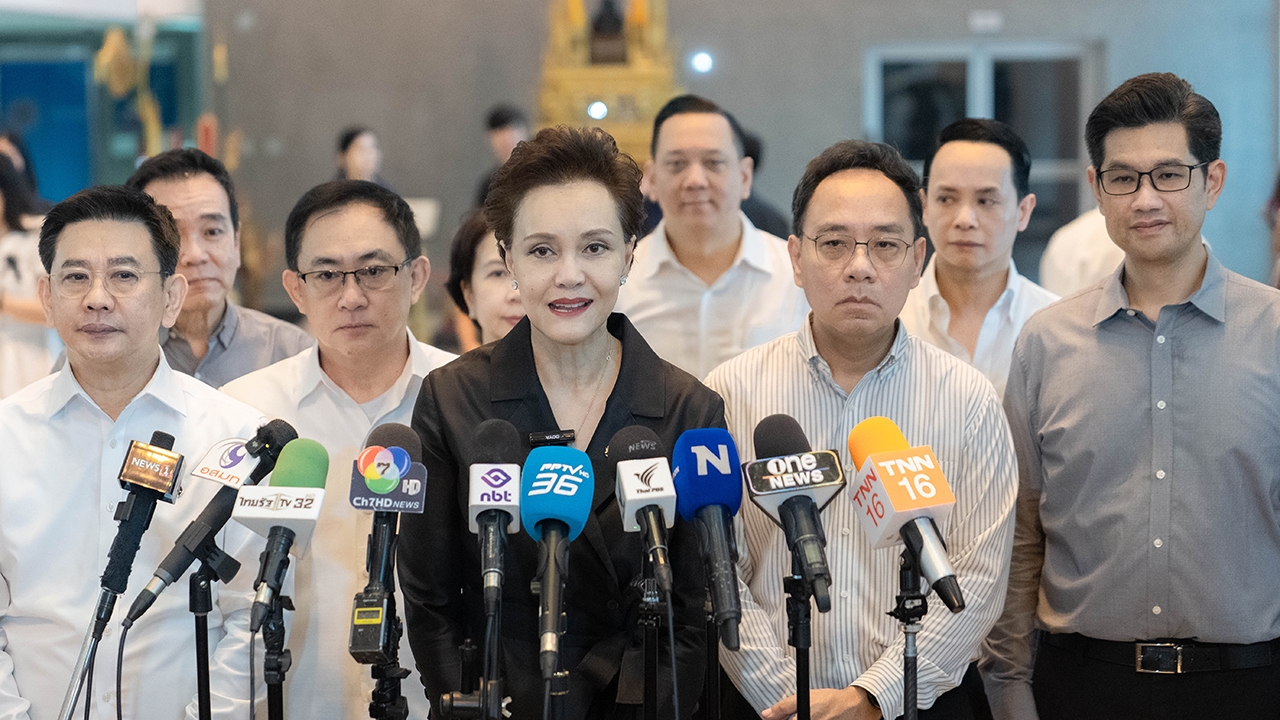
The Ministry of Commerce submitted a defense document to the U.S. by the 15 April 2026 deadline to refute allegations under Section 301 regarding excess production capacity and forced labor goods. Deputy Prime Minister Suphajee is preparing for an urgent trip to discuss with the U.S. Trade Representative (USTR) in early May, confident in Thailand's integrity but awaiting the review outcome amid concerns over potential import tariff impacts.
Deputy Prime Minister and Minister of Commerce Suphajee Suthumpun revealed updates on the U.S. application of Section 301 trade law against trading partners, including Thailand, to impose import tariffs. After the U.S. Trade Representative (USTR) accused or launched an investigation into Thailand under Section 301, Thailand faces two issues:
1. Excess production capacity in three industries: automotive and parts, rubber products, and electrical appliances. The U.S. has accused 16 countries including Thailand.
2. Importing goods from countries using forced labor. The U.S. has accused 60 countries including Thailand, and invited those accused to submit rebuttals or evidence to the USTR by 15 April 2026. The Ministry of Commerce submitted Thailand's rebuttal on that date as scheduled.
The rebuttal clarified that Thailand has no excess production capacity in the three industries. Importantly, it is government policy—implemented since a previous administration—to encourage Thai private sector use of domestic raw materials or components (local content) to promote Thai products. The U.S. likely fears Thailand may be a transit point for goods from other countries rerouted to avoid higher tariffs. Regarding forced labor, Thailand explained it does not import goods from countries using forced labor at all.
“We are confident in Thailand's explanation because we are not as accused, but uncertain about the review outcome. According to the U.S. schedule, around mid-May, approximately 13 May, countries under investigation can submit additional clarifications. Before then, in early May, I will travel to the U.S. to meet with the USTR. Then around mid-May, I may travel to the U.S. again to present our defense personally or possibly via video conference,” Suphajee said.
Suphajee added that after the mid-May defense, the USTR will take no more than seven days to decide and announce what measures will apply to Thailand, such as imposing import tariffs. It is understood that the U.S. aims to complete this before the 150-day tariff period under Section 122 trade law for trading partners, which imposes tariffs of 10-15%, ends around 24 July 2026. After that, tariffs under Section 301 can continue without interruption.
Read more " Government Policy " More