

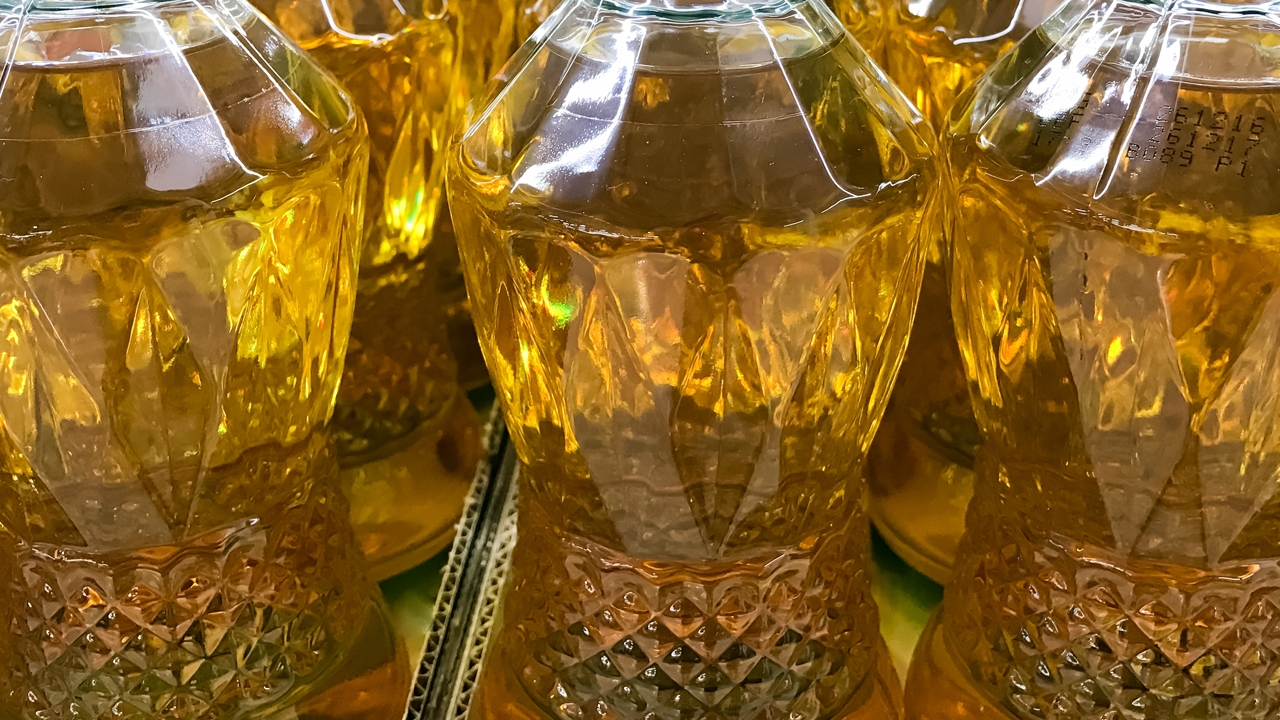
The Department of Internal Trade has approved one bottled palm oil producer to raise the selling price by 1-2 baht per bottle, moving prices to 47-49 baht. Meanwhile, three other producers are negotiating gradual price increases after requesting prices exceeding 50 baht per bottle. It was noted that palm production has declined, but prices have not risen due to a sharp drop in Malaysia's CPO prices, which has pulled down Thai palm prices accordingly. Farmers are urging a prompt investigation into crushing plants that are lowering purchase prices for palm fruit by 20-40 satang per kilogram every day.
Mr. Witthayakorn Maneenet, Director-General of the Department of Internal Trade, revealed after the third meeting of the Subcommittee on Palm Oil Balance Management 3/69 that recently the department approved one bottled palm oil producer to raise prices by 1-2 baht per bottle (liter) due to increased costs. Four producers in total had requested price hikes. The approved producer’s prices are now 47-49 baht per bottle. Other producers’ requests are still under review of cost structures and negotiation for gradual price increases to minimize impact on consumers, as some requested prices above 50 baht per bottle. Other products like soap and shampoo with requested price hikes are also under cost structure review.

Regarding the third meeting of the Subcommittee on Palm Oil Balance Management 3/69, the meeting reviewed the situation of production, pricing, and usage of crude palm oil. The Office of Agricultural Economics reported that during March-May 2026, adjustments were made to the forecasts.ForecastsProductionof palm oilwere revised downward from previous estimates due to drought conditions, now projected at 1.88 million tons, 2.24 million tons, and 2.50 million tons, down from original estimates of 2 million tons, 2.44 million tons, and 2.7 million tons.
However, on the price front, it was found that purchase prices for fresh palm fruit fromfarmershave started to decline following the drop in global crude palm oil (CPO) prices. As of 20 April, fresh palm fruit prices were 6.60-7.20 baht per kilogram with an oil content of 18%, whileMalaysia's CPO priceshave fallen from 39.50 baht per kilogram to 36 baht, following lower global crude oil prices. It is expected that increased use of CPO in the energy sector or for producing B7 and B20 biodiesel blends will help raise prices.
Regarding exports, after the Central Committee on Prices of Goods and Services (CCPGS) implemented export controls requiring prior approval to balance domestic supply, 102,000 tons of palm oil exports were permitted in April 2026 out of a quota of 200,000 tons. Domestic consumption was set at 125,000 tons. Currently, CPO stock for consumption stands at 290,000 tons, with energy sector use of B7 and B20 at 120,000-140,000 tons, up from the usual 70,000 tons.
Mr. Manas Phuttharat, Chairman of the Palm Oil Planters Federation of Thailand, said there are irregularities in the purchase prices of palm fruit from farmers, with crushing plants reducing prices by 20-40 satang per kilogram daily. This has caused farmers to incur losses, as central region farmers receive just over 6 baht per kilogram, below the 7 baht cost of production, while southern farmers get just over 7 baht per kilogram. He urged the Department of Internal Trade to investigate the cause to ensure fairness and enable farmers to sell their produce at reasonable prices.
Reporters surveyed retail prices of bottled palm oil at department stores and major wholesale outlets, finding most still sell at 47-49 baht per bottle, convenience stores at 49-50 baht, while fresh markets and small shops are already selling above 50 baht per bottle.