

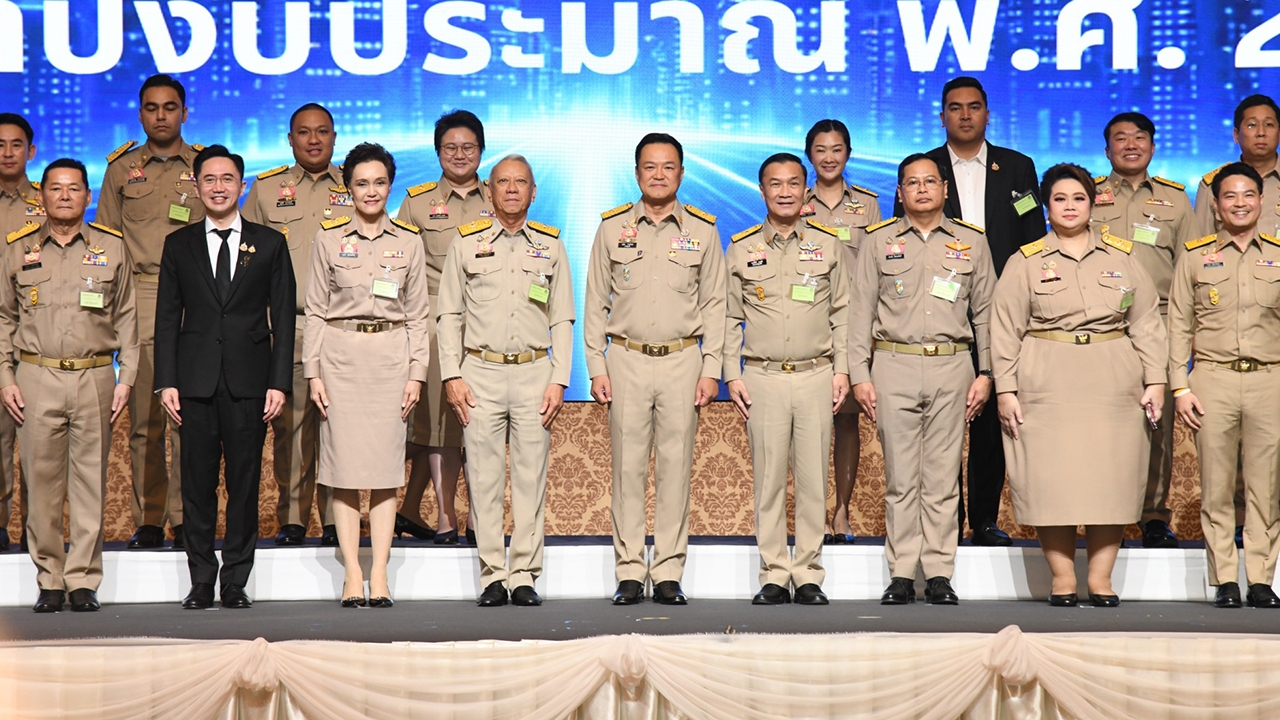
Phiphat Ratchakitprakarn Led by Phiphat Ratchakitprakarn, the Ministry of Transport executives received the 2027 budget policy from the Prime Minister, supporting the approach to reduce government expenditures by focusing on effective maintenance of existing roads instead of new construction, while also promoting the use of clean energy for sustainability.
On 20 April 2026, Phiphat Ratchakitprakarn, Deputy Prime Minister and Minister of Transport, together with Siriwong Angkasakulkiat, Pattarapong Pattaraprasit, Sanpetch Boonyamanee, Deputy Ministers of Transport, and Chayatham Promsorn, Permanent Secretary of Transport, attended a seminar on policy delivery and guidelines for preparing the 2027 fiscal year budget. The event was chaired by Prime Minister Anutin Charnvirakul and held at Challenger Building 1, IMPACT Exhibition and Convention Center, Muang Thong Thani, with representatives from related agencies participating.
Phiphat revealed that the meeting aimed to align the 2027 fiscal budget with government policies and the current volatile global situation. The Prime Minister set the budget framework at 3,788 billion baht, emphasizing precision and alignment with the “10 Plus” policy to guide the country through crises while laying foundations for sustainable development and escaping the middle-income trap. The budget focuses on five key areas: economy; foreign affairs and security; society; disaster and environment; and public administration and legal reform. It stresses cost-effectiveness and zero-based budgeting, considering necessity, urgency, and appropriateness, reducing unnecessary expenses. Budget increases must not exceed 20% from the previous year and only apply to investments. Furthermore, the policy promotes clean energy use, such as electric vehicles and solar rooftop installations across agencies, addressing long-term energy crises, alongside strengthening comprehensive security preparedness.
Regarding the Ministry of Transport, the Prime Minister directed a focus on maintaining and repairing existing road networks to ensure efficiency and continuous usability rather than launching new construction projects. This approach aims to optimize resource utilization, reduce government spending, and sustainably enhance transportation safety.
“The Ministry of Transport and its agencies are ready to implement the Prime Minister’s policy and operational guidelines in planning and budgeting to achieve tangible results. I have instructed all departments to prepare budget proposals that align with government policies, prioritizing the development of efficient transport infrastructure with the utmost benefit to the public and the nation. This will support the government’s policy goals effectively,” Phiphat said.