

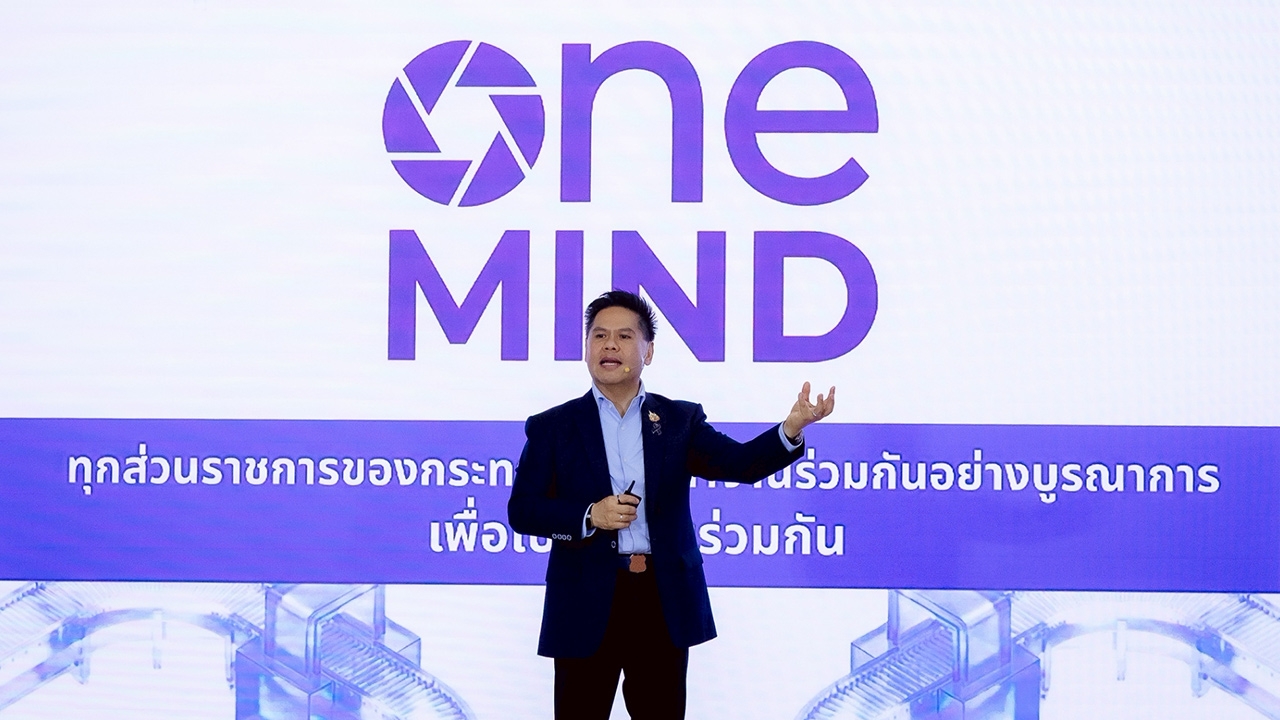
Industry Minister Warawut Silpa-archa is preparing to discuss with the World Bank plans to establish an "Industrial Transformation Fund" worth 100 billion baht, aiming to attract private sector co-investment to support SMEs adapting to future industries. He is promoting the "ONE MIND" policy driven by four pillars, focusing on revising outdated laws and elevating Thailand's economy to compete sustainably on the global stage.
Mr. Warawut Silpa-archa, Minister of Industry, revealed the direction for advancing Thailand's industrial policy, stating that the ministry plans to accelerate the establishment of the "Industrial Transformation Fund" with a capital of 100 billion baht, to be gradually set up in phases to attract financially capable private investors to join, helping small enterprises and SMEs to develop innovations and upgrade machinery to compete in the global market.
This week, he will meet first with representatives from the World Bank to seek academic advice and guidelines for setting up the fund, as the World Bank is an international financial institution with expertise in supporting developing countries. Simultaneously, he will consult with the Minister of Finance to frame the work to avoid overlap with the existing SME funds under the Pracharat model.

Mr. Warawut added that the ministry's work will be based on the principle of "ONE MIND," uniting all agencies to integrate and communicate in the same direction to provide concrete solutions for the public through a new four-pillar structure (4 Pillars), namely:
1. People Engagement (Listening to the public) Collecting industrial problems into a single channel to resolve hardships, along with a monthly status tracking system.
2. Policy Execution (Driving policies) Advancing future industries (New Engine) such as digital, AI, semiconductors, and electric vehicles (EV), promoting Thailand's entry into global production chains, upgrading agricultural products into a medical food hub, developing herbal products, smart handicrafts, and accelerating the creation of a green industrial ecosystem.
3. Legal Reform Focusing on revising laws that hinder investment to meet OECD standards, piloting new Industrial Waste and Factory Acts, promoting a carbon passport system, real-time pollution monitoring from smoke stacks, and encouraging community clean energy.
4. Minister’s Passion (Environmental and social challenges) Focusing on addressing natural disasters, preparing for an aging society and vulnerable groups, while building on the Eastern Economic Corridor (EEC) special development zone to connect with the global economy.

Additionally, there are plans to establish the "Thai Industrial Transformation Committee" together with the National Economic and Social Development Council (NESDC) and the Board of Investment (BOI) to push the fund in supporting innovation grants for SMEs alongside reskilling and upskilling Thai workers to keep pace with technology, including preparing for the carbon credit market to face the Cross-Border Adjustment Mechanism (CBAM) from abroad.
"My passion is to respond to a changing world. We will turn the challenges of environmental issues and an aging society into new business opportunities for all Thai people," Mr. Warawut concluded.