

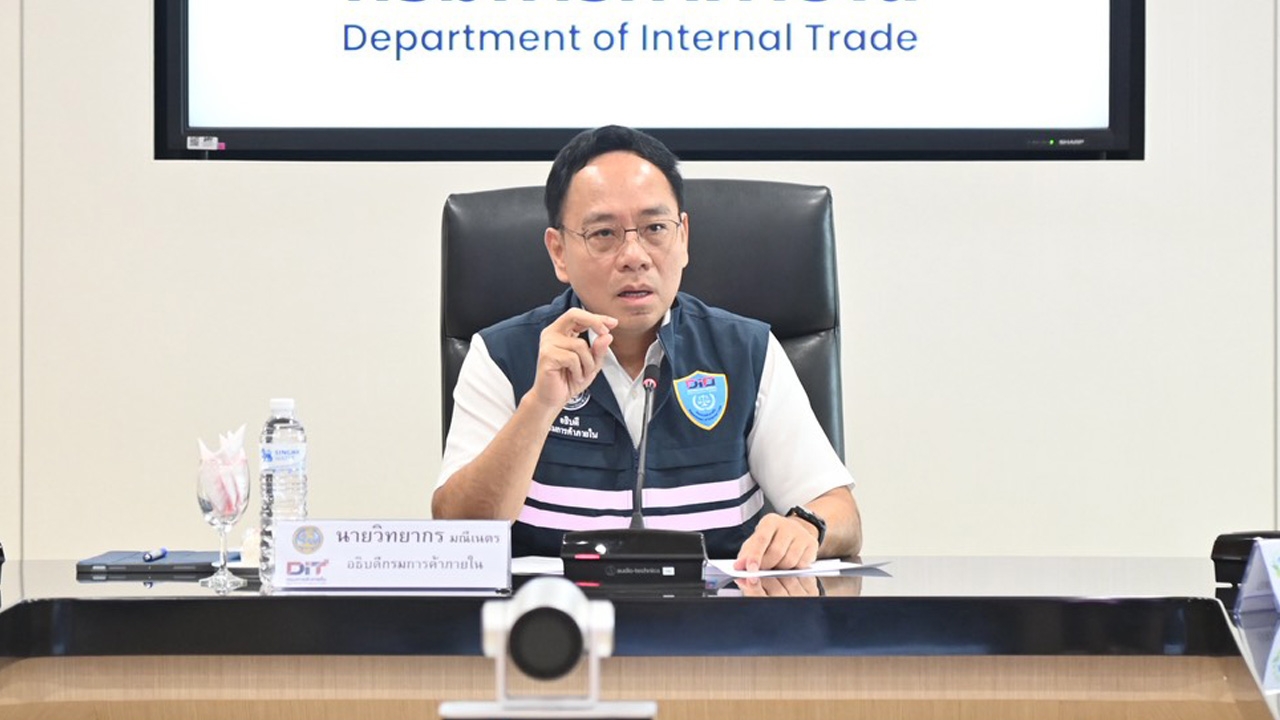
The Department of Internal Trade and four fertilizer trade associations are preparing to announce recommended retail prices for chemical fertilizers by province. Prices will be calculated from the factory gate to the district center, plus transportation and handling fees, to prevent price gouging. The announcement will start next week. Meanwhile, fertilizer traders point out that urea prices have surged nearly 100%, discouraging imports due to fear of losses. Domestic stocks total 920,000 tons, sufficient for only about two months during the planting season.

Mr. Wityakorn Maneenet, Director-General of the Department of Internal Trade, revealed after discussions with the Fertilizer and Agricultural Business Association of Thailand, the Thai Fertilizer Producers Association, the Thai Agricultural Business Association, and the Soil and Fertilizer Association of Thailand, that the meeting resolved to announce recommended chemical fertilizer retail prices by province. Prices will be calculated from the factory gate to the district center of each province, including other expenses such as transportation and bag handling fees, so that each retailer knows the appropriate selling price. The recommended prices will be announced starting next week on the department's website.www.dit.go.thThe announcement will also be communicated to the Provincial Committee on Goods and Services Prices (PCGSP), focusing on popular fertilizer formulas such as 16-0-0, 21-0-0, 0-0-60, 15-15-15, 16-20-0, and 16-8-8, among others.
"The purpose of setting recommended prices is to inform both retailers and farmers of the appropriate selling prices in each area, to prevent exploitation and excessive profits. Previously, there have been issues where retail prices rose significantly from factory gate prices, even though factories had not raised their prices. Inspections of 1,135 fertilizer shops based on public complaints found 51 violations, with price increases of 300 to 500 baht per sack. Six shops have been prosecuted, while evidence is still being gathered against others for further action."

Additionally, discussions included implementing the Green Flag Plus project to help reduce chemical fertilizer prices for farmers and promoting alternative fertilizers to reduce urea use, which has seen a significant price increase from 500 to over 900 US dollars per ton. As of 15 Apr 2026 GMT+7, Thailand's chemical fertilizer stocks, collected from 48 of 54 producers, total 920,000 tons held by producers, distributors, and in transit. The planting season starts in May 2026 GMT+7. Producers have sourced fertilizers from other regions outside the Middle East, including Malaysia, Brunei, and Indonesia, arriving continuously.
According to the Fertilizer and Agricultural Business Association of Thailand, imports of fertilizer from the Middle East are still en route, totaling 250,000 tons, but alternative sources such as Malaysia, Brunei, and Indonesia are being used continuously. Importers are reluctant to bring in urea due to its high price, nearly doubling from 500 to 959 US dollars per ton. They fear that if imported at such high prices and sold domestically, farmers will be unable to afford it, as prices would exceed 30,000 baht per ton. Furthermore, if the Middle East conflict ends and prices drop, importers would face losses.

However, even without urea imports, farmers can substitute with other fertilizer formulas. Of the 920,000 tons in stock, during the planting season from May to August annually, fertilizer usage ranges from 400,000 to 500,000 tons per month, covering about two months. There is no need for concern as importers continue to bring in supplies steadily. Regarding requests for price increases on new fertilizer batches, operators have not submitted any to the Department of Internal Trade yet. Although costs have risen, they have not reached previously approved ceilings. Should costs increase beyond that, price adjustments will be considered.
Read more news " Government Policy "