

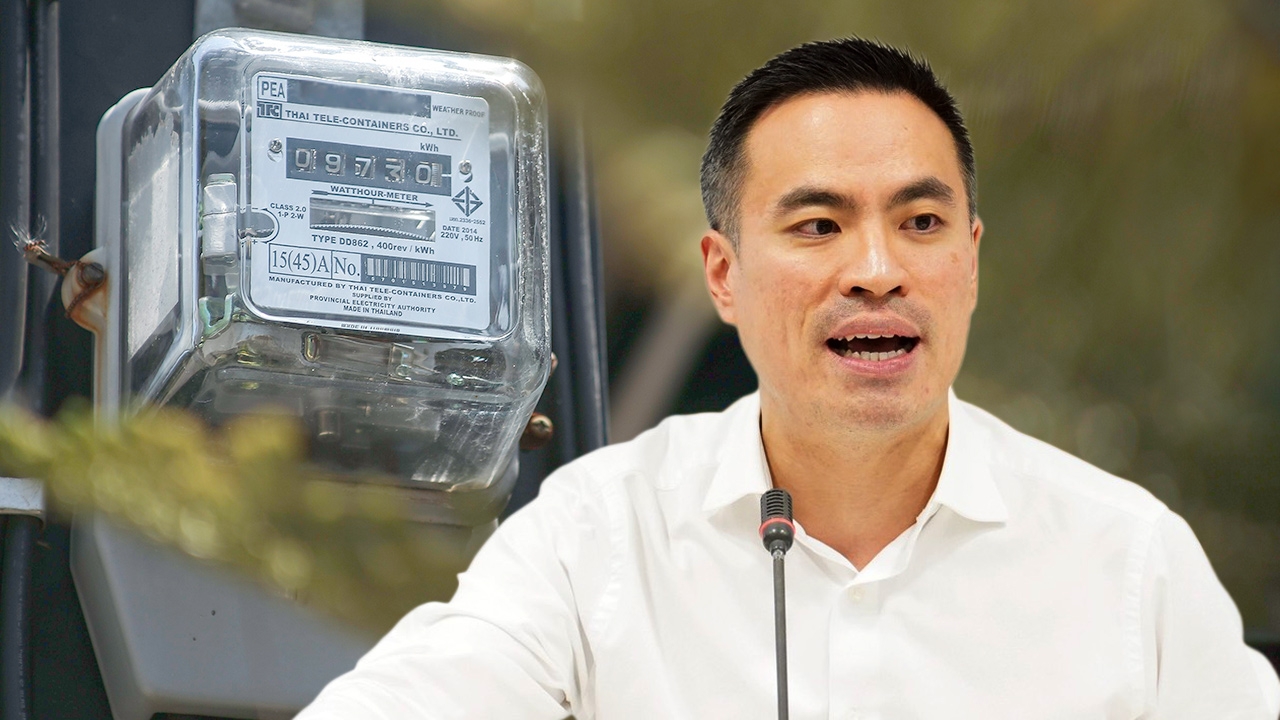
Energy Minister Eknat Promphan is advancing a new electricity tariff structure, set to begin with the June billing cycle, aiming to support consumers using no more than 200 units by capping their rate. At a rate not exceeding 3 baht per unit. He also plans to cancel private Adder contracts if price reductions are refused and encourages households with high electricity use to install solar panels to reduce long-term expenses.
Mr. Eknat Promphan, Energy Minister, explained discussions with relevant agencies to restructure electricity tariffs, which have raised overall consumer costs. This is due to the burden of purchasing electricity from past renewable energy projects supported by additional purchase price premiums (Adder), currently renewed automatically. 4,000 megawatts at rates of 3-5 baht per unit. This accounts for 10% of electricity production capacity or adds 20 satang per unit to the automatic variable electricity cost (FT) surcharge.
"I have summoned my team to discuss this issue and prepare to cancel contracts with those private power producers if they cannot negotiate to reduce electricity prices to reasonable levels, such as solar power generation, which should not exceed 2.20 baht per unit." For biomass fuel, prices must be renegotiated fairly. These producers have long recovered their investment selling electricity to the state, and with current changes in energy costs, purchase prices should be adjusted fairly."
He added that if negotiations fail, private companies are welcome to sue the government. The Energy Ministry has consulted the Attorney General's Office on this matter. Resolving these Adder issues could reduce electricity costs by 10 satang per unit. He said negotiations will follow the approach used with oil refineries, noting private firms are not losing money but possibly losing profits, so adjustments are needed. If talks fail, contracts will be canceled, lawsuits are possible, but electricity prices cannot be allowed to remain high.

The new tariff structure covers 23.2 million households. Implementation is targeted for the June 2026 billing cycle. June 2026 GMT+7 Details are as follows: For the first 200 units, covering 23.2 million beneficiaries, divided into
Mr. Eknat said under the new tariff structure, the first 200 units will be cheaper, capped at 3 baht per unit. Those using 200-400 units will pay the normal rate or slightly less, as the lower rate for the first 200 units averages down the overall bill. Users consuming over 401 units will see a tiered adjustment: the previous 4.50 baht per unit rate will increase by 1 baht to over 5 baht per unit. Slightly above 400 units remains at normal rates, but consumption from 480-500 units and above may break even under the new structure.
Mr. Eknat said Thailand's tiered electricity tariff structure has been in place for over 20 years without adjustment, failing to reflect that low consumers should pay less and high consumers more. Heavy consumption forces over 60% reliance on natural gas for electricity, with 30% imported as liquefied natural gas (LNG). During crises, LNG costs spike. Reducing LNG imports by 5-10% to around 20% can lower the FT surcharge by 10 satang per unit.
For users consuming 480-500 units and above, the government recommends installing rooftop solar panels to self-generate electricity. If budget is a constraint, the state will provide low-interest loans. For example, a 1-kilowatt solar system can generate 100-150 units; installing 2-3 kilowatts can produce 400-450 units. Installing 2-3 kilowatts costs about 60,000 baht. With no down payment and a 10-year repayment at 3% interest, monthly payments would be 600 baht, offsetting 300-400 units of electricity costing 1,500 baht per month. This means monthly solar loan payments replace electricity bills, allowing everyone to enjoy lower electricity costs.
Previously, solar installation took years; processes will be shortened. For example, the Provincial Electricity Authority's meter approval should not exceed one month, coordinated with the Ministry of Interior. Thus, installing solar for self-use (without selling back to the grid) will take 7 days. For those who install solar and have surplus electricity to sell back, the buy-back rate will be 2.20 baht per unit, higher than the rate for solar farms. The government previously capped purchases at 90 megawatts from a national capacity of 50,000 megawatts (0.1%). This quota will be expanded to 500 megawatts. Further expansion depends on public response, as solar generation reduces LNG imports and lowers electricity costs. The government will support installation costs and discuss with the Ministry of Finance to increase budget allocations for this policy.
Mr. Eknat said the Energy Ministry is exploring ways to lower electricity costs. Currently, for the May–August billing period, the average charge is 3.95 baht per unit. This is an increase from January–April's 3.88 baht per unit due to a 7 satang rise in the FT surcharge. The ministry will consult all stakeholders to find relief measures such as requesting emergency funds, contributions from the three electricity authorities, and shortfall funds covering actual natural gas cost differences compared to PTT Public Company Limited's estimates, which have led producers to import LNG. The goal is to use these funds to reduce the FT surcharge for the first 200 units, aiming to lower the average electricity cost from 3.95 baht to 3.50 baht per unit.
Read more news " Government Policy "