

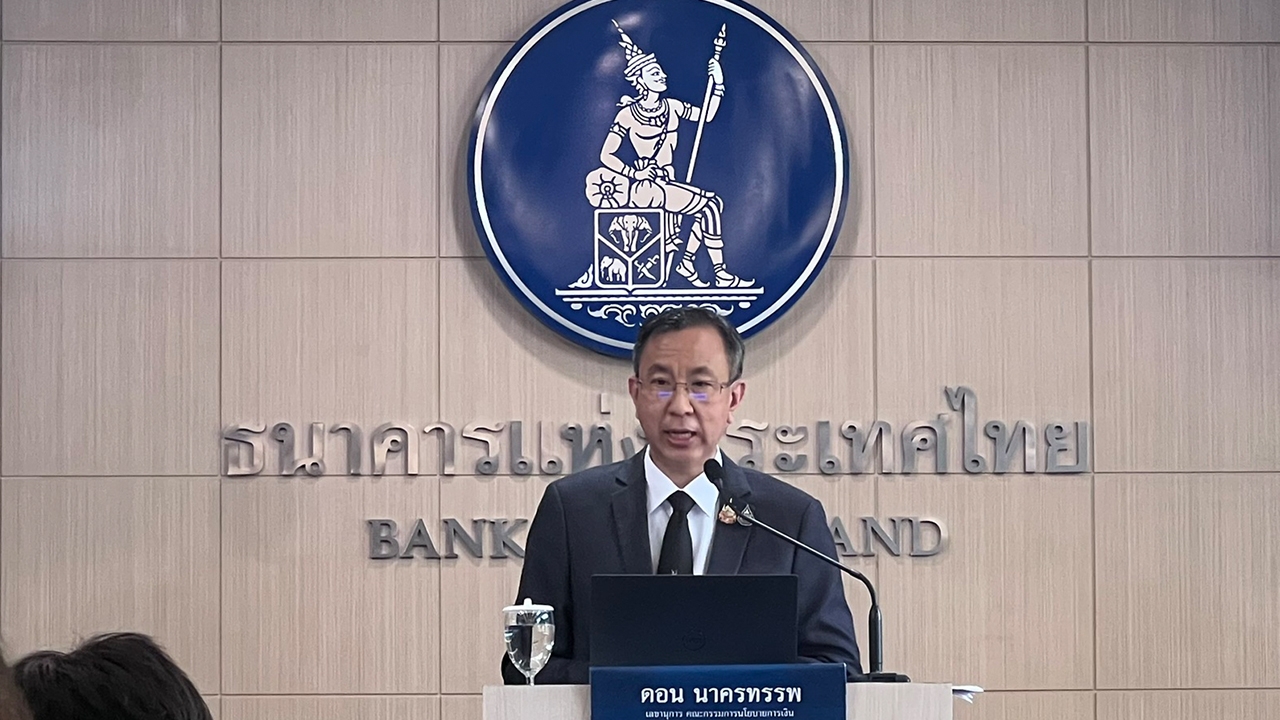
The Monetary Policy Committee (MPC) unanimously voted 6 to 0 to keep the policy interest rate at 1.00% per annum, stating it is an appropriate level to support the Thai economy which is slowing due to the Middle East war, while closely monitoring the rising inflation.
Mr. Don Nakornthap, Secretary of the Monetary Policy Committee (MPC). In a statement on the MPC meeting outcome, the committee unanimously voted 6 to 0 to maintain the policy interest rate at 1.00% per annum, as they assess the Thai economy is likely to slow down due to the impact of the Middle East war, which has weakened purchasing power and increased business costs. The committee views the current interest rate as appropriate to manage the high level of uncertainty.
Economic data before the Middle East conflict showed better growth prospects than previously estimated, driven by domestic demand and exports. However, the war's impact led to revised forecasts, with the Thai economy expected to grow slower at 1.5% in 2026 and 2.0% in 2027 respectively.
The main economic pressure comes from private consumption affected by rising living costs, reduced incomes, and fewer foreign tourists due to increased costs and travel restrictions, although technology exports continue to grow well. Additionally, if the government implements further stimulus measures, the economy might grow faster this year but slow down next year when such measures end.
Regarding inflation, the general inflation rate is forecasted to rise to an average of 2.9% in 2026 (up from minus 0.5% in the first quarter), mainly due to soaring global energy prices amid unrest, which may push inflation above the upper target limit of 3.0% for a period before gradually declining to an average of 1.5% in 2027 as supply-driven inflation pressures ease.
Core inflation for 2026 and 2027 is expected to be 1.6% and 1.5% respectively. Despite cost pass-through to goods and services prices, weak purchasing power will prevent widespread price increases by businesses. The MPC continues to monitor risks from a potential closure of the Strait of Hormuz, which could prolong the energy crisis beyond current expectations.
In the financial markets, asset prices and exchange rates remain highly volatile, with the baht depreciating due to Thailand's heavy reliance on energy imports from the Middle East. Meanwhile, Thai bond yields have risen following global market trends.
Credit from financial institutions tends to remain stable at low levels, as they continue to exercise strict caution in lending to high-risk borrowers amid ongoing assessments of the war's economic impact.
/read news " state policy " for more