

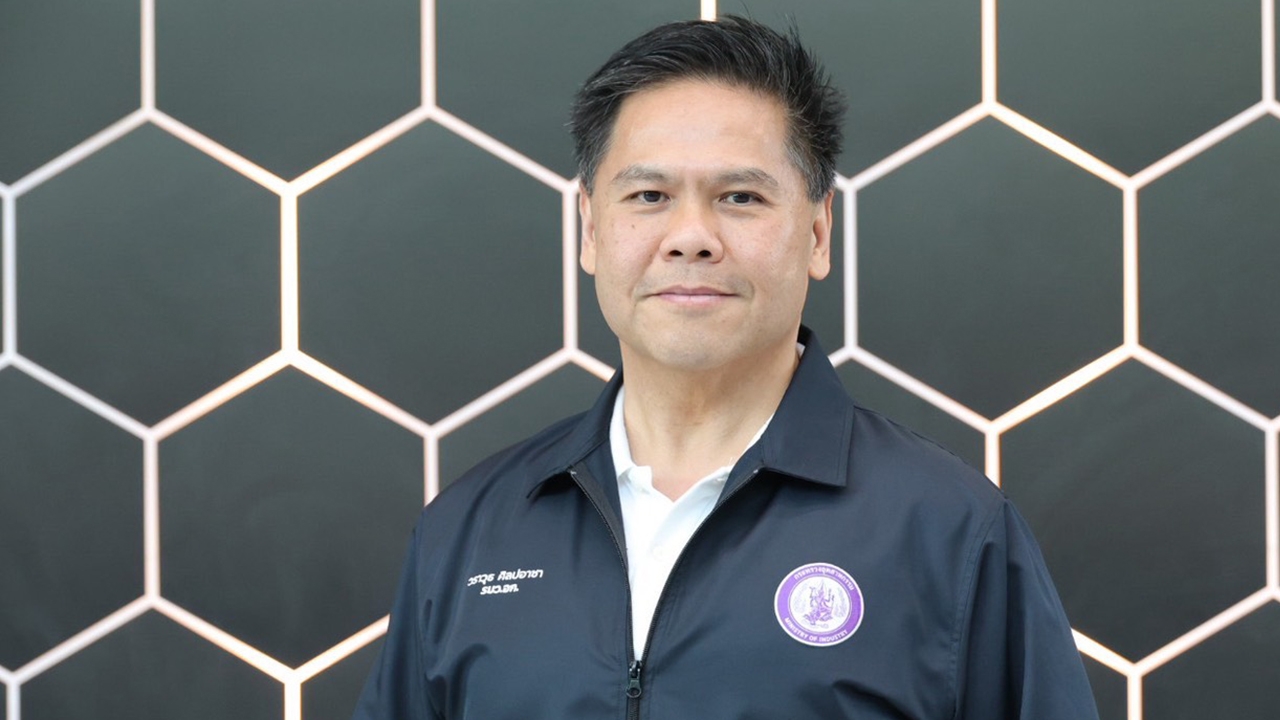
Warawut Silpa-archa, Minister of Industry, revealed after inspecting and providing policy direction to the Eastern Economic Corridor (EEC) that the development of Thailand's industrial estates will focus on balancing economic growth with environmental conservation.
Warawut stated that although the Landbridge project has not yet been formally discussed in the Cabinet, its core is the efficient management of deep-sea ports in Chumphon and Ranong provinces, including cargo handling and logistics connections (rail, road, pipeline), requiring careful consideration of construction methods.
Since the area is rich in natural resources and includes numerous national parks, a thorough environmental impact assessment is necessary. This includes comparing cost-effectiveness and time saved versus shipping through the Malacca Strait, within the context of changing global geopolitics. He also stressed the importance of genuinely listening to local residents' opinions.
“National development requires balance, like a car where the Ministry of Industry is the accelerator. Pressing only the accelerator without the brake leads to accidents, while only using the brake halts progress. Therefore, careful weighing is essential,” Warawut explained.
Regarding redundancies between the Industrial Estate Authority of Thailand Act and the Factory Act, the Minister of Industry assigned the Permanent Secretary to urgently review and revise conflicting regulations to streamline procedures, increase efficiency, and expedite factory establishment.
Additionally, the One Stop Service policy is being accelerated to facilitate investors by integrating work with the Ministries of Commerce and Interior, which will be key to attracting FDI. He noted the government prioritizes updating outdated regulations to prevent obstacles in operations.
The EEC plans to implement a new communication system with estate officials nationwide within 1–2 months to enhance the efficiency of waste emission monitoring.
Sumet Tangprasert, Governor of the EEC, revealed that the EEC will no longer pursue constructing new industrial estates specifically for SMEs due to high costs.
Instead, the EEC will allocate approximately 5–10% of space within existing or upcoming industrial estates to accommodate SME operators, repurposing unused buildings or facilities. The pilot project will be launched at the Lat Krabang Industrial Estate to develop a supply chain for SMEs.
, State Policy ." Additional