

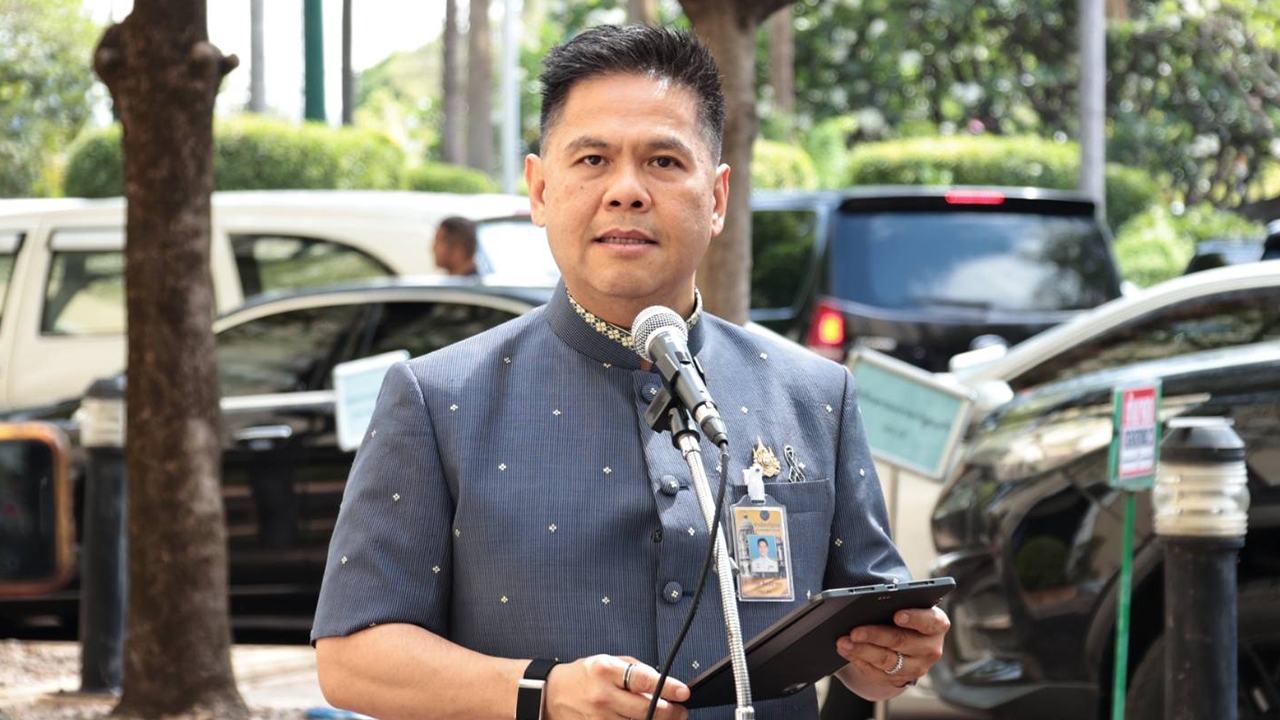
Minister of Industry Warawut Silpa-archa supports EGAT in developing "Low Carbon Cities" by piloting projects in three industrial estates—Lamphun, Bangpoo, and Laem Chabang—with a budget of 3.5 billion baht to advance Thailand's carbon credit market to global standards, aiming to reduce greenhouse gas emissions by 2.33 million tons over 10 years.
Mr. Warawut Silpa-archa, Minister of Industry. He revealed the direction for driving Thailand's industry under the Low Carbon Cities & Carbon Market Development (LCC) project, a national strategic initiative to reform financial and energy infrastructure toward building a carbon financial ecosystem. After inspecting the Industrial Estate Authority of Thailand (IEAT), he noted that the Ministry of Industry joined the project as a pilot public sector organization on 21 March 2025 GMT+7.
The carbon financial ecosystem is Thailand's first internationally recognized effort, focusing on developing carbon finance infrastructure and international carbon markets. The Cabinet approved this on 9 December 2025 GMT+7. The project is a collaboration involving the Department of Climate Change and Environment, Ministry of Natural Resources and Environment, and the World Bank through the Export-Import Bank of Thailand (EXIM Bank).
To support investment in clean energy technologies including renewable energy (RE), energy efficiency (EE), and electric vehicles (EV) on public assets, the project's key goal is to establish a transparent, credible voluntary carbon market platform in Thailand that integrates seamlessly with international markets through multi-agency collaboration.
Agencies involved include the Department of Climate Change and Environment overseeing standards, the Public Debt Management Office supervising financial matters and establishing the Digital MRV system, and setting up the Verified Emission Reductions Monetization Facility (VERMF) to verify, certify, and convert greenhouse gas reductions into market value accurately. This financial innovation will upgrade Thailand's carbon credits to high-quality credits marketable worldwide. Over 10 years, it is projected to reduce greenhouse gas emissions by 2.33 million tons of CO2, generating approximately 3.4 million USD annually in carbon credit revenue. This will reduce public energy costs, create green jobs, enhance competitiveness, and strengthen the credibility of Thailand’s carbon credit market globally.
Mr. Warawut said that Mr. Sumet Tangprasert, Governor of the Industrial Estate Authority of Thailand (IEAT), reported that upon joining as a pilot public sector organization, IEAT will receive investment support of approximately 3.5 billion baht for industrial estate areas. The project’s distinctive feature is its innovative financial mechanism: IEAT will use a business model through Energy Service Companies (ESCOs) borrowing funds from EXIM Bank to implement the project. Government agencies will pay only based on verified energy savings (performance-based). IEAT will serve as the public asset owner of carbon credit rights through the Coordinating and Managing Entity (CME), managed by Krungthai Bank and the VERMF fund. This entity will aggregate carbon credits and convert them into value via the Stock Exchange of Thailand, using spot and continuous futures contracts over 10 years. Revenues from carbon credit sales will be reinvested in new green projects.
Currently, IEAT’s operational plan includes surveying target areas in northern industrial estates in Lamphun province, Bangpoo Industrial Estate, and Laem Chabang Industrial Estate. The selection is expected to be completed by May 2026 GMT+7, with a Request for Proposal (RFP) draft finished by the end of June 2026 GMT+7. ESCO companies will then be invited to assess the sites between July and August 2026 GMT+7, followed by loan approval and installation of solar cow systems. The goal is to achieve greenhouse gas emission reductions and initiate carbon credit trading mechanisms by May 2027 GMT+7. The long-term MAP phase from 2027 to 2029 GMT+7 will expand phase 1 projects with public-private collaboration across industrial estates.
Read more " Government Policy " updates