

"Thailand Team" is preparing to fly to the U.S. on 13-14 May to respond. The U.S. Trade Representative (USTR) has accused Thailand of having excess production capacity and importing goods from countries using forced labor. The Department of Foreign Trade is concerned about the labor issue, fearing potential U.S. discrimination, but insists Thailand has never imported goods made with forced labor. The Thai Ministry of Labor is drafting comprehensive human rights legislation to enable thorough due diligence and traceability of labor practices throughout the supply chain.
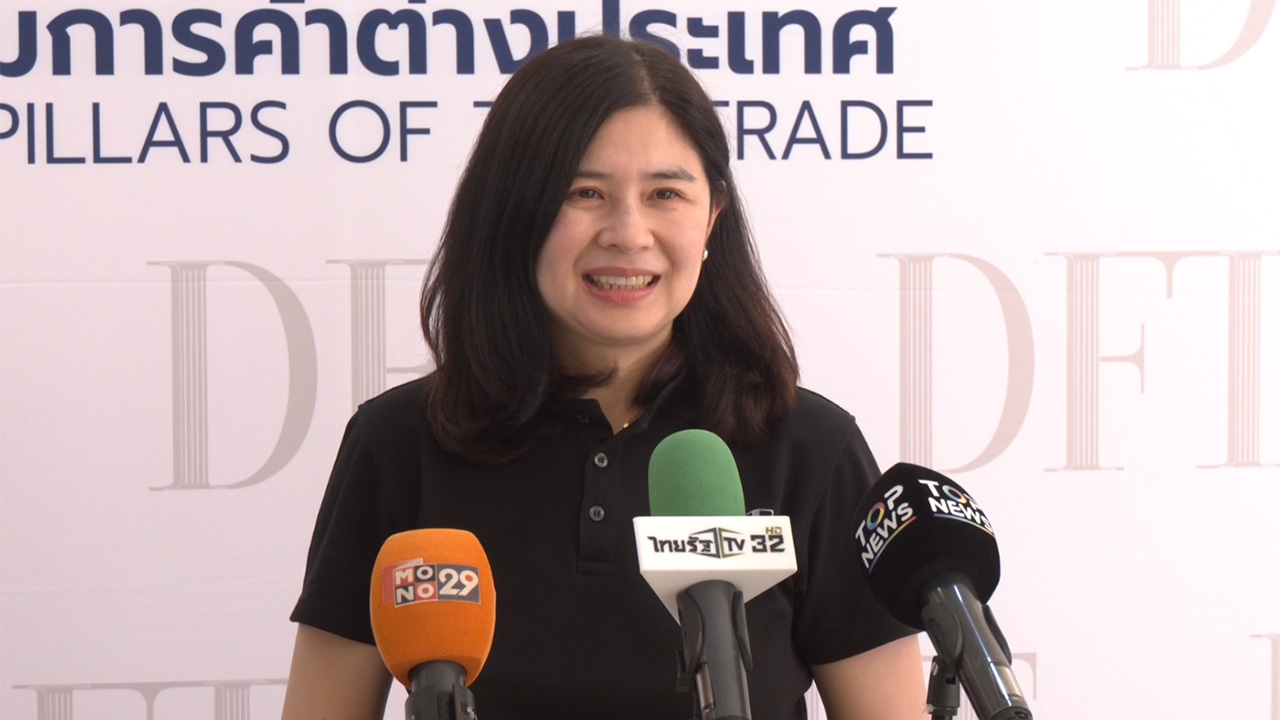
Ms. Arada Fuengthong, Director-General of the Department of Foreign Trade, provided an update on the U.S. investigation under Section 301 of U.S. trade law that could lead to import tariffs on Thai products. After Thailand submitted its defense on 15 Apr 2026 against USTR accusations of overcapacity in three industries—automotive, machinery, and rubber products—as well as importing goods from forced labor countries, the USTR will hold additional consultations with the Thai government on 13-14 May. The Department is preparing a delegation including Customs, the U.S. Affairs Division, the Board of Investment (BOI), and the Ministry of Labor to travel to the U.S. to present all facts.
The points to be emphasized further include reaffirming to the U.S. that Thailand does not have excess capacity in those three industries, and that Thai industries are part of the U.S. production supply chain. Confidence remains that Thailand’s defense is sound. However, concerns remain about accusations of importing goods from forced labor countries, as the U.S. is likely to apply strict criteria and may discriminate against certain countries. Doubts also exist about the process to prove whether the origin countries actually use forced labor.
"We have clearly stated that Thailand does not import goods made with forced labor. Furthermore, Thailand itself maintains labor standards aligned with international norms and consistent with U.S. labor laws. Thailand has continuously amended labor laws to raise standards, and most recently, the Ministry of Labor is drafting the Human Rights Due Diligence law to comprehensively verify human rights. This will enable tracing back the origin of goods throughout the supply chain to confirm no forced labor is used and to build confidence among international trading partners."
Ms. Arada added that the U.S. is expected to expedite the investigation to conclude before the 10% tariff under Section 122 expires on 24 Jul 2026, allowing immediate implementation of tariffs under Section 301. However, if Thailand fails to defend both issues, the U.S. may impose higher tariffs on imports from the three industries, potentially exceeding the current 19% retaliatory tariffs, which would definitely impact Thai SMEs. Regarding forced labor allegations, if the defense fails, it remains unclear which Thai products would face tariffs, as the accusations did not specify imported goods from forced labor countries, though garments and agricultural products are suspected.
"Whatever measures the U.S. takes against Thai products, the Ministry of Commerce will continue negotiations to seek tariff exemptions to mitigate impacts on exporters."
Read more news " State Policies "