

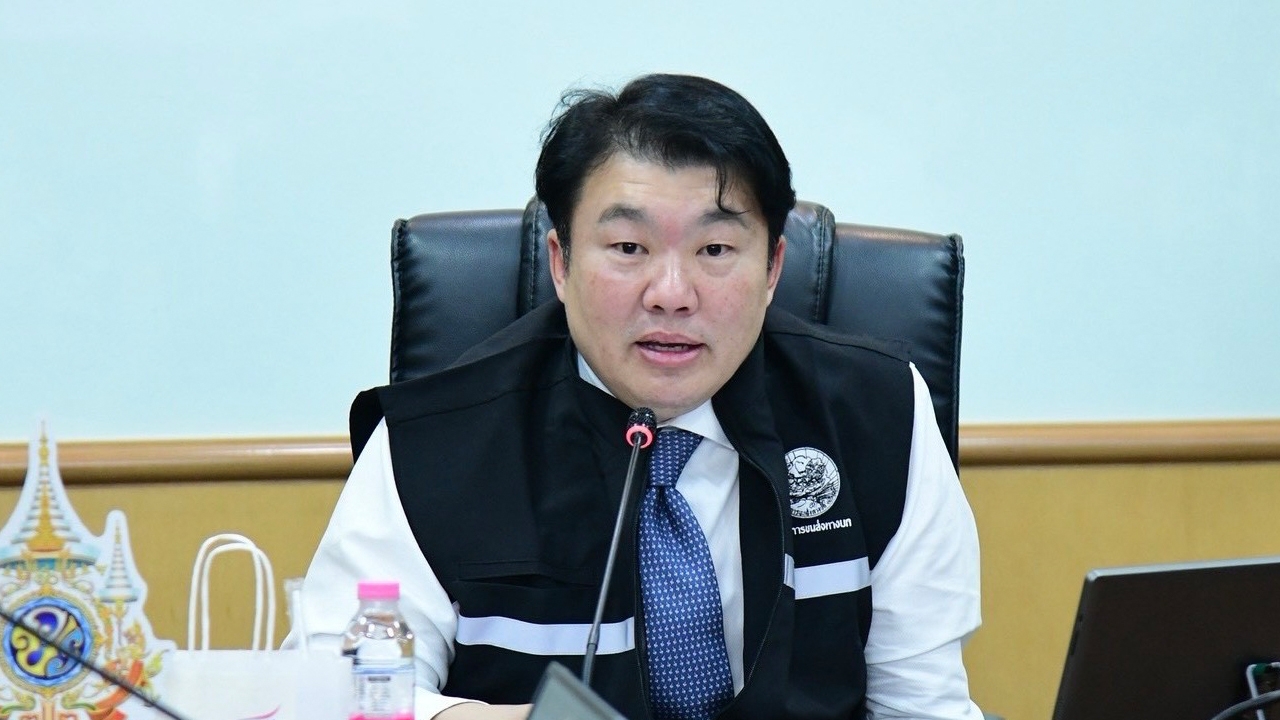
."Siripong"Vows! No relocation ofMo Chit 2 to another location for sure, and orders Bor-Kor-Sor to improve and create a connection system fromBor-Kor-Sor to Bang Sue Central Station, aiming for seamless passenger transfers.Plans to allocate over 60 million baht annually to subsidize fares for vulnerable groups, alongside a plan to convert 157 old buses to electric vehicles to reduce long-term costs. Opens the way for private operators to run routes and suggests discussions with the Department of Land Transport if interested in joining the “Old Bus for New Bus” program.

Mr.SiripongAngkasukrit, Deputy Minister of Transport, revealed after giving policy directives to the Transport Company Limited (Bor-Kor-Sor) that he firmly confirmedthere is no policy to relocate the Mo Chit 2 terminal from its current site. However, he wants a clear study on how to connect with the rail system first. Initially, options may include building connecting walkways, a light rail tram, or expanding existing buildings. All plans depend on study results and design before deciding on further action. The goal is to complete this connection within the 2028 fiscal year."The ministry's policy is
to makeroad and rail transport systems integrate seamlessly so that people canget off a bus and easily transfer to a train,or travel from a train and transfer to a bus more conveniently. There is no idea to relocate the terminal and build a new one entirely, but rather to see if the current site can be improved to its maximum efficiency."Mr.Siripongadded that he also instructed Bor-Kor-Sor to quickly improve bus quality and services, and study the feasibility of

replacing old buses with electric vehicles (EVs) to reduce long-term energy costs. Initially, about 157 buses may be replaced, but considerations include route suitability, charging stations, and business viability.Regarding whether Bor-Kor-Sor will participate in the “Old Bus for New Bus” program, if interested, it must first negotiate with the Department of Land Transport (DLT), then propose to the Ministry of Finance for approval. The program covers buses, trucks, taxis, minibuses, public motorcycles, and tuk-tuks to encourage operators to switch to clean energy vehicles.Mr.Siripongalso said he assigned Bor-Kor-Sor to study routes
that it does not wish to operate itself, so private operators can be invited to join through transparent bidding.

Currently, many private companies have shown interest in some routes. The ministry will review routes held by existing licensees; if licenses expire and there is no plan to improve service quality, reconsideration may be necessary. However, there is no intention to cancel any operators but to enhance service quality.Meanwhile, there is an idea to organize small passenger vehicles (vans and minibuses) to operate from the same area as Bor-Kor-Sor for easier management. This follows problems with overcharging fares. The DLT and Bor-Kor-Sor will jointly set uniform fare standards, require clear fare signage, and issue receipts to allow public monitoring.Additionally,Bor-Kor-Sor, which faces an average annual loss of 140 million baht, has a policy to find ways to increase revenue. Bor-Kor-Sor reportedplans to expand parcel and freight transport services using its buses, generating over 200 million baht annually. This will be another revenue stream.However, it must be understood that part of Bor-Kor-Sor’s lossescomes from subsidies it must provide for vulnerable groups' fares, totaling over 60 million baht annually.Therefore, he intends to find ways to allocate budget to support Bor-Kor-Sor to reduce losses,as this service is a public benefit. The subsidy budget might start in 2028 fiscal year.
."

Read more about thegovernment policy"