

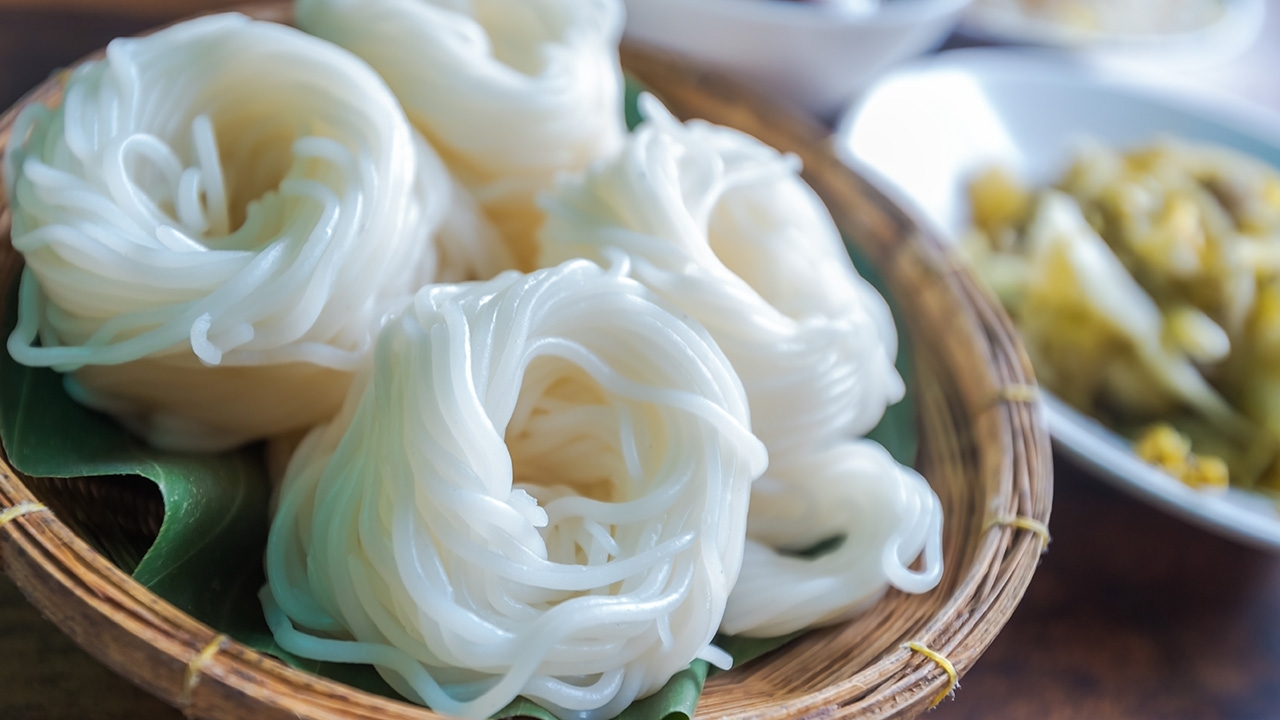
The Ministry of Digital Economy (DE) warns against sharing distorted news claiming Cambodia's rights to "Khanom Jeen" as an ancient Khmer local dish The Fine Arts Department clarifies clearly it is a shared regional culture with similarities, not the exclusive heritage of any nation
Mr. Wetang Puangsap, spokesperson for the Ministry of Digital Economy and Society (DE), permanent official, discussed monitoring results and reports of fake news by Thailand’s Anti-Fake News Center (AFNC) under the policy to prevent and resolve security and social threat issues of Minister Chaiyachon Chidchob, DE Minister, emphasizing raising awareness and vigilance against cybercrime, fake news, and misinformation.

On 6 May 2026, AFNC reviewed a total of 160,423 messages, with 3,201 requiring verification. The majority of leads came from social listening with 3,198 messages and 3 from Line Official. Twenty-five cases required verification, with 14 verified by relevant agencies. Among these, 7 were highly publicized: one true, five fake, and one distorted news story, namely
Rank 1: Distorted news claiming Cambodia declared Khanom Jeen as an ancient Khmer local dish
Rank 2: True news about the Ministry of Culture receiving a 3,000-year-old artifact from the Kud Chim archaeological site
Rank 3: Fake news about BAAC offering online loans via TikTok account good.bye3514
Rank 4: Fake news claiming tooth decay is caused by insects and treated by fumigation
Rank 5: Fake news about home-based coffee bag folding jobs promoted on Facebook page JobStation TH
Rank 6: Fake news about driving license services offered on Facebook page Learn to drive Kru Tiw Prongsai, claimed verifiable
Rank 7: Fake news about illegal daily purchase of one ton of Thai durian for sale in Cambodia
For Rank 1, the distorted news claiming "Cambodia declares Khanom Jeen as an ancient Khmer local dish," the Ministry of DE, together with the Fine Arts Department, Ministry of Culture, confirmed it as "distorted news." The claim that the dish originated solely from Cambodia lacks clear academic evidence.


Historical food data shows that "Khanom Jeen" in Thailand is linked to the Mon ethnic group. Comparative studies find that fermented rice noodle dishes appear in several countries such as Thailand, Cambodia, Vietnam, and Myanmar, sharing similarities in ingredients and production techniques. This reflects a "Shared Culinary Heritage" born from past cultural exchanges, rather than exclusive heritage of any single nation.
Cambodia has a local dish called "Nom Banh Chok," a fermented rice noodle similar to Thailand's Khanom Jeen. It is common in daily life and culturally significant in Cambodia. Cambodia submitted "Nom Banh Chok" to UNESCO's Tentative List, but the proposal was not approved for years and is not currently listed. The main reason analyzed is the dish’s status as a "shared regional culture," lacking distinct national uniqueness.

The Ministry of DE expresses concern for public awareness of fake news spreading on online and social media. Without vigilance, sharing false information can mislead, cause misunderstandings, damage property or personal data, and broadly impact society. The public is urged to trust and share only useful information from official sources and verify facts or website links carefully.
If people encounter suspicious or distorted information, they can report leads and verify fake news by calling hotline 1111 ext. 87 (24 hours) or via the websitewww.antifakenewscenter.comLine ID: @antifakenewscenter Facebook:Anti-Fake News Center ThailandX (Twitter):@AFNCThailandTikTok:@antifakenewscenterInstagram:afnc_thailand/
Read more news " Government Policy " here