

"Sanphet"has assigned SRTA to reform Grandfather's land assets across Thailand, expediting income generation from 39,000 rai valued at over 360 billion baht into"economic assets" for growth.The target for 2026 is to generate more than 3.335 billion baht in revenue for SRT, aiming to raise asset returns from 1% to 4% within this administration. The plan includes developing 10 high-potential plots totaling more than 1,200 rai, enabling transparent private sector investment, shifting the model so the state becomes a "building tenant" to reduce budget burdens, and promoting the 223 billion baht Bang Sue development as a new national economic hub.
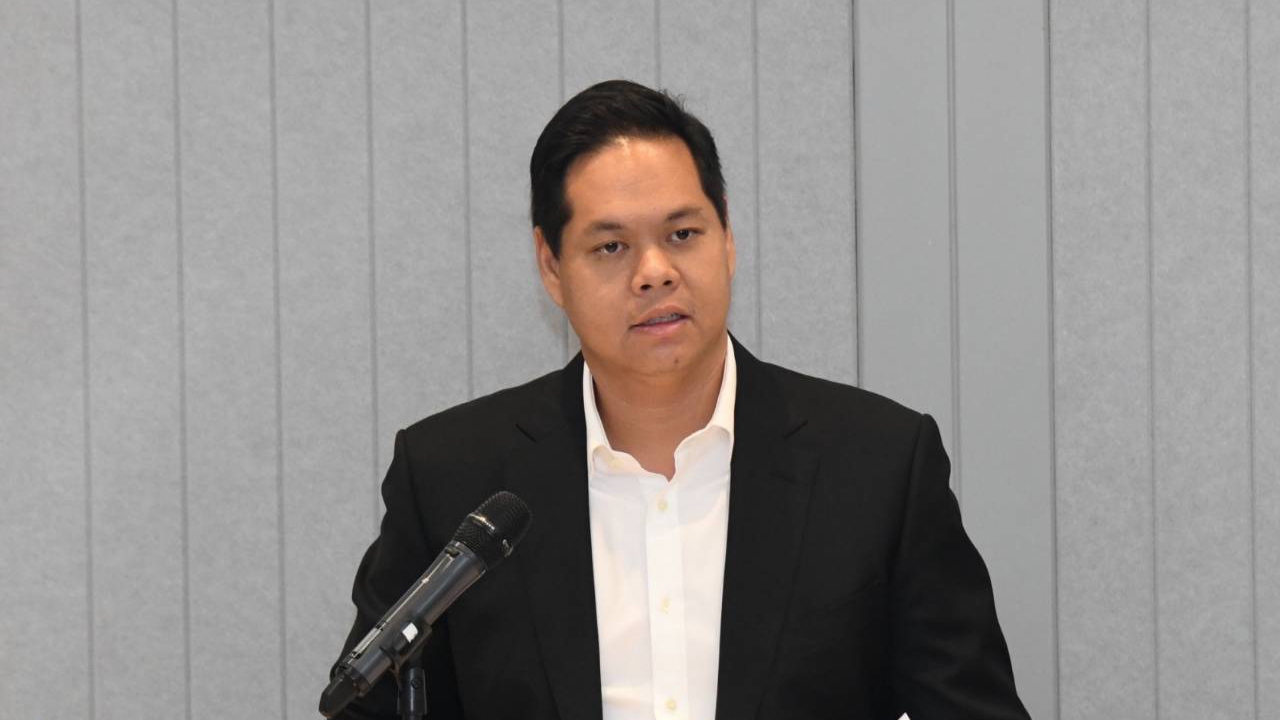
Mr. Sanphet Boonyamanee, Deputy Minister of Transport, revealed after delivering policy guidance to SRT Asset Company Limited(SRTA), a subsidiaryof the State Railway of Thailand(SRT), regarding asset management,that currently SRTA has received over 12,000 lease contracts transferred from SRT, representing large-scale national assets covering commercial areas, stations, and related properties. Of these, over 92% of the contracts have expired, reflecting the urgent mission to organize contracts, renew leases, and restructure management for greater efficiency and modernization.

SRTA is currently accelerating the development of a contract database system, revenue management, and digital systems to standardize management nationwide. Recently, it has begun comprehensive lease collection and contract oversight, improving revenue tracking efficiency and significantly reducing long-standing contract backlogs. Our key goal is to transform SRT’s assets from undeveloped land into economic assets that generate continuous long-term income and are vital tools for restoring SRT’s financial health.
Mr. Sanphet added that fiscal year 2026 will be the first year SRTA manages these assets, targeting total revenue delivery to SRT of approximately 3.335 billion baht. This includes about 2.068 billion baht from managing existing lease contracts and around 1.266 billion baht from subleasing and new project development, marking a significant shift from traditional contract management to proactive real estate development that creates long-term added value.
"When consideringthe asset structure, SRT owns over 39,000 rai of non-core business land nationwide valued at about 360 billion baht, yet only about 9% has been utilized, representinguntapped potentialthat can be leveraged to generate income and drive the economysignificantly."

Mr. Sanphet continued that the Ministry of Transport has directed SRTA to promptly develop high-potential land in suitable forms such as mixed-use projects, office buildings, shopping centers, hotels, and transit-oriented development (TOD) around railway stations to concretely link rail systems with urban economies and increase the long-term economic value of these areas.
In the initial phase, SRTA is accelerating development on 10 prime plots totaling over 1,200 rai in Bangkok and other regions. Key areas with clear progress include Bang Sue (Plot E), where studies are underway for a new Ministry of Transport building alongside mixed-use smart city development, and the Km.11 Railway Industrial Estate (Plot G), which has attracted private investment interest.
Bang Sue, regarded asthe heartof the country’s rail system, has a long-term 14-year development plan valued at over 223 billion baht. This Smart City and TOD project spans nine plots (A-I) aiming to create a new national economic center encompassing business, residential, and fully integrated transportation systems.

There is also a concept to shift investment in the new Ministry of Transport building from using government budget to having SRTA invest and develop, with the Ministry becoming atenant, which willreduce short-term state budget burdens and enhance long-term revenue potential from assets.
Regarding commercial land auction plans, Mr. Sanphet stated that in 2026, private sector participation will gradually open in many high-potential areas. Ready projects in the near term include hotel development near Makkasan Station and regional sites under Terms of Reference (TOR) preparation for fair and transparent private competition. He emphasized that all projects must be quality investments generating income, employment, and local economic benefits, not just short-term returns.
However, large projects, especially strategic lands in Bangkok, may require more preparation time and study. Thus, during this fiscal year, auctions will focus on medium and smaller plots that can proceed more quickly, while larger plots are expected to become clearer and open for bidding next year.
Mr. Sanphet concluded that the Ministry of Transport aims to raise SRT’s asset management returns from the current approximately 1% of total asset value to 3-4% within this government. This will be achieved through large commercial projects and transit-oriented development around railway stations that will progressively generate continuous revenue.

Ms. Traithip Siwakritkul, Chairperson of the SRTA Board, said that by fiscal year 2026, SRTA plans to finalize contracts for high-potential land such as over 1 rai of land and real estate in the Makkasan area to be developed into a hotel, currently preparing for private investment auctions. This includes RCA land and the Glasshouse building on Ratchadaphisek Road, which is under lease negotiation. For 2027, SRTA plans to push forward with 10 large plots transferred from SRT, most of which are under feasibility study.
It is expected that in 2027, SRTA will pilot development of land in the Phahonyothin area at the new Bangkok Central Station (Aphiwat), with Plot A being studied jointly with the Transport Company Limited and the Ministry of Transport to design a transportation hub, currently awaiting study results from the Transport Company. SRTA will prepare the area accordingly. Plot E will be studied to accommodate the new Ministry of Transport building and a mixed-use commercial project. Additionally, clear development plans are expected for Hat Yai railway station land, 160 rai of riverfront land, Hua Hin golf course land, and 100 rai of Tanun land.
Read more news " Government Policy " updates