

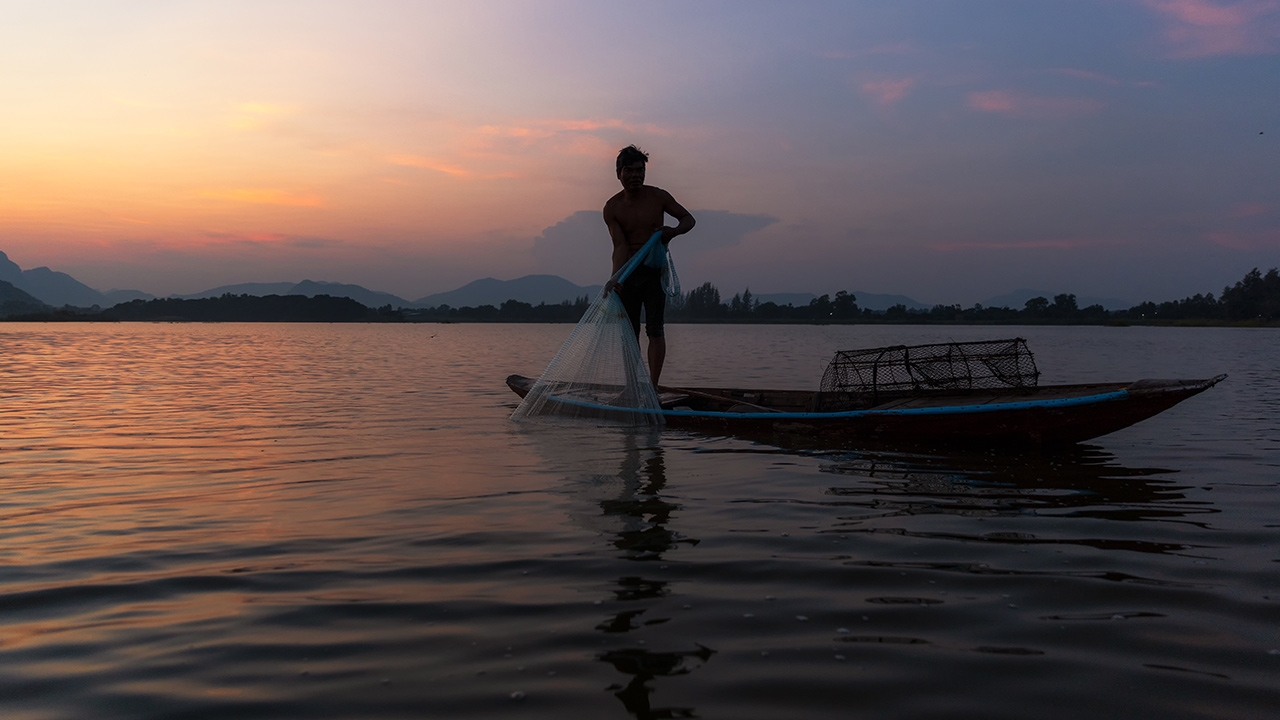
The Fisheries Department has announced the start of the “Red Water Season 2026” effective 16 May, prohibiting the capture of freshwater aquatic animals during their spawning season. The country is divided into three zones, with violators facing fines up to 50,000 baht. Check here for the fishing gear permitted for use.
Ms. Thitiporn Laoprasert, Director-General of the Fisheries Department, stated that the Fisheries Department has continuously implemented management measures during the spawning season of freshwater aquatic animals, known as the “Red Water Season,” since 1964 to protect and conserve these species, allowing them to reproduce. The department regularly monitors and evaluates scientific data to adjust measures appropriately, based on the biology of freshwater animals, average rainfall, water flow, and current fisheries data. Most recently, in 2025, the department issued a new announcement granting provincial fisheries committees authority to designate areas, tools, fishing methods, and conditions tailored to local circumstances, effective for five years (16 May 2025 to 30 November 2029). This aims to improve accuracy in scientific monitoring and evaluation, as long-term research and data collection reveal trends and real impacts, leading to stronger, sustainable fisheries resource management policies.

An assessment of the 2025 measures collected samples of mature female fish with fully developed reproductive organs, covering 155 species from 60 water sources across 40 provinces and 18 river basins nationwide. The study evaluated key spawning periods, their relation to rainfall, and the effectiveness of the measures. It found freshwater fish spawn predominantly from late May to late August, peaking in late July when 124 species were entering spawning phases. The intensity of spawning remained high from late April to late September, indicating the spawning season extends beyond early rainy season through to its end. Additionally, data from the Meteorological Department's April 2026 monitoring of El Niño/La Niña phenomena forecasts normal ENSO conditions continuing through April to June, shifting to El Niño conditions from May to July and persisting until late 2026. Monsoon influences in early rainy season may affect overall rainfall and water flow nationwide. These data indicate that the current measures should continue focusing on protecting freshwater aquatic animals during early to mid-rainy season.
Therefore, the Fisheries Department maintains the existing designated areas, timeframes, and permitted fishing gear, dividing the country into three periods according to ecosystem suitability. Fishing is prohibited in rivers, canals, streams, creeks, ponds, reservoirs, dams, swamps, and all tributaries, including flooded forests and lands naturally connected to these areas, whether public or private property, during the specified times and locations.

Permitted fishing gear, methods, and conditions are as follows:
1. All types of hooks, except for trotlines or gang hooks used by jerking or similar methods.
2. Traps, swings, scoops, lift nets, or fish traps with openings no wider than 2 meters, and not fishing by corralling or driving aquatic animals with three or more gear used simultaneously.
3. Fish cages, spears, and forks.
4. Fish traps such as cylindrical traps, pot traps, or similar.
5. Nets with a depth not exceeding 6 fathoms (3 meters).
If a provincial fisheries committee announces stricter conservation measures in any area, prohibiting the use of any of the above tools, methods, or conditions, those stricter rules shall apply.
Fishing for academic study, research, or government projects requires written permission from the Director-General of the Fisheries Department or a designated representative, or fishing to rescue aquatic animals by Fisheries Department officials or under their supervision is allowed.
Provincial fisheries committees may issue additional announcements to designate areas, gear, methods, and fishing conditions differently, upon approval from the Director-General of the Fisheries Department.
Anyone violating the announcement under Section 70 of the Fisheries Act B.E. 2558 (2015), as amended, faces fines from 5,000 to 50,000 baht or five times the value of the aquatic animals caught.
In closing, the Director-General thanked all fishermen for their cooperation in complying with the law and recognizing the importance of participating in managing aquatic resources during the Red Water Season by refraining from using gear harmful to aquatic life. This allows aquatic animals to reproduce and grow naturally. The Fisheries Department is ready to collaborate with all related sectors under the concept “Fisheries Connect for Sustainability” to restore and replenish the productivity of freshwater ecosystems nationwide, while promoting balanced and sustainable use of aquatic resources to ensure livelihood security and improve the quality of life for Thai fishermen.
Read more news \ Government policy \