

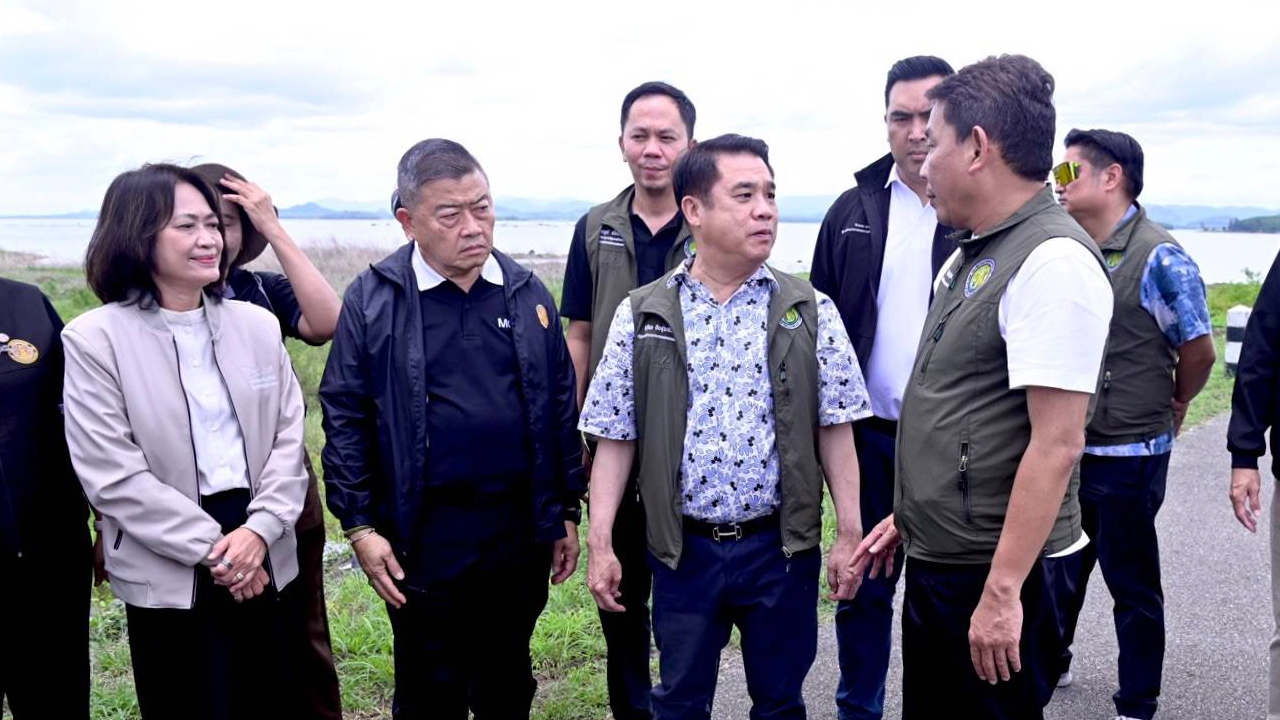
Minister Suriya has instructed the Royal Irrigation Department and all relevant agencies to proactively manage water resources to prepare for El Niño, implementing a five-point plan to comprehensively manage water-related risks.
Suriya Jungrungreangkit, Minister of Agriculture and Cooperatives, revealed after visiting the Phakdi Ramphai Drainage Canal Project under the royal initiative in Mueang District, Chanthaburi Province, and receiving a briefing on water conditions and management in the Eastern Economic Corridor (EEC) at Prasae Reservoir, Wang Chan District, Rayong Province, that Thailand faces a risk of below-normal rainfall from mid-2026 through 2027 due to weather fluctuations and El Niño. He ordered the Royal Irrigation Department and all related agencies to immediately implement proactive water management, covering storage, allocation, and efficient use to support farmers, the public, and industry. For the EEC area, water pumping to link canals and reservoirs must meet demand. Regarding this year’s rainy season and dry spells, he urged agencies to closely monitor rainfall and water situations and prepare machinery and equipment to assist farmers and citizens promptly.

Minister Suriya added that in case of flooding, all agencies must protect critical areas such as hospitals, temples, historical sites, and key provincial and community locations to minimize damage and impact. If dry spells occur, the Royal Irrigation Department is tasked with providing water trucks and pumps to assist affected citizens and farmers immediately.
"Water is not only a production input but also fundamental infrastructure for Thailand’s economy. The EEC area must ensure water security alongside energy and logistics to support investment," Minister Suriya said.

He affirmed that the government does not view the situation as a crisis but is "accelerating preparedness" to manage all risks through five measures: 1) Accelerate water storage in all areas, including reservoirs, community water sources, and medium- to small-scale distribution systems, to reserve water for dry spells or drought seasons; 2) Manage water according to priority and spatial data by integrating with energy, industry, and local administrative agencies; 3) Promote more efficient water use, especially in agriculture, through precise irrigation systems, soil analysis, planting plans, and climate-smart agriculture technologies; 4) Closely monitor and forecast water situations and crop yields to provide advance warnings and information to farmers and businesses, reducing damage and market volatility; and 5) Support increasing "water productivity," meaning each unit of water should generate greater output, income, and added value over time. Thailand must shift from short-term drought solutions to strategic water management to ensure food security, economic stability, and long-term national investment.

"I believe that if all sectors cooperate using scientific data and efficient management, Thailand can overcome this climate variability and turn risks into opportunities to strengthen agriculture and the economy," Minister Suriya said.
, State Policy . Additional