

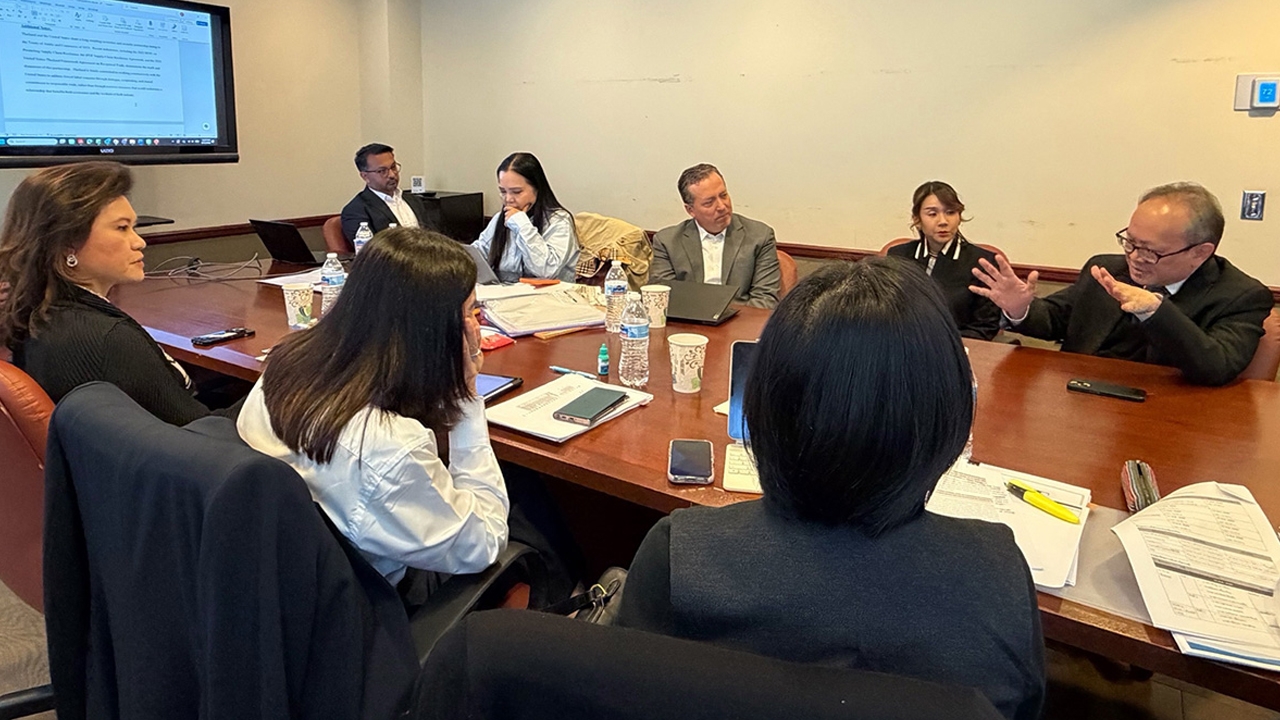
The Ministry of Commerce led Thailand’s delegation to explain to the United States its hope to clear allegations of forced labor use and excess production capacity. It emphasized clearly that Thailand’s supply chains are free from forced labor and denied the excess production capacity accusations, while reaffirming Thailand’s commitment to a free trade system and its role as an important U.S. trade ally that has generated long-standing mutual benefits.
Arada Fuengthong, Director-General of the Department of Foreign Trade, revealed that the Thai delegation, led by Assistant Minister of Commerce Kirida Paopijit, along with related agencies including the Department of Foreign Trade, Ministry of Labor, Ministry of Foreign Affairs, Customs Department, and the Board of Investment (BOI), held technical-level talks with the U.S. Trade Representative (USTR) on 13–14 May 2026. The discussions aimed to clarify facts regarding U.S. allegations about forced labor use and excess production capacity in the automotive and parts, rubber products, machinery, and electronics industries under an investigation per Section 301 of the Trade Act of 1974.

The Thai side emphasized that Thailand’s product supply chains are free from forced labor, with strict enforcement of labor laws. Thai exports have been inspected and certified by U.S. buyers and international private organizations as meeting required standards and free from forced labor. Additionally, Thailand is drafting Human Rights Due Diligence (HRDD) legislation to elevate supply chain inspection standards for greater efficiency, which will help build long-term confidence among trade partners. Both sides agreed on the importance of close cooperation to prevent forced labor throughout supply chains.
Regarding concerns over excess production capacity, which the U.S. fears might lead Thailand to increase exports to the U.S. and cause a significant trade deficit, Thailand affirmed its adherence to free trade and market mechanisms. Production and investment decisions are made by the private sector based on market conditions and business opportunities. The government does not set production targets but facilitates and oversees fair and transparent competition. It also confirmed that Thailand does not have excess production capacity in the industries under scrutiny.

On concerns about transshipment, the Department of Foreign Trade stressed its close cooperation with U.S. Customs in monitoring and preventing false claims of Thai origin for exports to the U.S. Measures to upgrade certification standards for the origin of goods exported to the U.S. have also been enhanced to ensure Thai products have undergone sufficient processing according to U.S. regulations.
“The discussions were conducted in a constructive and friendly atmosphere. The Thai side emphasized that Thailand and the U.S. are longstanding trade partners with mutual benefits. Thailand plays a vital role in the U.S. supply chain, and Thai products are in demand by U.S. consumers, so they are not a trade threat. Thailand also reaffirmed its readiness to cooperate closely with the U.S. to ensure bilateral trade proceeds transparently, fairly, and sustainably,” the delegation stated.
." State Policy " Additional