

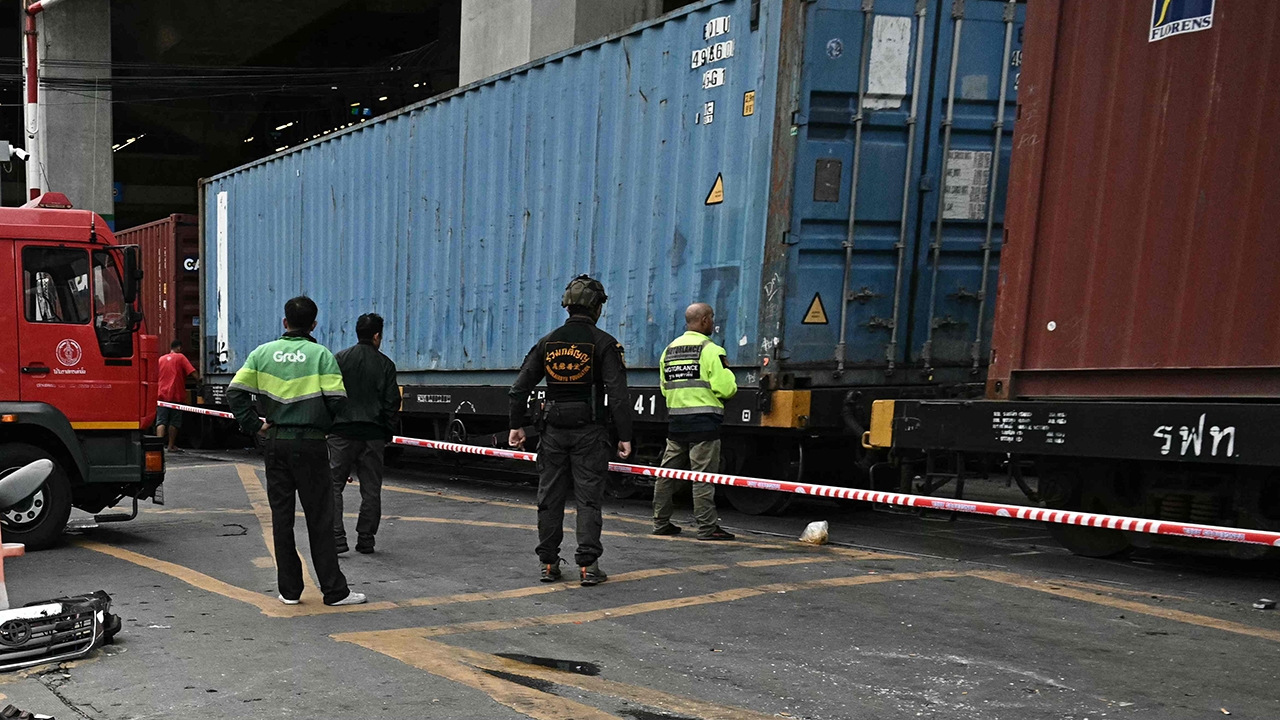
The chairman of the fact-finding investigation stated that 15 days are requested to summarize all facts and report to "Phiphat." However, investigation details cannot be disclosed as they affect the legal case.
21 May 2026 GMT+7 Mr. Jirapong Thepphitak, Deputy Permanent Secretary of the Ministry of Transport, acting as chairman of the fact-finding committee investigating the collision between the train and bus route 206 at the Makkasan railway crossing, with participation from the Department of Rail Transport, Department of Land Transport, and Metropolitan Police Bureau in the inquiry.
, , Mr. Jirapong said that this meeting marks the first step in the fact-finding investigation to gather information for reporting to senior management at the Ministry of Transport and to use the data to learn safety lessons for the future. The investigation framework allows 30 days, but it is expected to complete details within 15 days, by 2 June 2026, and present the findings to Minister of Transport Phiphat Ratchakitprakarn. However, the committee cannot yet disclose details or assign fault, as these involve the train driver, crossing gate operator, railway signal authority, and train technicians, all of which relate to the police case file.

At the press briefing, the meeting unveiled footage from four CCTV angles showing the full sequence of events, including views of the bus side, railway crossing, and surrounding traffic conditions. Key events identified from the footage are as follows:
15:33:22 – Bus route 206 passes the first railway crossing gate.
15:33:27 – The bus halts and becomes stuck on the railway tracks.
15:33:31 – Signal systems and crossing gates begin to activate.
The CCTV footage shows that the road officer tried pressing the button to lower the crossing gate, but could not because vehicles were blocking it. The officer then used a radio to alert and waved a red flag to signal the train to stop. However, the train continued into the crossing and ultimately collided with the bus stuck on the tracks.
Regarding Pol. Col. Kampol Rattanaprateep, Deputy Commissioner of Metropolitan Police Division 1, said that efforts are underway to ease traffic at the Asok crossing by implementing immediate measures at the Asok-Kamphaeng Phet 7 intersection, an area with over 3,000 vehicles per hour during rush hour. They are testing lane adjustments to reduce vehicle conflicts at the crossing, deploying traffic police throughout peak times to prevent vehicles from entering the railway tracks illegally.
Meanwhile, Bangkok Metropolitan Administration has begun installing retractable barriers and painted no-stopping zones in front of the railway crossing. They are preparing to implement an automatic traffic signal system linked with the Asok-Phetchaburi intersection to prevent vehicle buildup at the crossing. This crossing is only about 120 meters from the Asok-Phetchaburi intersection, requiring close coordination of traffic signals. In the future, a continuous signal control system will be used to reduce reliance on stationed personnel.
Regarding inquiries about whether, during the time vehicles were stopped on the railway tracks and traffic could not be cleared, the State Railway of Thailand (SRT) at the incident site coordinated with nearby police posts to request assistance in traffic management before the train passed, the SRT confirmed that no such coordination was made to request police help in clearing traffic.
Read more news " State policy "