

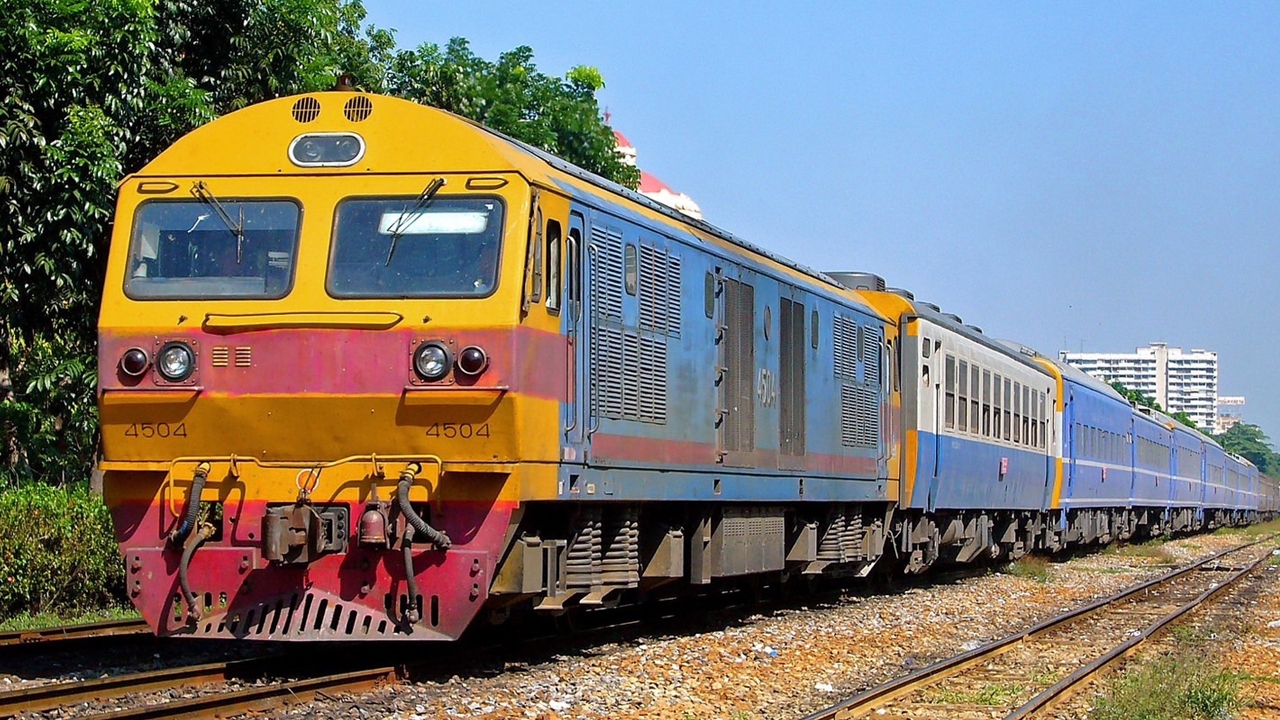
“Piyapong”,kicks off the first State Railway board meeting, pushing to unlock railway projects,"double-track and high-speed rail,"raising safety standards at railway crossings,across the country to reduce accidents,and improve service efficiency. Moves ahead to generate income from land and assets, develops feeder links connecting rail networks, and orders a review of plans to increase staffing by 2,800 positions to support future maintenance and rail system expansion.

Mr. Piyapong Jiwattanakulpaisan, Director-General of the Department of Highways (DOH), serving as chairman of the State Railway of Thailand (SRT) board, revealed after the first SRT board meeting that he provided operational guidance and exchanged views with board members and executives, aiming to push the SRT to develop infrastructure and provideservices focused on safety, includingincreasing future revenue generation.
The meeting discussed progress on major SRT construction projects, many of which face problems and obstacles, especially the double-track and high-speed rail projects, which still have unresolved issues. It was agreed that all parties must jointly analyze and carefully distinguish problems in each project to find ways to unlock obstacles causing delays, because ongoing setbacks would prevent progress on other crucial steps as planned.
Additionally, the board emphasized safety by raising standards comprehensively, alongside improving service quality and efficiency. Following the recent train collision with a passenger vehicle,the meetingreviewed safety measures at approximately 2,600 railway crossings nationwide. About 600 crossings have barriers and protection systems, while more than 2,000 remain at grade-level with roads.
Mr. Piyapongalso addressedenhancing SRT's revenue-generating capacity, stating that asset and land management must maximize benefits, especially land around stations and nearby areas, as well as other properties. This is a plan SRT already pursues but should expedite to achieve tangible results. There is also development of rail tourism via special trains and various tour routes to boost income, alongside preparations for the Open Access policy, which legally allows private sector access to rail infrastructure in the future. Therefore, system and infrastructure development must keep pace with these changes.
Regarding development of connecting transport or feeders, it was seen as another critical issue requiring urgent action, because building stations alone is insufficient without convenient connecting systems for passengers to access stations. Coordination with agencies under the Ministry of Transport, includingthe Department of Highways (DOH), the Department of Rural Roads (DRR), local administrative organizations,and public transport providers is needed to develop infrastructure, parking areas, facilities, and connecting transport systems aligned with public travel needs. For freight transport, especially in double-track projects both existing and new lines, planning efficient logistics linkages is essential to fully utilize the rail network's potential.
Mr. Piyapong added that the shortage of SRT staff is a key organizational challenge. The board discussed plans to request 2,800 additional positions, requiring SRT to prepare detailed data and justifications. As a state enterprise with financial burdens, any personnel increase must clearly explain necessity, cost impact, and benefits to operational efficiency.The SRT board proposedthat SRT prepare detailed breakdowns by department on current workforce needs per task and identify future necessary roles, those that could be replaced by technology, or where private sector involvement may increase. This ensures workforce planning aligns with the organization's long-term development direction.
Mr. Piyapong stated that SRT must demonstrate that staff involved in core future tasks remain essential, such as track maintenance, signaling system care, and infrastructure repairs. These roles will become more critical as private operators use the rail network, since poor infrastructure standards could undermine user confidence.
Regarding the request for additional staff, SRT will need to seek Cabinet approval review, currently studying financial impacts and expecting conclusions by June. The number of 2,800 additional positions remains under detailed consideration.
Read more news " government policy " here