

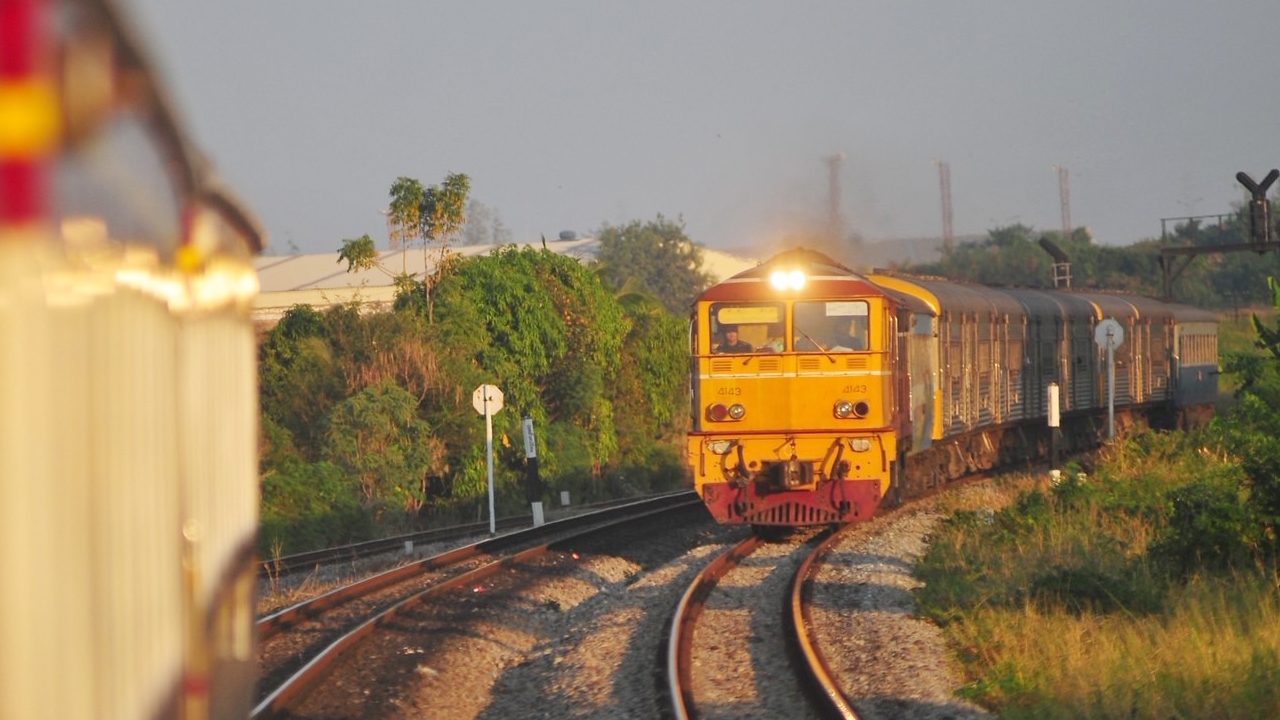
The State Railway of Thailand (SRT) board approved an 18 billion baht loan to boost liquidity for fiscal year 2027, aiming to maintain financial stability amid heavy maintenance costs for the Red Line commuter train. The board also set a target to increase income from asset management to 5.2 billion baht, while passenger service revenues are expected to continue growing in fiscal year 2027.
Mr. Anan Phonnimdaeng, Deputy Governor of the State Railway of Thailand (SRT) and Acting Governor, revealed that the meetingof the board of directors (board)of the SRT, chaired by Mr. Piyapong Chiwattanakulpaisan, Director-General of the Department of Highways, who serves as the board chairman,presided over the meeting.The meeting also approved a borrowing framework to strengthen the SRT's financial liquidity for fiscal year 2027, amounting to 18 billion baht, which is at the same level as the previous fiscal year. This is due to the expected increase in organizational expenses, especially the maintenance costs of the suburban Red Line electric train system, which is entering a major maintenance cycle as scheduled.
Currently, the Red Line train generates operational revenue of about 300 million baht per year, while expenses run into several billion baht, resulting in an annual loss of nearly 700 million baht. However, the SRT aims to increase income from asset management, an important revenue source, from the current approximately 4.7 billion baht to 5.2 billion baht. This is intended to help stabilize finances and reduce the need for additional borrowing in the future.
Additionally, the meeting acknowledged the development of a cost accounting system through the Financial Management Information System (FMIS), which will serve as a central database for calculating the SRT's service costs for both passenger and freight transport. This data will be forwarded to the Department of Rail Transport to assist in setting fare and freight rate caps in the future, ensuring that service rates are appropriate and more accurately reflect true costs.
Mr. Anan added that for fiscal year 2027, the SRT expects passenger transport revenues of approximately 4.036 billion baht, an increase of 109 million baht from the previous year, reflecting a continued growth trend in public travel. Meanwhile, freight transport revenues are projected to decline to 2.328 billion baht due to changes in transport modes for certain goods, such as cement and fuel, which are increasingly transported by alternative methods.
However, theincome from asset management is expected to rise to 5.2 billion baht, following plans for area development and commercial asset management, which will be key factors in strengthening the SRT's financial stability and supporting the long-term development of the country's rail system.
Read more news " Government Policies " here.