

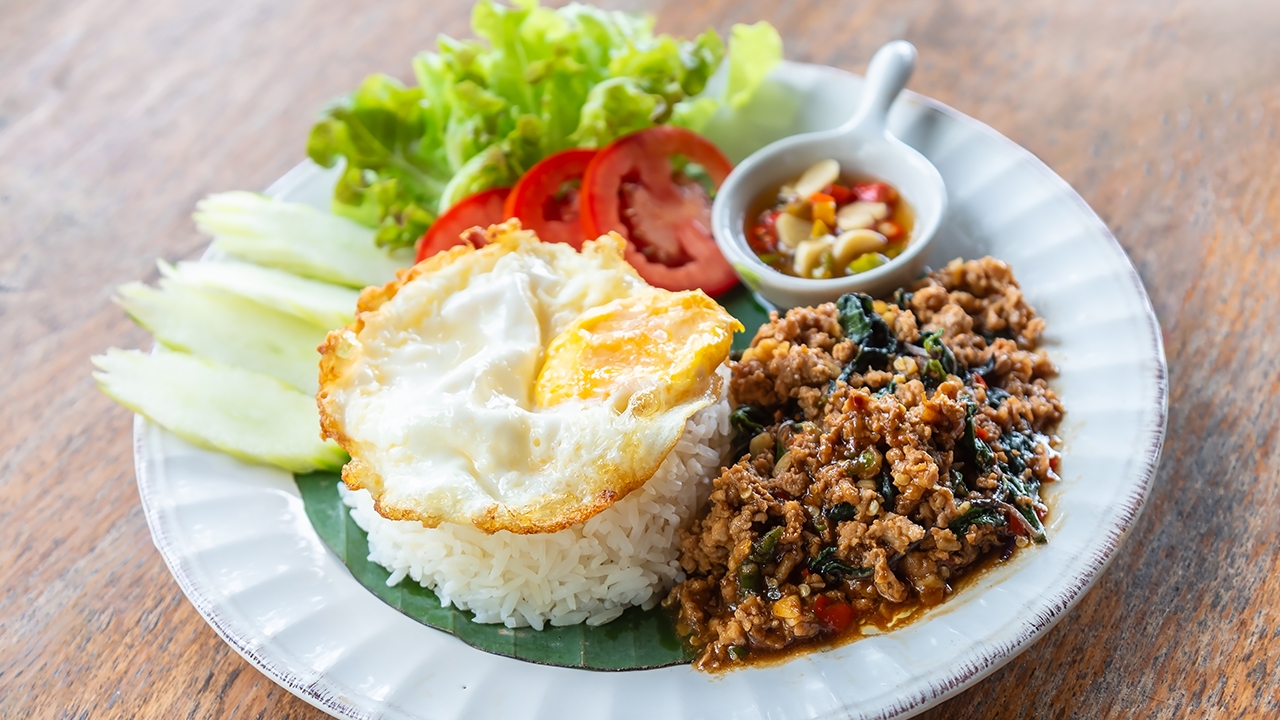
The Trade Policy Office revealed that inflation in May 2026 remained high at 2.79%, a result of the Middle East conflict pushing up fuel and single-dish meal prices. A survey covering prices of seven single-dish meals, totaling 1,525 samples, found that prices increased in 316 samples.The highest increasewas 10 baht per dish, rising from 40-50 baht to 60 baht. Meanwhile, the "Thai Chua Thai Plus" program caused only a slight increase in inflation.

Mr. Nanthapong Jiralertpong, Director of the Trade Policy and Strategy Office, stated that the general consumer price index (CPI) for Thailand in May 2026 was 103.20, compared to 100.40 in May 2025, resulting in a general inflation rate of 2.79%. Compared to April 2026, it rose 0.17%, and the average for January to May 2026 versus the same period in 2025 increased by 0.82%. Core inflation (which excludes fresh food and energy) rose 0.92% compared to May 2025, accelerating from April's increase of 0.83%.
The main reasons for the 2.79% inflation increase in May 2026 compared to May 2025 include persistently high domestic fuel prices due to the prolonged Middle East conflict, which also pushed up public transport fares. Additionally, ready-to-eat food prices rose as businesses passed on higher costs to consumers, significantly increasing living costs. Fresh vegetable prices were also higher than the previous year. Other goods and services had minimal impact on overall inflation.

The outlook for June 2026 is expected to remain positive due to rising domestic retail fuel prices following global crude oil price increases caused by ongoing Middle East tensions. Ready-to-eat food prices are gradually increasing as businesses pass on higher costs, with prices typically hard to reduce once raised. Public transport fares have increased alongside fuel costs. Key fresh vegetable prices are expected to stay higher than last year. Factors easing inflation include lower electricity costs from May to August compared to the previous year and decreased meat prices due to sufficient market supply. The general inflation rate for this year is forecasted to be between 1.5% and 2.5%, with a midpoint of 2.0%.

The "Thai Chua Thai Plus" program, aimed at stimulating spending and boosting consumer confidence, has caused only a slight increase in inflation because it did not lead to higher product prices. Regardless of the program's presence, some productshave already beenincreasing in price, especially single-dish meals. The Trade Policy Office surveyed prices of seven single-dish meal types—fried rice, pad see ew/stir-fried noodles, red pork rice, chicken rice, papaya salad, noodles, and stir-fried basil rice—across the country from April to May this year, covering 1,525 samples, and found that prices rose in 316 samples, or 20.72%. The group with the highest price increase was those priced between 40-50 baht, which rose by as much as 10 baht to 50-60 baht per dish. Once prices rise, they are difficult to reduce, thus increasing living costs.(stir-fried basil rice)across the country from April to May this year, covering 1,525 samples, and found that prices rose in 316 samples, or 20.72%. The group with the highest price increase was those priced between 40-50 baht, which rose by as much as 10 baht to 50-60 baht per dish. Once prices rise, they are difficult to reduce, thus increasing living costs.

Read more news on " government policy " here.