

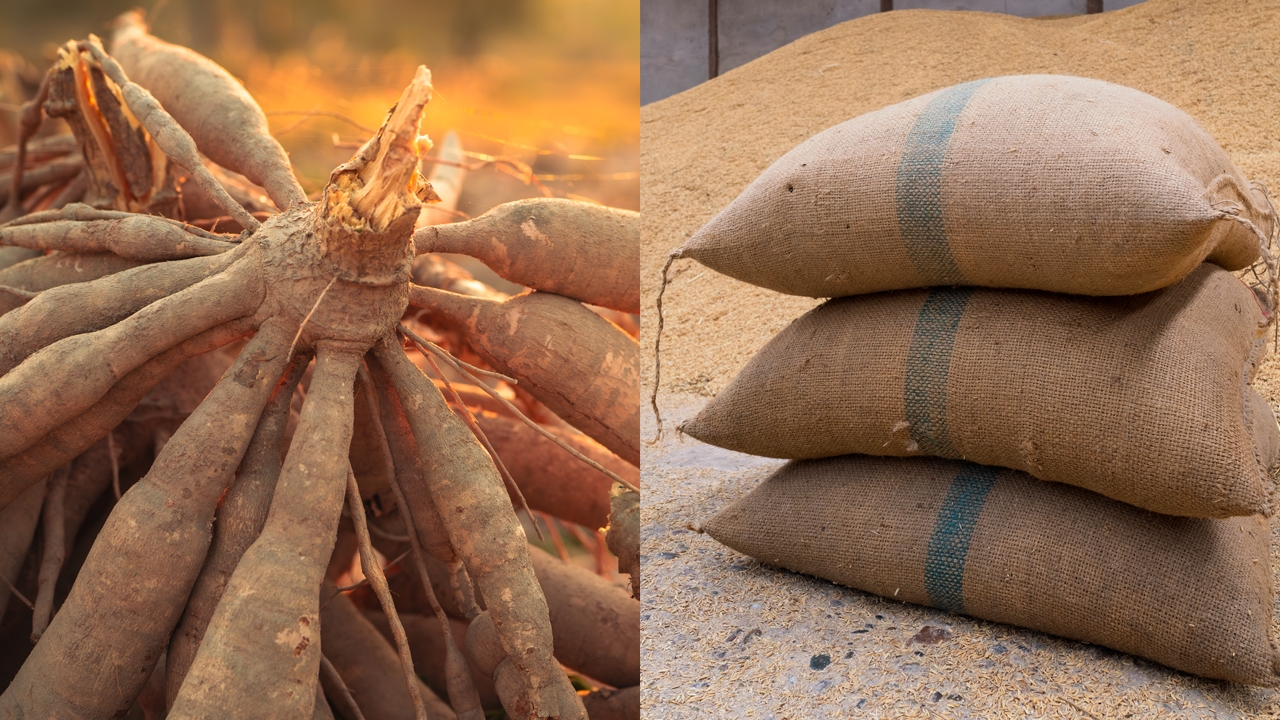
The Department of Foreign Trade has revealed plans to boost exports of key Thai agricultural products—rice and cassava—in the second half of 2026. It aims to pursue a government-to-government (G2G) rice deal with China for 460,000 tons and to penetrate the premium US market, targeting export volumes exceeding 7 million tons each. Officials noted that the El Niño effect and increased food security concerns are expected to improve the situation in the second half of the year.

Arada Fuengthong, Director-General of the Department of Foreign Trade, disclosed plans to promote Thai exports of rice and cassava in the latter half of 2026. She noted that during the first four months (January–April 2026), exports of both products slightly slowed due to external factors. Thailand exported 2.17 million tons of rice, down 9.96%, valued at 1.258 billion US dollars./This was due to abundant global rice production and problems in the Middle East, which prevented shipments to Thailand’s main market, Iraq. Meanwhile, cassava exports totaled 1.96 million tons, down 39.88%, valued at 27.662 billion baht.
However, the plan for the second half of 2026 aims to achieve rice export targets of7million tons. The department focuses on diversifying markets to reduce risks, covering Asia, Europe, America, and Oceania. A key highlight is accelerating government-to-government rice sales (G2G) with China’s COFCO.G2G with COFCOof the Chinese government
still requires negotiation on pricing and delivery of another 460,000 tons out of a total 500,000 tons. Additionally, plans include sending government and private sector delegations to strengthen relations and negotiate with importers in South Korea, the Philippines, Malaysia, and China, along with participating in international trade shows abroad.
The outlook for rice exports in the second half of the year is expected to improve significantly due to increased demand for rice reserves for food security in many countries amid concerns caused by the El Niño phenomenon. Notably, Malaysia has expanded its rice stockpiling policy from three months to nine months, causing Thai rice imports there to rise by 350% in the first four months. The Philippines also shows a rising trend in rice imports this year.
There are also continuous orders from African countries, such as South Africa, a market loyal to Thai steamed rice. During the first four months, Thai exports to South Africa increased by 45%. Consequently, the department maintains its 2026 Thai rice export target at 7 million tons, as agreed with the Thai Rice Exporters Association.
Arada said that the plan to promote cassava exports in the second half will be proactive with two main activities: sending a delegation to the United States to negotiate the promotion of premium-grade cassava starch exports to the food, bakery, and confectionery industries.food additives, cosmetics, adhesives, and paper industriesin mid-July 2026, followed by organizing an event to build networks between Thai cassava exporters and foreign importers in Thailand in mid-August 2026, aiming to push annual exports to 7 million tons.
“In addition to overseas market promotion,the department alsoplaces importance on domestic measures to supervise and maintain cassava price stability,strictly enforcingcontrol and inspection of imported cassava product standards at 25 customs checkpoints across 24 provinces,
to prevent low-quality products from neighboring countries from impacting Thai farmers’ prices.The frequency ofsending officials to key import checkpoints has increased continuously,andthe department coordinates with security agencies, such as the First Army Region, to concretely block and prevent illegal agricultural imports along border areas,to ensuretransparency and build confidence among Thai farmers.”
Read more news " State Policies "