

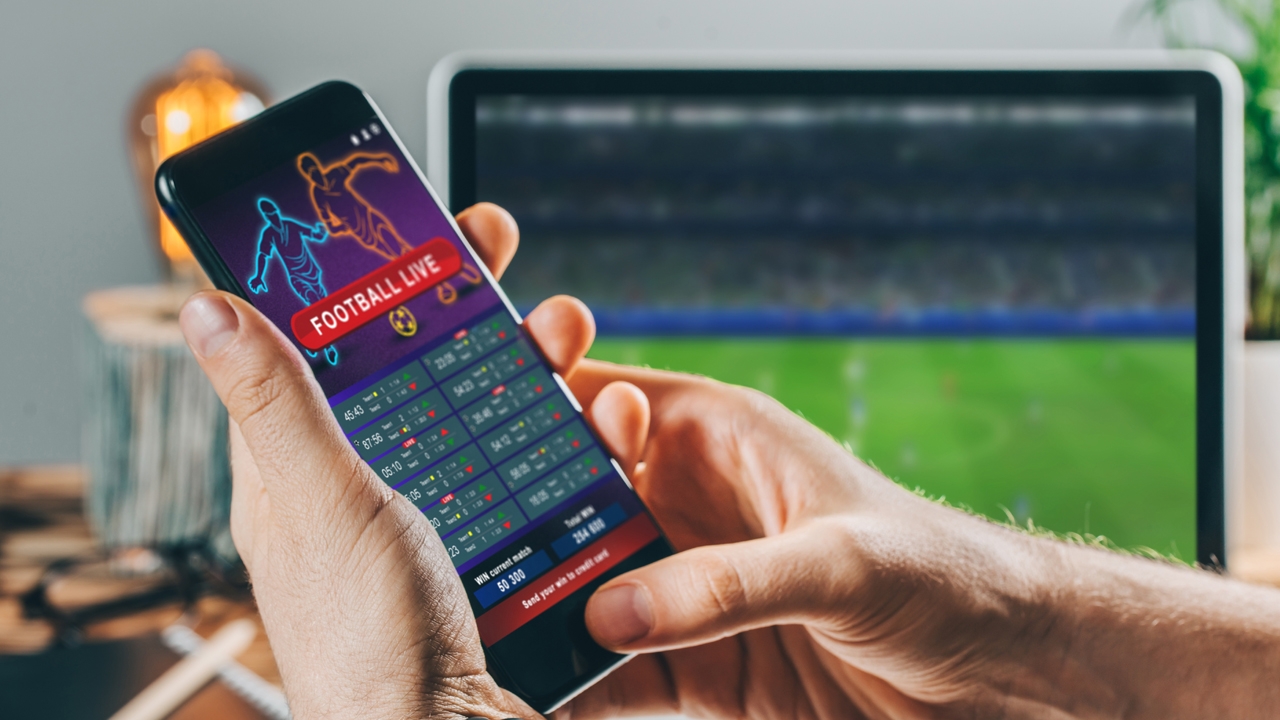
The University of the Thai Chamber of Commerce revealed a survey on the 2026 World Cup, finding that if matches are broadcast live, total spending will reach 68 billion baht, a decrease from football...Euro2024 due to public economic concerns. However, total betting across all channels could reach as much as 47 billion baht, as people are betting larger amounts and have easier access to gambling.Furthermore,some are even using funds from the “Thai Chua Thai Plus” program for spending. If there is no live broadcast, total spending would drop to 57 billion baht, but betting money would still be as high as 45 billion baht.

Mr. Thanawat Polwichai, President and Chairman of the Advisory Board of the Economic and Business Forecasting Center,University of the Thai Chamber of Commerce, revealed behaviors and spending patterns, as well as economic and social impacts in Thailand during the 2026 World Cup from 11 June to 19 July 2026.He stated that if Thailand broadcasts the matches live, total spending would be 68.63562 billion baht, a 21.7% decrease compared to Euro 2024, which saw spending of 87.62 billion baht. Of this, 47.574 billion baht would be circulating outside the formal economy (betting), down 29%, while 21.06162 billion baht would circulate within the formal economy, a 2.4% increase.
“Although football betting still involves large amounts of money, it is estimated at about 47 billion baht this year, down from the peak of 67 billion baht during Euro 2024. This is the lowest level in 12 years, reflecting public concerns about the economy, living costs, and stricter gambling enforcement.”
However, if there is nolive broadcast,total spending would decrease to 57.66 billion baht, a 34.2% drop, but betting would remain high at 45.195 billion baht. Spending within the formal economy would fall to only 12.465 billion baht, down 39.4%. Formal economy expenses include food and beverages at home and outside, buying postcards to predict match results, streaming or online viewing subscription fees, World Cup merchandise, internet and mobile fees, SMS contest fees, travel to watch matches, and purchasing televisions or signal reception equipment.
Despite the proportion of bettors during this World Cup being much smaller than non-bettors—with 62.3% not betting and 37.7% betting either occasionally, on favorite teams, or every match—most bet in cash and with significantly higher amounts. Specifically, 39.1% bet 10,001–50,000 baht per match, followed by 19.4% betting 2,501–5,000 baht, 16.6% betting 5,001–10,000 baht, and the rest betting below 500–2,500 baht per match. They use income from salaries, savings, parents, bonuses, or special earnings. Additionally, 72.1% said gambling access is easy, 27.2% said unchanged, and 0.7% said it is harder to access.
“There are many gambling channels, mostly informal betting among friends and family without a bookmaker, online gambling websites and applications, small local bookmakers, etc. Importantly, 66.7% of respondents said they would use money from the Thai Chua Thai Plus 60/40 programto spendduring the World Cup, whether partially or almost entirely. Moreover,most—up to 48%—believe this program moderately helps reduce living costs, 41.2% say it helps a lot, and 10.8% say it helps very little.”
Mr. Thanawat added that when asked abouttheir thoughtson the economic and social impacts of this year’s World Cup, respondents noted both positive and negative effects. Positive effectsincludeencouraging youth interest in sports, reducing stress from study or work, increasing spending, strengthening family relationships, higher prices for World Cup-related products, and boosting the economy. Negative effects include increased debt, accidents from alcohol consumption and lack of rest,reducedwork and study efficiency, more absences, increased crime and theft, and more illegal gambling.
“Although Thailand’s economy grew by 2.8% in the first quarter this year and the Thai Chua Thai Plus program helped stimulate spending, it only alleviates living costs and does not increase purchasing power enough for lavish spending. This means the World Cup may create an atmosphere for following the event, but excitement depends mainly on the clarity of broadcast channels. The majority want to watch on free TV, but if streamed, some respondents are willing to pay for access and may also watch at restaurants or venues showing the matches.”
Read more news " Government policies " here