

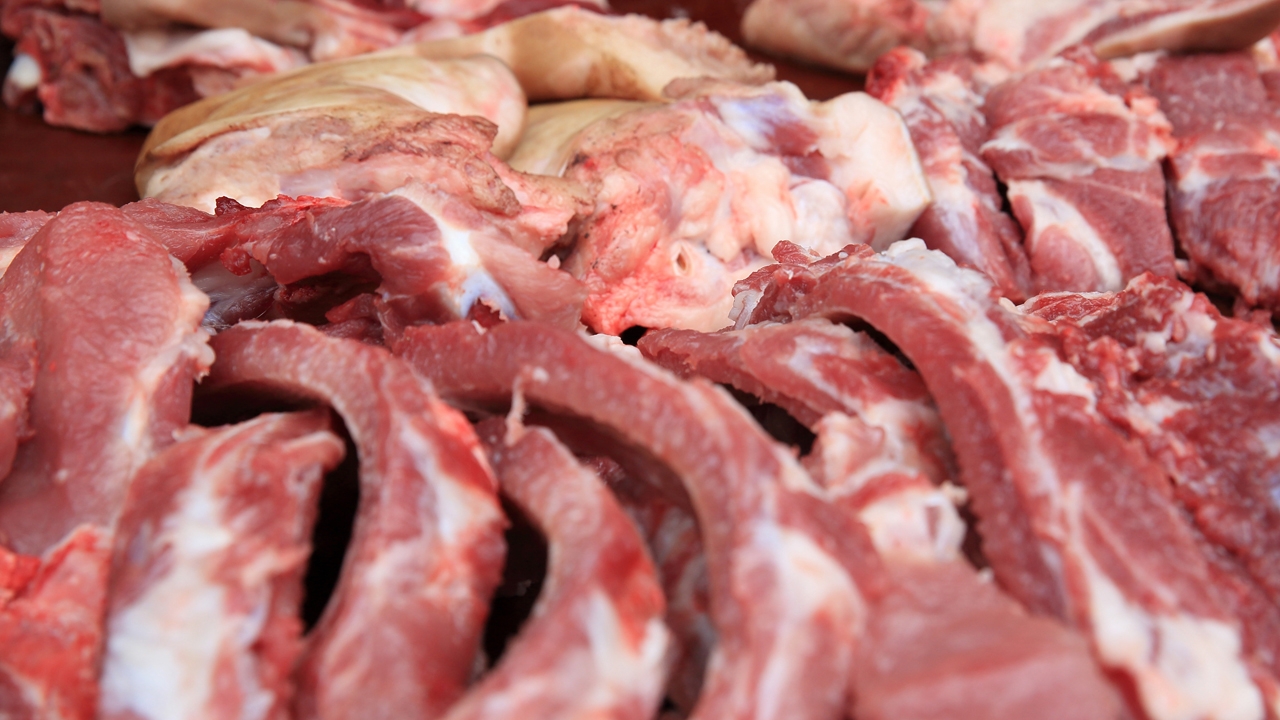
The Department of Internal Trade confirms there is no pork shortage, with production sufficient to meet consumption demand. Prices remain within regulated limits, and the department is closely monitoring the system's balance.
The Department of Internal Trade confirms that the domestic pig and pork situation remains normal, with sufficient production to meet public consumption needs. Although live pig farm-gate prices have recently risen following market conditions due to increased demand and high production costs—including energy, animal feed raw materials, and management expenses—the department closely monitors the situation and assures there is no sign of product shortage, with prices still manageable within regulatory frameworks.

Mr. Jirawut Suwanart, Deputy Director-General of the Department of Internal Trade, stated that the department is closely monitoring pig production and trade at the farm, wholesale, and retail levels. They also regularly consult with the Department of Livestock Development and pig farming organizations to track production volume, production costs, and market conditions comprehensively.
Latest data shows that about 62,300 pigs enter the market daily, while average consumption demand is around 56,000 pigs per day. This indicates the supply remains sufficient for nationwide consumption, with production exceeding demand, thus no shortage occurs.
Currently, live pig prices at farms have increased to 62–68 baht per kilogram, close to the average production cost of 68.57 baht per kilogram. Meanwhile, the average retail price for red pork nationwide stands at 128.31 baht per kilogram. Continuous market supply supports adequate availability to meet consumer demand.
Additionally, the Department of Internal Trade uses initiatives like the Thong Fah (Blue Flag) campaign and market linkage activities in certain areas as tools to manage pig production. Coordinating with pig farmers and traders to sell pork directly to consumers, these efforts expand marketing channels and accelerate distribution during periods of high production, ensuring efficient product circulation, reducing concentration risks, and supporting supply-demand balance throughout the trade system. This approach supplements market mechanisms without interfering with price formation but enhances supply chain management efficiency.
The Deputy Director-General added that the department continuously supervises and monitors pork prices, engaging all sectors to manage costs and retail prices fairly and appropriately. They also ensure no opportunistic price hikes occur.
The Department of Internal Trade will maintain close monitoring of pork prices and supply to ensure production and marketing management align with current conditions. Should retail prices trend upward enough to impact the public’s cost of living, the department is prepared to consider suitable measures with relevant agencies, including direct supply linkages from producers to consumers and targeted Thong Fah activities, to increase purchase options and stabilize essential consumer goods prices while balancing producers, traders, and consumers.
If the public encounters any traders selling pork or other livestock products at unreasonably high prices, they can report to the Department of Internal Trade hotline at 1569. Violations are punishable under Section 29 of the Price of Goods and Services Act B.E. 2542 (1999), with penalties of up to a 140,000 baht fine, imprisonment for up to seven years, or both.
/ / /