

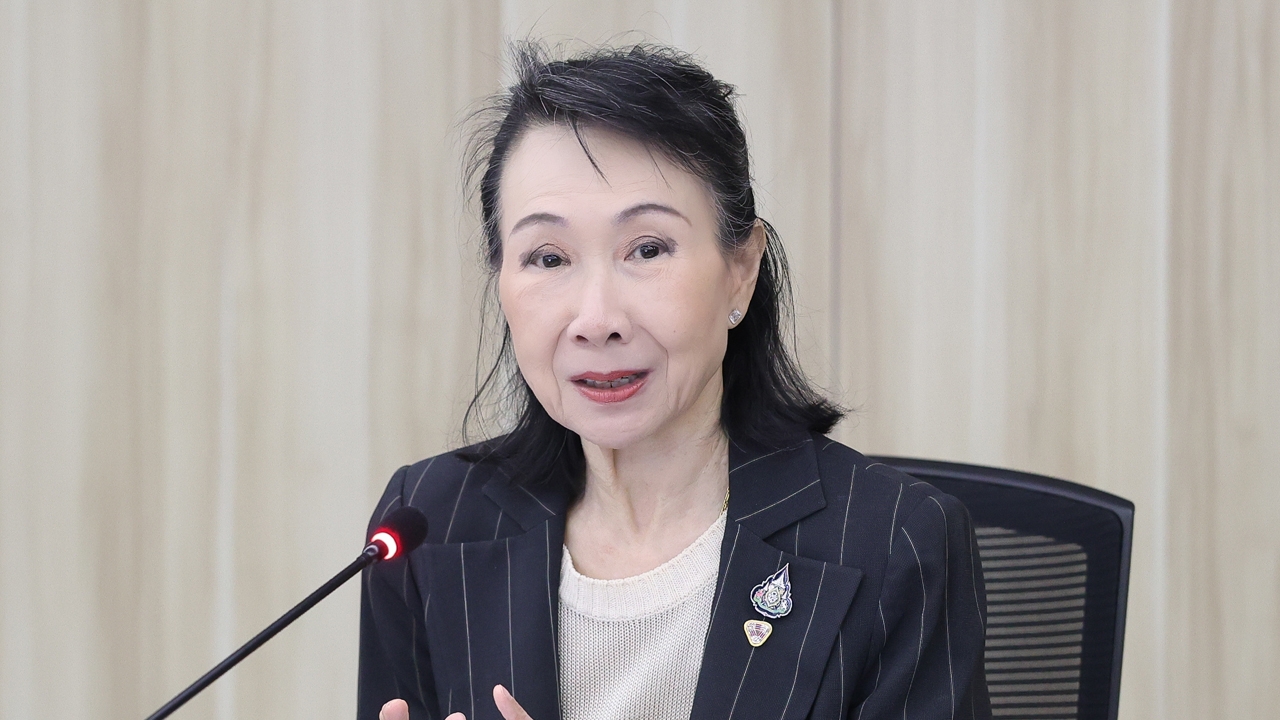
The Federation of Thai Industries (FTI) points to signs of Middle East peace supporting Thailand’s economy in the second half of 2026, with the reopening of the Hormuz Strait helping to reduce pressures on energy and logistics costs, though the industrial sector still needs to accelerate its shift toward an Intelligent Industry.
Ms. Pimjai Leeissaranukul, Chairperson of the Federation of Thai Industries (FTI), revealed progress in Middle East peace negotiations and the reopening of the Hormuz Strait for commercial shipping. She said that if the agreement is signed and implemented, it would be a positive signal for the global and Thai economies in the latter half of 2026, particularly regarding energy price stability, transportation costs, economic confidence, and the continuity of global supply chains.
Ms. Pimjai noted that the Hormuz Strait is a critical global energy route. Its safe reopening will help reduce supply risks for oil, natural gas, and key raw materials, which are major cost components for many industries such as petrochemicals, chemicals, plastics, steel, construction materials, processed foods, and transportation.
“Progress in these peace negotiations is a positive factor that will ease pressures on the industrial sector, which has faced ongoing uncertainties in energy and logistics. If the situation improves, oil prices, shipping freight rates, and transport insurance premiums are likely to ease, allowing businesses to plan production, raw material procurement, and deliveries more stably,” Ms. Pimjai said.
However, FTI believes it remains necessary to monitor the clarity of the agreement’s signing, enforcement, the return of shipping volumes to normal levels, and whether energy prices, shipping costs, and insurance premiums can sustainably decrease.
Regarding the overall Thai economy, the latest Joint Private Sector Committee (JPSC) forecast for 2026 GDP growth is 1.6%–2.0%, up from the previous range of 1.2%–1.6%. Export growth has been revised up to 8%–10%, from a prior expectation of no growth, with inflation forecasted at 2.5%–3.0%. Key drivers include expansion in technology exports, investments in AI and data centers, and government stimulus programs such as "Thai Help Thai Plus."
Nevertheless, Thailand's economy still faces a K-shaped recovery. Although exports grew 18.9% in the first four months of the year and technology products surged by 48.4%, these gains have not fully translated into the real economy. Many technology products rely heavily on imported raw materials, while many industries continue to face high costs, sluggish purchasing power, competition from imports, and uncertainty from U.S. trade measures after the USTR proposed tariffs on Thailand under Section 301.
Ms. Pimjai added that the current easing situation in the Middle East should be viewed as an "opportunity moment" to reduce cost pressures rather than the sole factor for immediate economic recovery. It is crucial for Thailand’s industrial sector to use this time to accelerate adaptations to enhance competitiveness.
Accordingly, FTI is advancing the strategy to elevate Thai industry to an Intelligent Industry by improving production efficiency through automation and digital AI systems, alongside creating added value through innovation, branding, investments in clean energy, and structural cost reductions to strengthen Thailand’s industrial competitiveness sustainably on the global stage.
." Government Policy ."