

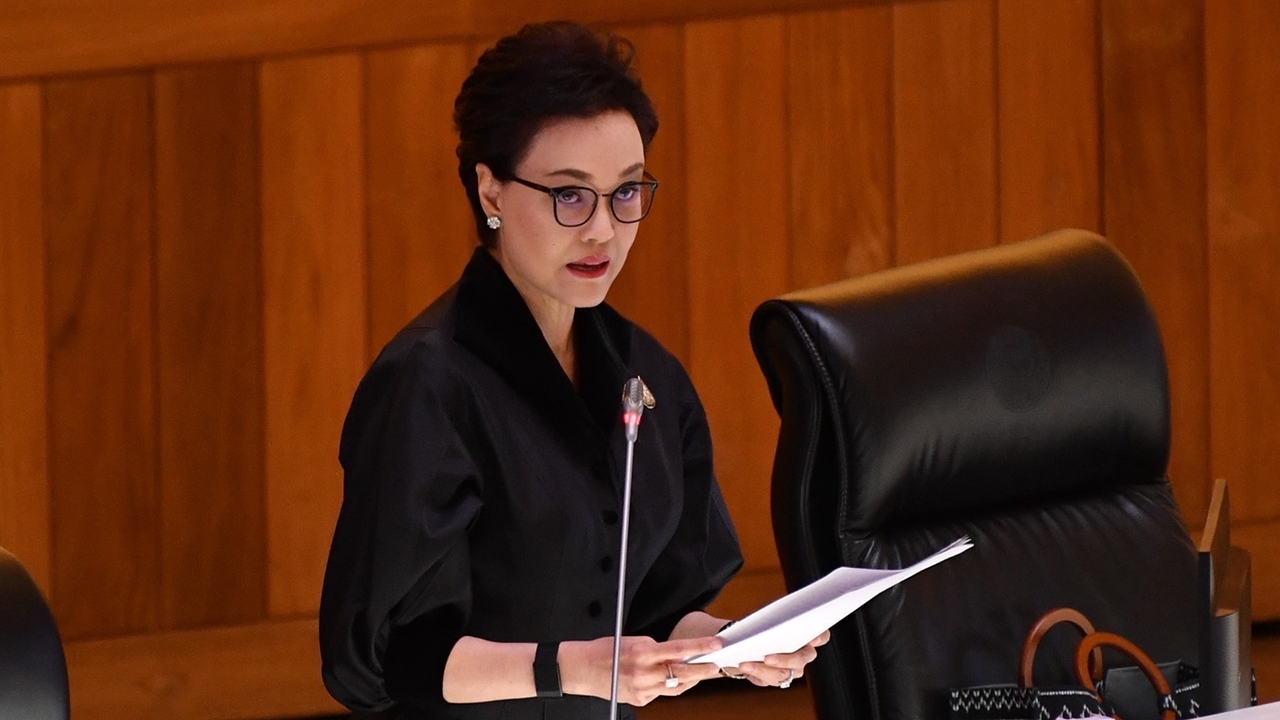
Parliament gave the green light to five global trade agreements, advancing the Thai-EFTA and Thai-Bhutan FTAs to open export doors to Europe and South Asia, while upgrading ASEAN-China cooperation towards a green economy.
On 17 June 2026 at the Parliament building, Deputy Prime Minister and Commerce Minister Supachai Sutthumpun presented five trade agreements to a special joint parliamentary session (third session, first ordinary annual meeting) for approval. These included two free trade agreements (FTAs): 1) Thai-European Free Trade Association (EFTA) and 2) Thai-Bhutan FTA. Also included were upgrades to two FTAs: 1) ASEAN-China Free Trade Area (ACFTA) and 2) the Second Protocol to Amend the ASEAN Trade in Goods Agreement (ATIGA). The final agreement was an amendment to the Marrakesh Agreement establishing the WTO to incorporate the fisheries subsidies agreement. After discussion, the joint session approved these proposals.
Supachai said the FTA with EFTA is a significant milestone as it is Thailand's first FTA with a European group. EFTA countries have strong purchasing power and will immediately eliminate import tariffs on many Thai products once the agreement is in force. This will benefit Thailand by expanding export and service opportunities in sectors where Thailand has strengths. Moreover, EFTA is notable for technology and innovation and emphasizes environmental sustainability. Trade and investment with EFTA will facilitate technology transfer and encourage Thai businesses to upgrade product quality and production processes to meet international standards. This foundation is crucial for opening trade with the EU, with which Thailand is negotiating an FTA, and also prepares Thailand for future OECD membership.
Regarding the Thai-Bhutan FTA, both sides will immediately remove import tariffs once the agreement takes effect. Key Thai exports expected to benefit include automobiles and parts, fruit juices, dried fruits, instant noodles, processed foods, textiles and garments, chemicals, electrical appliances, construction materials, as well as environmentally friendly technology and equipment. It will also provide Thai businesses with greater access to Bhutanese raw materials, reducing production costs and enhancing the competitiveness of Thai industries. Furthermore, it will expand Thailand's trade and investment opportunities in the South Asian region.
Supachai added that upgrading ACFTA involves modernizing regulations and economic cooperation to better support business operations. This covers improvements to customs procedures, agricultural and industrial product standards, economic and academic cooperation, and the addition of five new chapters on digital economy, green economy, competition and consumer protection, supply chain connectivity, and MSME promotion. These measures will enhance trade efficiency, reduce business costs, and create new opportunities for Thai entrepreneurs to add value and expand into global markets.
Besides opening new markets, Parliament also approved upgrades to two free trade agreements: the ASEAN-China FTA (ACFTA) and the ASEAN Trade in Goods Agreement (ATIGA), to make them more modern.
The ACFTA upgrade introduced new provisions in five key areas: digital economy, green economy, competition and consumer protection, supply chain connectivity, and MSME promotion. Meanwhile, the ATIGA revision focuses on reducing non-tariff trade barriers and promoting the use of digital technologies to facilitate trade.
Regarding the final agreement, Parliament approved Thailand's accession to the WTO Agreement on Fisheries Subsidies under the Marrakesh Agreement. Its main goal is to prohibit subsidies to operators engaged in illegal, unreported, and unregulated (IUU) fishing. This not only helps protect marine resources but also ensures fair competition for Thai fishers who comply with regulations.
/Read more news " Government Policy " updates