

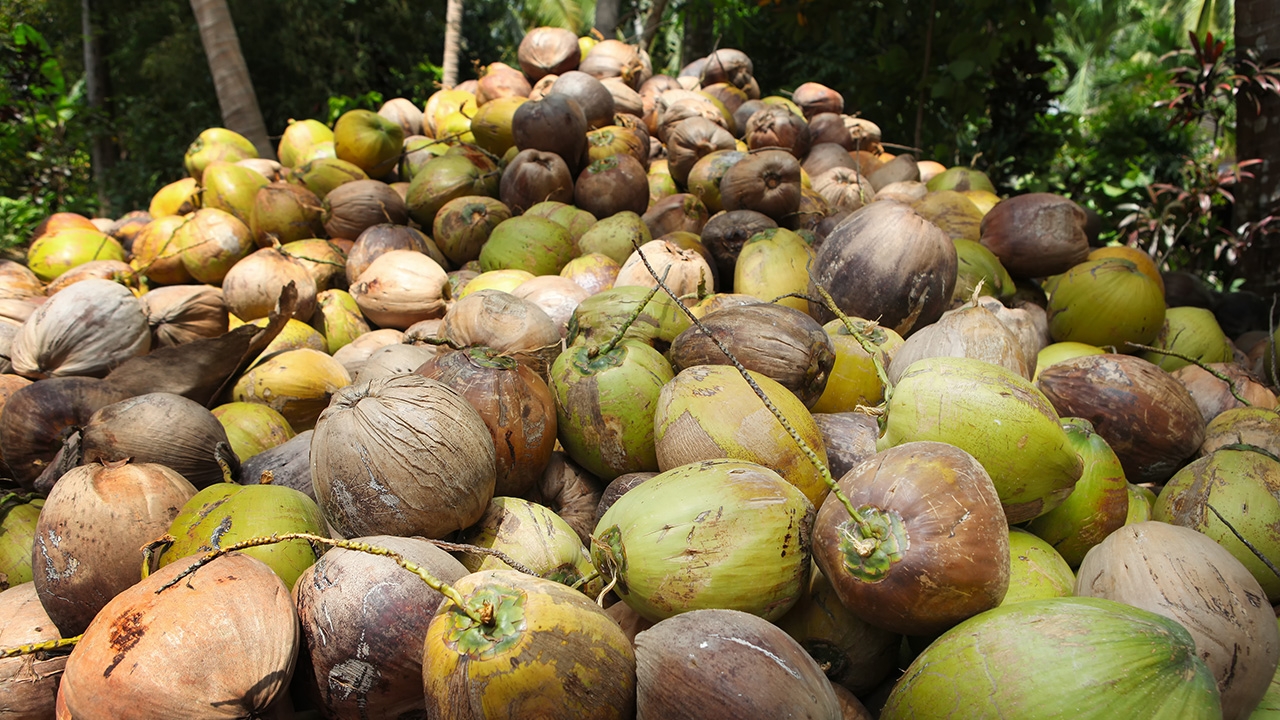
The Ministry of Commerce is cracking down on gangs producing fake "aromatic coconut water" and foreign nominee coconut hubs. They identified 37 risky legal entities across 5 provinces and sent data to 9 agencies for in-depth inspection, aiming to protect consumers and uphold Thailand's coconut industry standards.Tags: [Ministry of Commerce, counterfeit products, coconut industry, consumer protection, legal investigation]
Supachai Sutthaphan, Deputy Prime Minister and Minister of Commerce, revealed that the Department of Business Development, the Ratchaburi Provincial Industry Council, and the Thai Aromatic Coconut Association jointly announced preliminary results on preventing and suppressing adulteration of coconut water. Initially, the Department of Business Development identified two main risk groups in five provinces: Ratchaburi, Samut Sakhon, Pathum Thani, Samut Prakan, and Bangkok, includingTags: [Deputy Prime Minister, Department of Business Development, coconut water adulteration, risk groups, provinces]
Fifteen risky coconut hubs suspected of being foreign capital using Thai nominees to conceal ownership, operating without permits under the Foreign Business Act B.E. 2542 (1999).Tags: [coconut hubs, foreign capital, nominee, illegal operation, Foreign Business Act]
Twenty-four risky factories classified under industry code 00801, potentially producing adulterated aromatic coconut water. Among these, two have overlapping names with the coconut hubs.Tags: [factories, adulterated coconut water, industry code, overlapping entities]
Data on all 37 legal entities (15 hubs and 24 factories, with 2 overlapping names) were forwarded to nine agencies: Central Investigation Bureau (CIB), Department of Special Investigation (DSI), Revenue Department, Department of Industrial Works, Department of Agriculture, Food and Drug Administration (FDA), Thai Industrial Standards Institute (TISI), and the Office of Consumer Protection Commission (OCP) for comprehensive investigations.Tags: [legal entities, interagency cooperation, investigation, consumer protection]

“The Ministry of Commerce has established a state-private sector network to monitor and prevent adulteration of coconut water, especially by overseeing the sources and quality of raw materials, the primary processing sites (coconut hubs), and the input process to factories. This aims to prevent unknown or risky raw materials from entering the production chain. The Department of Industrial Works cooperates to verify that factories have legal permits and registrations, including source disclosure. The FDA and Department of Agriculture oversee raw material standards and product hygiene,” the ministry stated.Tags: [Ministry of Commerce, monitoring network, raw materials, factory permits, product hygiene]
Additionally, scientific testing will be conducted to verify the 100% authenticity of coconut water. Clear labeling requirements will mandate the declaration of key components on ready-to-drink coconut water products, such as 100% coconut water or the percentage of natural sugar content and any additives like sweeteners. This ensures consumers receive accurate information when purchasing.Tags: [scientific testing, product authenticity, labeling standards, consumer information]

.Tags: [] Mr. Poonpong Nainapakorn, Director-General of the Department of Business Development,Tags: [Director-General, Department of Business Development] said that upon investigating risky legal entities suspected of adulterating aromatic coconut water, all 24 factories produce and sell 350 milliliter bottles of aromatic coconut water at very low prices, some as low as 20 or 25 baht per bottle. Considering costs, this price is unusually low because the cost of a single coconut ranges from 15 to 18 baht, and producing a 350 ml bottle requires about one and a half coconuts. Additional costs include the plastic bottle, label, bottling, and other production expenses. Genuine aromatic coconut water is typically sold for 40 to 60 baht per bottle. Furthermore, labels on products from these 24 factories claim "100% aromatic coconut water" or "100% coconut water," but it is unclear what substances the aromatic coconut water may have been adulterated with and whether it is safe for consumers.Tags: [pricing, production cost, adulteration, product labeling, consumer safety]

Mr. Charan Charoensap, President of the Thai Aromatic Coconut Association,Tags: [Association President, Thai Aromatic Coconut Association] said that the Ministry of Commerce's comprehensive approach to the aromatic coconut issue has helped increase farm gate prices from 2-3 baht per coconut to 13-15 baht, a price satisfactory to farmers. However, he urged continued strict inspections to prevent adulteration, which could cause future price drops and damage Thailand's coconut reputation.Tags: [price increase, farmers, inspection, adulteration prevention, reputation]
Read more news "Tags: [] State PolicyTags: [state policy] " continuedTags: []