

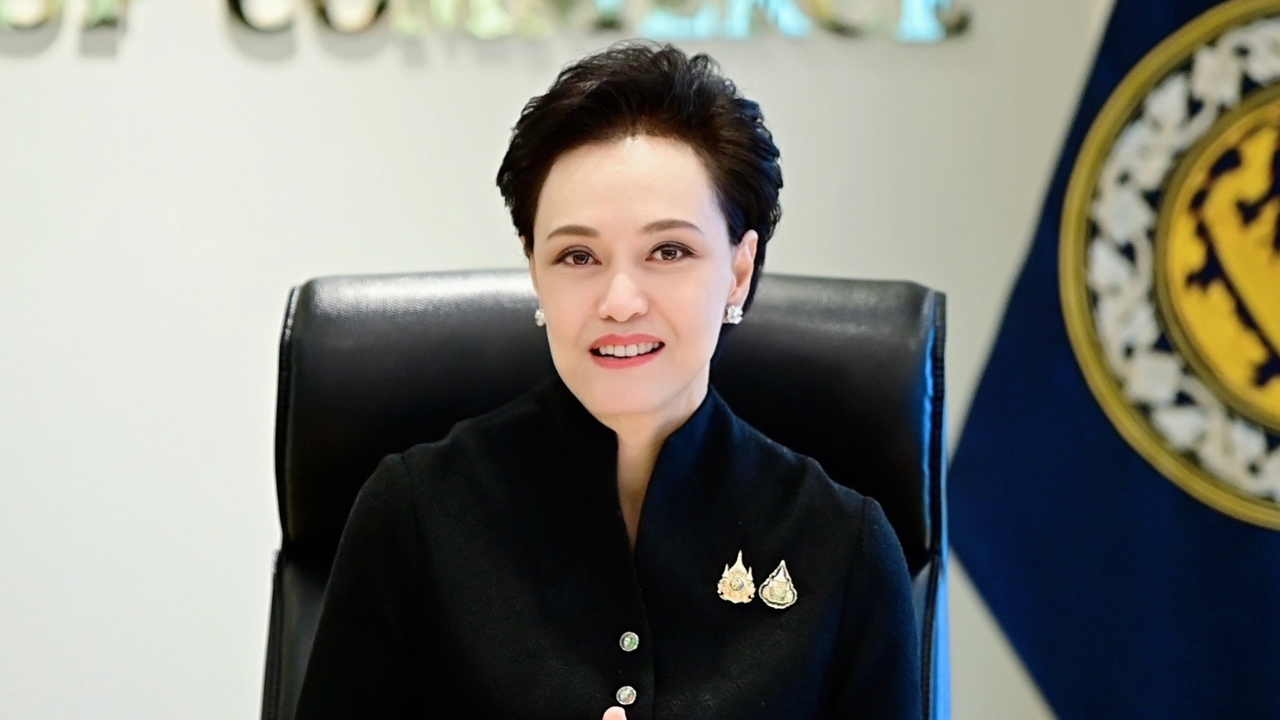
The Ministry of Commerce held talks with the Thai Rice Exporters Association to monitor the rice trade situation, listening to various challenges, and working closely with the private sector to promote Thai rice markets. They emphasized the policy to accelerate rice exports to meet the 7 million ton target, generating income for Thai rice farmers, while expanding into new markets in Africa, Latin America, and the Middle East. They also aim to leverage Free Trade Agreements (FTAs) to increase trade opportunities. The private sector remains confident that global demand for Thai rice is strong and expects prices to stay favorable through year-end.

Supachai Sutthapan, Deputy Prime Minister and Minister of Commerce, revealed after a meeting with the Thai Rice Exporters Association led by honorary president Chukiat Opaswong, vice president Chokchai Setthiwann, and other association representatives on 19 June 2026 at the Ministry of Commerce, that the ministry is ready to work closely with the private sector to achieve the 2026 Thai rice export target of 7 million tons. Exports are a key mechanism to secure orders for production and generate income for Thai rice farmers.
Supachai said that although the global rice market faces fierce competition and uncertainty this year, Thai rice remains recognized for quality, production standards, and reliable delivery. He instructed the Department of Foreign Trade and the Department of International Trade Promotion to coordinate with commercial attachés worldwide to promote Thai rice sales in potential markets and to work proactively with the private sector to expand trade opportunities in key global markets.

The Ministry of Commerce places importance on expanding Thai rice exports to Africa and Latin America, where import demand is steadily rising. The ministry plans to utilize FTAs Thailand has with trading partners such as Peru and Chile to enhance Thai rice competitiveness in these regions. Soon, talks will be held with Peru's minister to strengthen FTA utilization, following earlier discussions with ambassadors and deputy ambassadors in Latin America to jointly promote Thai rice exports.
Additionally, related agencies have been assigned to accelerate efforts to increase the long-term competitiveness of Thai rice, including developing rice varieties that meet global market demand, expanding into new markets, and managing risks from El Niño, which could affect future rice yields. Coordination with relevant agencies will also focus on enhancing farmer support measures and ensuring national rice production security.

Regarding the global rice market situation this year, although Middle East conflicts have slowed Thai rice exports to Iraq—a key regional market—since March, tensions and El Niño-driven drought risks have prompted many countries to increase rice imports to secure food supplies. As a result, Thailand has expanded exports to other markets, especially in Asia and Africa.
Chukiat Opaswong, honorary president of the Thai Rice Exporters Association, said the global rice market this year is sensitive and changing rapidly. Rice prices have significantly risen from about 320-340 USD per ton late last year to around 480 USD per ton now, partly due to concerns over El Niño and food security. This has led many countries, especially the Philippines and Malaysia, to increase large rice purchases.
Although Iraq, Thailand's top rice export market, has been affected by regional conflicts causing delivery delays, it is expected that exports will return to normal once the situation stabilizes. Meanwhile, other countries have purchased Thai rice to compensate for global demand, and increased domestic use of rice bran in animal feed due to corn shortages has contributed to improved Thai rice prices.
To boost rice exports within quota to Europe, it is proposed to negotiate for a higher quota proportion for exporting paddy rice, as most exports to Europe are currently paddy rather than milled rice. The Ministry of Commerce plans to raise this issue in talks with European counterparts.

Arada Fuengthong, director-general of the Department of Foreign Trade, added that the department is actively implementing government policies and the deputy prime minister and commerce minister’s directives to promote and push Thai rice exports continuously across Asia, Europe, America, and Oceania to reduce dependence on any single market and stimulate orders to support Thai rice production. This is driven through cooperation between public and private sectors.
The Department of Foreign Trade is expediting government-to-government rice purchase negotiations with China's COFCO for an additional 460,000 tons. It also plans to lead delegations of government and private representatives to meet key rice importers to build confidence and expand Thai rice export markets. Recently, meetings with rice import agencies in South Korea were held from 7–10 June 2026, with planned trips to the Philippines and Malaysia in early August 2026. There is also preparation for Thai jasmine and premium rice exporters to negotiate with Chinese importers in Guangzhou in July 2026.
Arada expressed confidence that proactive efforts combined with close cooperation between public and private sectors will maintain Thai rice competitiveness and support achieving the 7 million ton export target for 2026.
From January to May 2026, Thailand exported 2.74 million tons of rice, down 10.75% compared to the same period last year. However, Thailand has increased rice exports to Africa and Asia, its two top export regions with continued growth potential despite challenging global market conditions, reflecting global market confidence in Thai rice quality and Thailand’s capacity as a major quality rice producer and exporter.
." Government Policy ."