

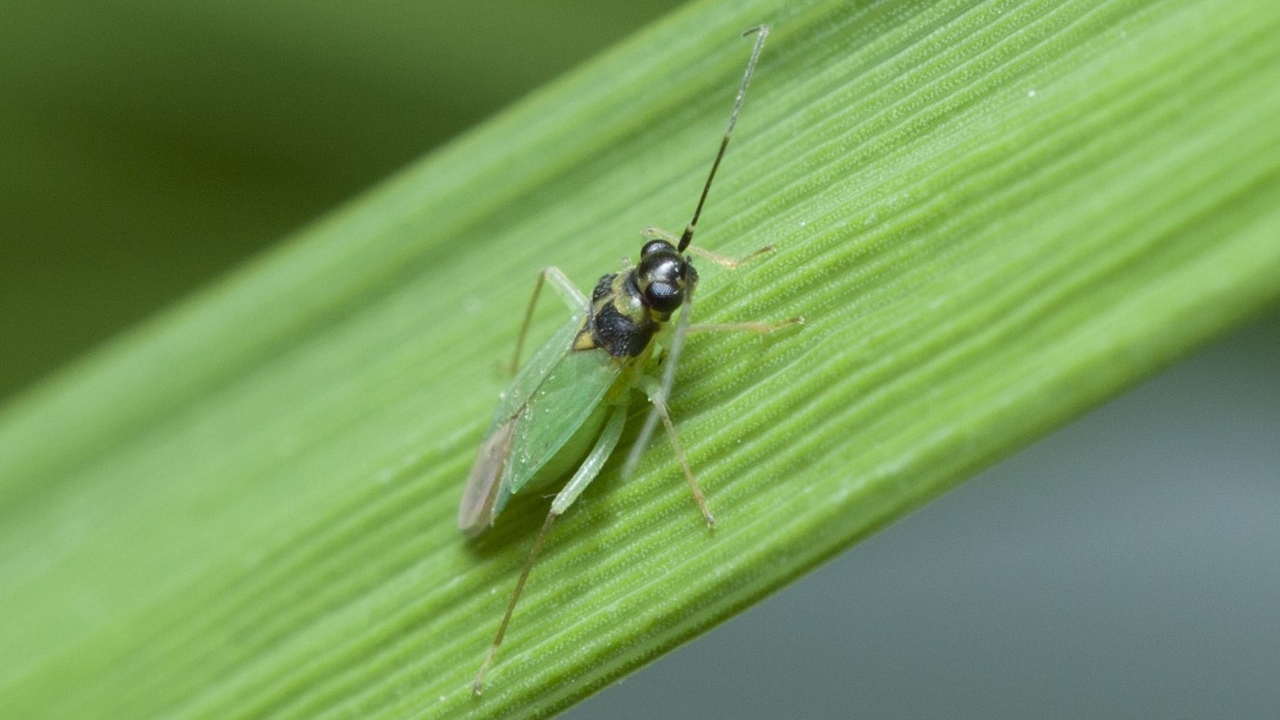
The Department of Agricultural Extension warns farmers to prepare for a "rain gap" during June–July 2026, with alternating hot weather and rain increasing the risk of severe brown planthopper outbreaks. They recommend a natural method: conserving the "green bug egg sucker," a tiny hero that helps control rice field pests.
Mr. Weerasak Boonchoen, Deputy Director-General of the Department of Agricultural Extension, said that this period marks the start of the planting season, especially for rice in Thailand. However, in 2026, weather is becoming more erratic, threatening agriculture. According to the Meteorological Department’s forecast, Thailand may face a "rain gap" during the rainy season in June–July 2026, resulting in alternating hot and rainy conditions that increase pest risks. The Department therefore advises farmers to conserve natural enemies or beneficial insects to better protect their crops.
Mr. Weerasak added that bugs of the genus Miridae number over 80,000 species worldwide, including both agricultural pests and natural enemies that do not harm plants but prey on harmful insects. The green bug egg sucker is such a natural enemy, acting as a tiny protector of rice fields from the brown planthopper, a major pest. Especially during this season with hot and rainy alternations, the risk of brown planthopper damage is high, causing rice leaves to yellow and dry as if scalded, leading to patchy die-off. Conserving green bug egg suckers in rice fields is a natural, cost-free method beneficial to farmers.
To recognize the green bug egg sucker: its eggs last 6–11 days, appearing milky white, elongated, slightly curved, with black dots at the pointed ends. The nymph stage lasts 10–16 days, is green, similar in shape to the adult but without wings covering the abdomen. Adults measure about 2.5 millimeters, with black head and thorax, long black antennae, green forewing bases, and grayish or dark wing tips.

Mr. Weerasak further explained that the green bug egg sucker has piercing-sucking mouthparts and hunts by using its antennae to locate brown planthoppers on rice plants. It pierces leaf tissues to suck fluids from planthopper eggs and nymphs, causing the eggs to shrivel and fail to hatch. Nymphs pierced by the bug lose internal fluids and eventually die.

If farmers find green bug egg suckers in their fields at populations 2–3 times greater than brown planthoppers, these natural enemies can prevent the pests from reaching damaging levels. Therefore, farmers should inspect their crops at least once or twice a week, carefully distinguishing pests from beneficial insects to avoid unintentionally destroying natural enemies.
However, if pest outbreaks are mild, conserving natural enemies such as green bug egg suckers, parasitoids, and predators can reduce chemical pesticide use and lower production costs. Farmers can contact their local district or provincial agricultural offices for more information.
Read more news " Government Policy " here