

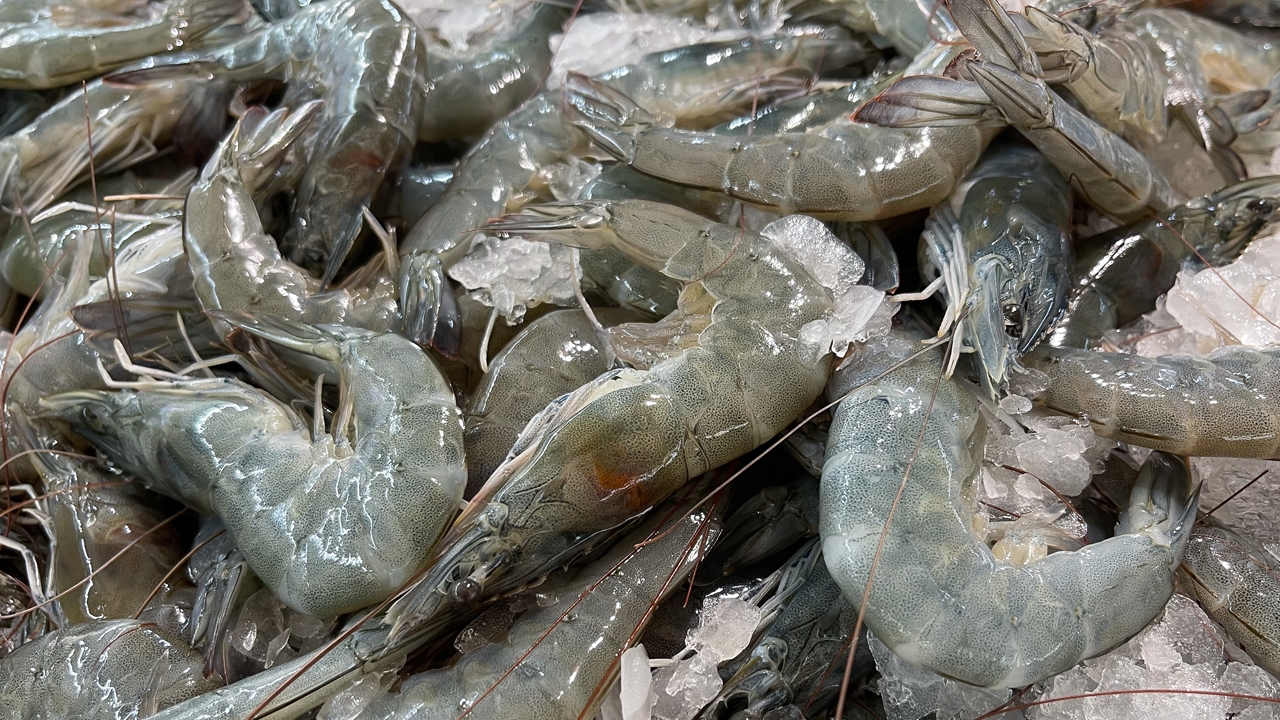
The Ministry of Agriculture is accelerating efforts to promote Thailand's shrimp industry as a national agenda for 2026-2027, coordinating with Malaysia to lift the temporary shrimp import ban, and approving a 25 million baht budget to engage the Department of Internal Trade in distributing products to support farmers.
Mr. Watcharapol Khaokham, Deputy Minister of Agriculture and Cooperatives, revealed after chairing the Executive Committee meeting on managing the marine shrimp industry value chain that the aim is to jointly define management guidelines and drive the development of Thailand's shrimp industry along the entire value chain to be strong and sustainably competitive.

The meeting was updated on progress regarding the resolution of Malaysia's temporary shrimp import suspension. Additionally, the Department of Fisheries has been in continuous coordination with Malaysian counterparts following discussions between the agriculture ministers of both countries, who agreed to expedite the assessment process of Sanitary and Phytosanitary (SPS) measures to restore shrimp trade between the two countries to normal as soon as possible.

The Department of Fisheries was assigned to monitor progress and promptly resolve operational obstacles. The meeting also acknowledged the progress in drafting the 2026–2027 national action plan to elevate the marine shrimp issue as a national agenda. The Deputy Minister instructed the Department of Fisheries to accelerate immediately implementable measures alongside transferring knowledge to farmers, shrimp breed development, production efficiency upgrades, and promoting appropriate technologies for farmers to enhance Thailand's shrimp industry competitiveness in the long term.
Moreover, the meeting was informed about the 2026 shrimp product linkage and distribution project by the Department of Internal Trade, which has requested 25 million baht from the Agricultural Assistance Fund to connect markets, distribute products, and stimulate domestic consumption to mitigate the impact of large market supplies caused by export slowdowns and Malaysia's shrimp import suspension.

The committee also approved appointing a specialized subcommittee to study, analyze, and systematically drive solutions to key issues in Thailand's shrimp industry, as well as to monitor implementation and integrate cooperation among relevant agencies to achieve concrete results.
"Advancing Thailand's shrimp industry requires cooperation from all sectors—government, private sector, and farmers. Supporting farmers alone is insufficient; development must proceed alongside market creation, production capacity enhancement, and competitive capability upgrades to ensure a strong shrimp industry that maximizes benefits for Thai farmers," said Mr. Watcharapol.
." State Policy ."