

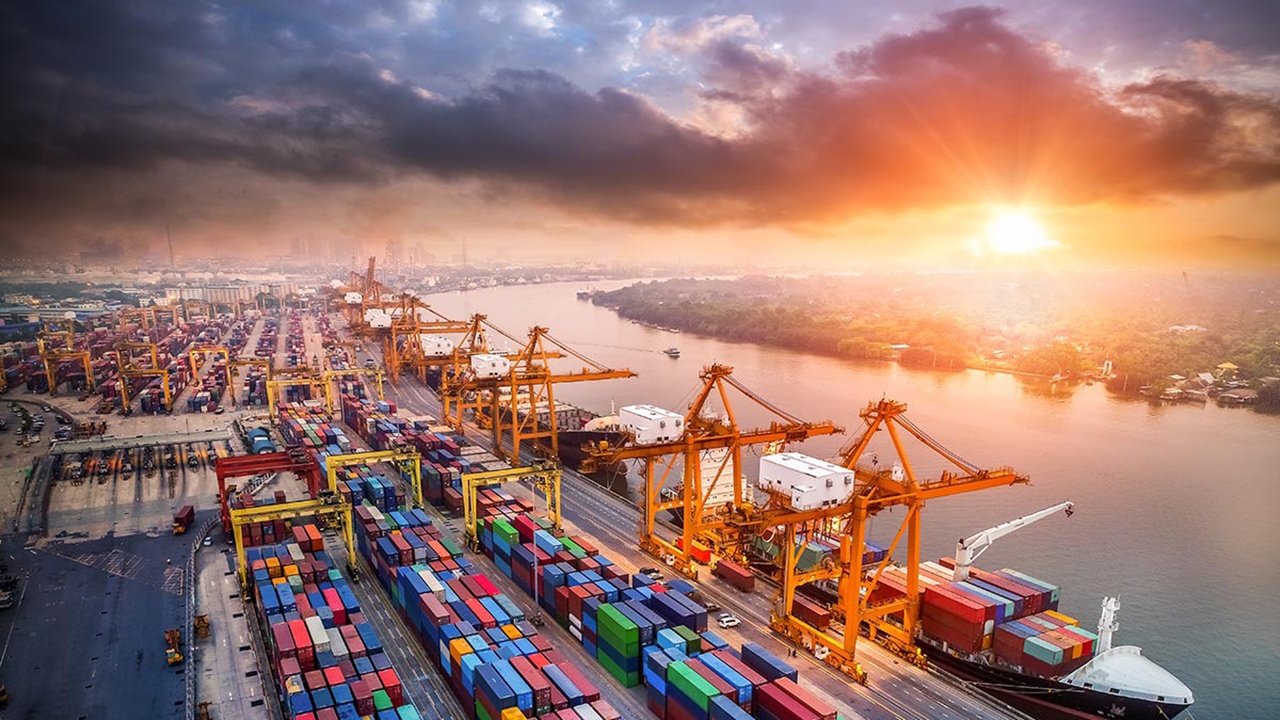
"Phiphat" declared decisively the closure of Bangkok Port, moving its operations to Laem Chabang Port to centralize management, reduce costs, and improve logistics efficiency before developing more than 2,353 rai of land into a fully commercial area, transforming it into a comprehensive entertainment complex alongside upgrading the quality of life in the Khlong Toei community.
Mr. Phiphat Ratchakitprakarn, Deputy Prime Minister and Minister of Transport, revealed the policy direction for developing the Bangkok Port (Khlong Toei) area, stating that the Ministry of Transport plans to review previous policies regarding the establishment of Laem Chabang Port. They will consult with the Port Authority of Thailand (PAT) and related agencies to study the original purpose of Laem Chabang’s construction, which is believed to have been intended to support relocating Bangkok Port’s functions to Laem Chabang and to have a single main port management in the country. Initially, they will verify past Cabinet resolutions before Laem Chabang’s construction to see if there was a policy to gradually shift duties from Bangkok Port to Laem Chabang. If such a resolution exists, they will follow the original policy; if not, the Ministry will discuss internally with PAT and propose the matter to the Prime Minister for consideration.

Mr. Phiphat stated that Thailand should not operate two main cargo ports simultaneously because it wastes budget, personnel, and management costs. Keeping Bangkok Port within Bangkok also affects logistics and traffic, as many trucks must enter the city center, while large cargo ships are increasingly reducing their use of Bangkok Port. Therefore, his policy is to study moving all Bangkok Port operations to Laem Chabang. Simply put, closing Bangkok Port and studying redevelopment of the entire 2,353-rai area into commercial property to generate income.
"Currently, Bangkok Port still operates normally, but long-term plans should reduce its role, as it cannot continue indefinitely. We should manage only one main port to save personnel, reduce costs, and improve cargo transport convenience, especially for large cargo ships, which have no reason to navigate all the way to Bangkok due to obstacles like narrow channels, river bends, and other limitations. The clear long-term goal is to close Bangkok Port after gradually reducing its role and consolidating all cargo transport at Laem Chabang. However, no definite timeline is set yet, as detailed studies and consultations with PAT management, the PAT board, Khlong Toei community, and all related agencies are required, along with review of previous Cabinet resolutions before finalizing the direction."
Mr. Phiphat added that Laem Chabang Port has greater maritime transport capacity, able to accommodate large cargo ships directly, unlike Bangkok Port where ships must navigate through the Gulf of Thailand and up the Chao Phraya River, resulting in time and cost losses. Additionally, many cases require multiple cargo transfers. Consolidating container transport solely at Laem Chabang would reduce handling steps, save time, and significantly cut national logistics costs.

Mr. Phiphat elaborated that if Bangkok Port operations move to Laem Chabang, the 2,353-rai area of Bangkok Port will be developed commercially to generate revenue for the PAT and to partly fund quality-of-life improvements in the Khlong Toei community. The development concept is an Entertainment Complex without any casino project. He emphasized it is not a casino but a new urban development comprising tourism and economic activities such as a cruise terminal, yacht marina, high-quality residential projects, commercial areas, and economic value-adding activities. Private sector investment will be invited through long-term concessions to maximize returns for the PAT.
"Income generated from the development will be reinvested into the Khlong Toei community, improving education, healthcare, welfare, and public utilities. The government plans to allocate about 500-600 rai to develop new housing for over 40,000 people, approximately 12,600 households, with full facilities including residential buildings, parks, playgrounds, schools, childcare centers, and community hospitals to raise residents’ quality of life. These will be high-rise buildings," Mr. Phiphat said.
Mr. Phiphat acknowledged that the policy might face opposition from some businesses and residents but believes that if the government clearly explains the long-term benefits, presents a clear development plan, and shares benefits with the community, public understanding and acceptance will increase.
Currently, Bangkok Port handles about 1.2-1.3 million TEUs per year, while Laem Chabang Port accommodates around 6-7 million TEUs and plans to expand to about 10 million TEUs in the future. This leaves Bangkok Port with only about 10% of total capacity. Therefore, centralizing management at Laem Chabang is seen as more beneficial for transportation, urban planning, and maximizing the use of waterfront land in central Bangkok.
Mr. Phiphat emphasized that the policy is still under detailed study and consultation with all sectors. The priority is the country's benefit alongside safeguarding the rights and quality of life of Khlong Toei residents to ensure the significant transition of Bangkok Port happens appropriately and fairly for all parties.
/ / /