

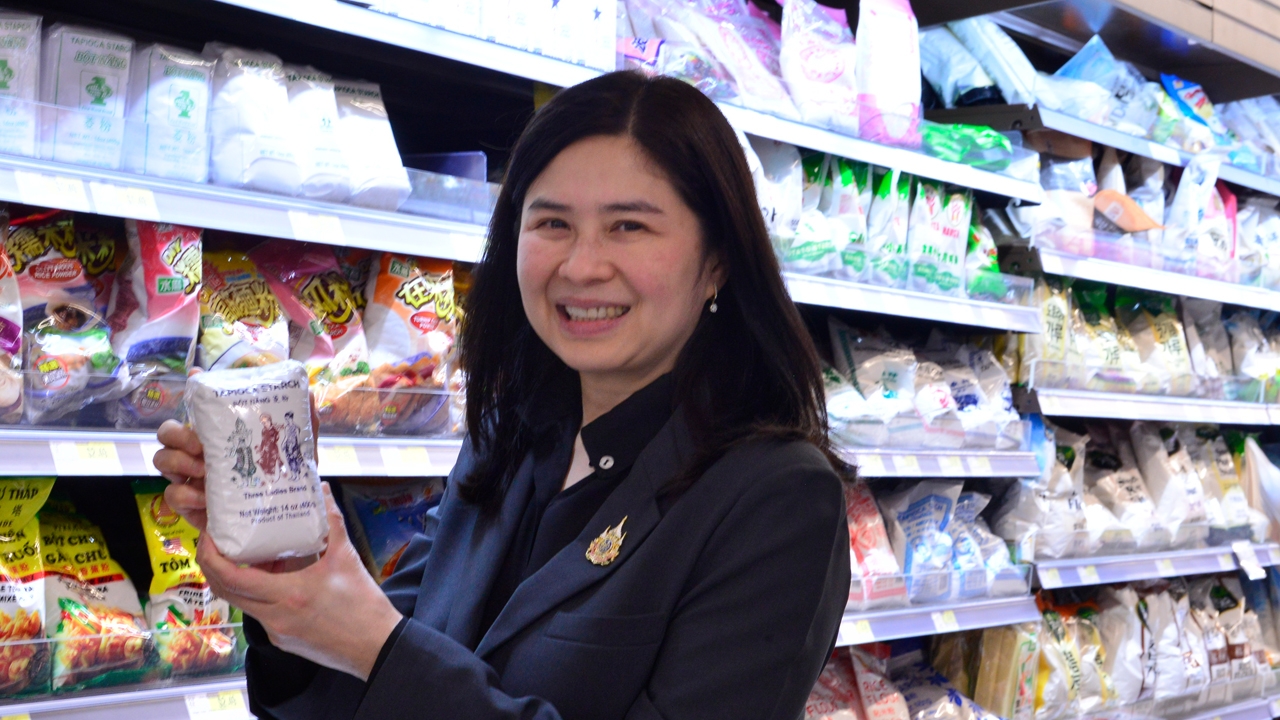
The Department of Foreign Trade led a delegation to the U.S. to benefit from the exemption of Thai tapioca starch tariffs under Annex A Section 301, accelerating negotiations with major food producers and advancing into the UAE market by supplying pelletized starch for animal feed.

Arada Fuengthong, Director-General of the Department of Foreign Trade, revealed that the department led a delegation of government representatives, tapioca starch experts, and private sector members to Illinois, USA, from 15 to 17 July 2026. The goal was to explore trade opportunities for Thai tapioca starch in a high-potential market. The visit was highly successful, with the delegation meeting state government agencies and food and beverage networks, including the Illinois Economic Development Corporation (Illinois EDC), Chicagoland Food and Beverage Network (CFBN), and Illinois Department of Agriculture. These bodies drive the Mid-West economy and serve as centers for the food, agricultural processing, and logistics industries that link Thai products to the U.S. market. They recognized opportunities to utilize Thai tapioca starch raw materials in various industries, especially food and beverages. CFBN showed strong interest in Thai tapioca starch’s potential and proposed cooperation in developing value-added food products with major regional research institutes. They also supported connecting Thai exporters with key buyers within CFBN’s network through targeted industry-specific negotiation activities to reach end users directly.
Additionally, the delegation met with major global companies in the U.S. downstream industry, which confirmed that Thai tapioca starch is a critical raw material in U.S. production due to its high-quality standards. The tariff exemption under Annex A of Section 301, which the U.S. is currently investigating with trade partners including Thailand, further enhances Thai tapioca starch’s competitive advantage. The delegation presented the potential and benefits of Thai tapioca starch along with innovations in value-added starch products such as organic starch, tapioca flour, and processed starch. They also discussed Thailand’s stance and efforts to push for tariff exemptions under Section 301 for other tapioca starch types, boosting importer and buyer confidence in the U.S. market. This promotes expanded trade cooperation and business opportunities between Thai exporters and U.S. partners, resulting in successful business matching and agreements between Thai private sector and major U.S. importers.

“This U.S. visit marks another success for the department in leading meetings with government agencies, state-level private organizations and networks, and leading U.S. manufacturers to build sustainable supply chain cooperation. It builds on the opportunity Thailand has gained through tariff exemption under Annex A, opening new trade opportunities and enhancing the competitiveness of Thailand’s tapioca starch industry globally. It also strengthens confidence among leading companies in partnering with Thailand to secure quality raw materials and support sustainable price stability for Thai tapioca farmers,” she said.

Arada added that the department has continuously expanded the tapioca products market in promising areas, leading recently to a major dairy company in the United Arab Emirates (UAE) trialing Thai pelletized tapioca starch as an ingredient in animal feed. This helps reduce risks from relying on a single export market and elevates the competitiveness of Thai tapioca starch to grow steadily and sustainably across all supply chain dimensions.
." State Policy ."