

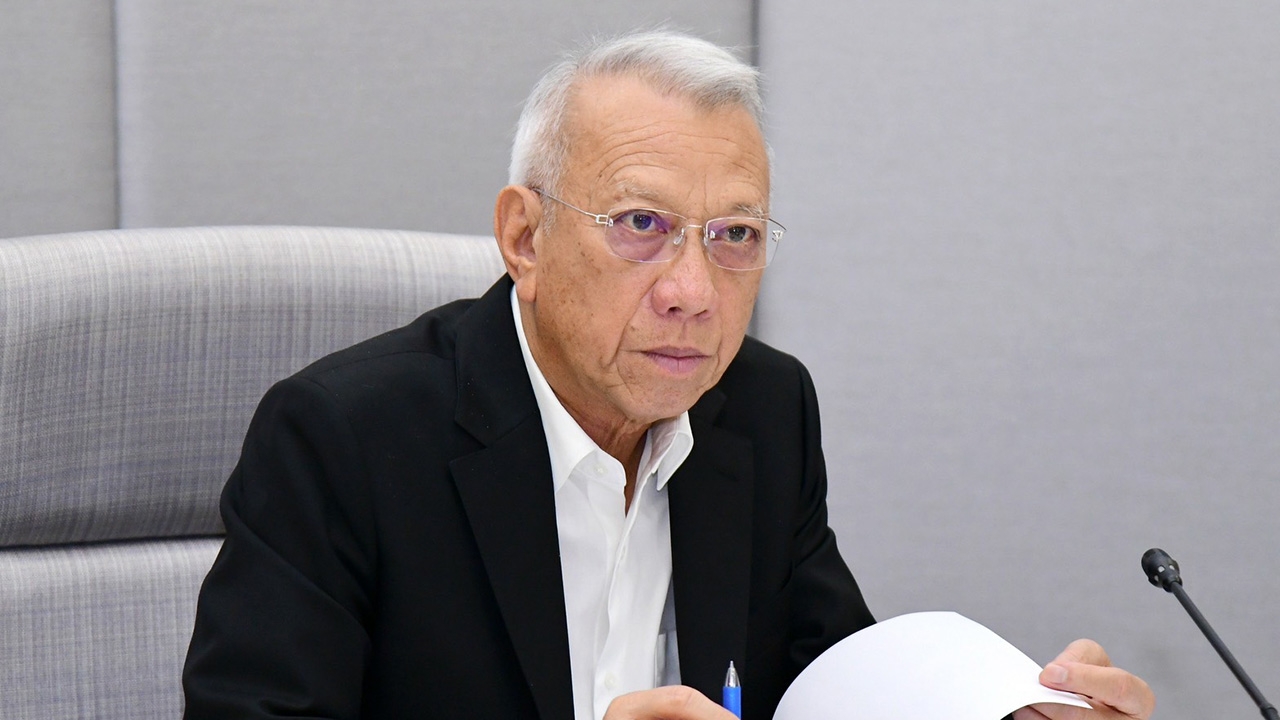
"Phiphat" is expediting solutions for 300 communities encroaching on State Railway of Thailand (SRT) land nationwide, moving 27,000 households into a legal lease system with terms up to 30 years, emphasizing quality of life improvement alongside the high-speed rail project.
Mr. Phiphat Ratchakitprakarn, Deputy Prime Minister and Minister of Transport, revealed after chairing the meeting of the committee overseeing housing issues on State Railway of Thailand land that the housing problem for people living on SRT land is a priority for the Ministry of Transport, as it affects the quality of life and housing security of tens of thousands of households nationwide. Therefore, solutions must proceed simultaneously in terms of legal frameworks, appropriate land use, and consideration of public hardships, adhering to the principle of "listening to all parties to resolve fairly."

The meeting reviewed progress following the resolution from the 4 June 2026 session, including renewing 24 SRT land lease contracts, with 2 completed and 22 in process, and transferring 10 lease contracts from SRT Asset Company Limited back to the State Railway of Thailand to secure long-term leasing rights for residents.
Additionally, the meeting monitored solutions for communities affected by rail system development in various areas, such as adjusting land lease rates, resolving issues of land handover delays to communities, linking lease rates to inflation, obtaining permits for stable housing projects, surveying land boundaries, and addressing tax and rent payments to ensure comprehensive, fair consideration for all parties.

Regarding structural solutions, the meeting approved establishing a subcommittee under the main committee to conduct field visits, verify facts, coordinate with relevant agencies, gather public feedback, and recommend practical and swift solutions for each area.
The meeting also discussed continuing policies to resolve housing issues on SRT land as per the Cabinet resolution dated 1 February 2022, covering over 300 communities in 35 provinces or more than 27,000 households. The SRT, Community Organizations Development Institute (CODI), and related agencies will collaborate with the public to define clear action plans and present them to the SRT board for consideration.
Mr. Phiphat emphasized that addressing housing issues must progress alongside national infrastructure development; both must advance together. The Ministry of Transport is ready to serve as a mediator to listen to all parties and accelerate tangible solutions within legal, proper, and fair frameworks to sustainably improve citizens' quality of life.

, Mr. Jirapong Theppitak, Deputy Permanent Secretary of the Ministry of Transport, revealed that the committee overseeing housing issues on SRT land will accelerate resolving encroaching communities nationwide, totaling over 300 communities and about 27,000 households, aiming to convert encroachers into legal land tenants.
The key approach involves having CODI serve as an intermediary to organize community groups and sign long-term lease contracts with the SRT, replacing individual negotiations by the SRT, which reduces steps and delays. Today’s meeting focused on monitoring progress and expediting approval of lease contracts already submitted by communities to produce concrete results. For areas required for major projects like the high-speed rail or the Red Line, the SRT and CODI will swiftly negotiate new relocation areas to avoid impacting state construction projects and ensure secure housing for residents.

Regarding recent progress, the project has continuously advanced; out of approximately 300 communities, lease contracts have been signed with 111. The remaining are being expedited to completion. Lease terms vary by suitability; for example, areas outside train operation safety zones can receive leases up to 30 years.
Read more news " Government Policy " Additional