

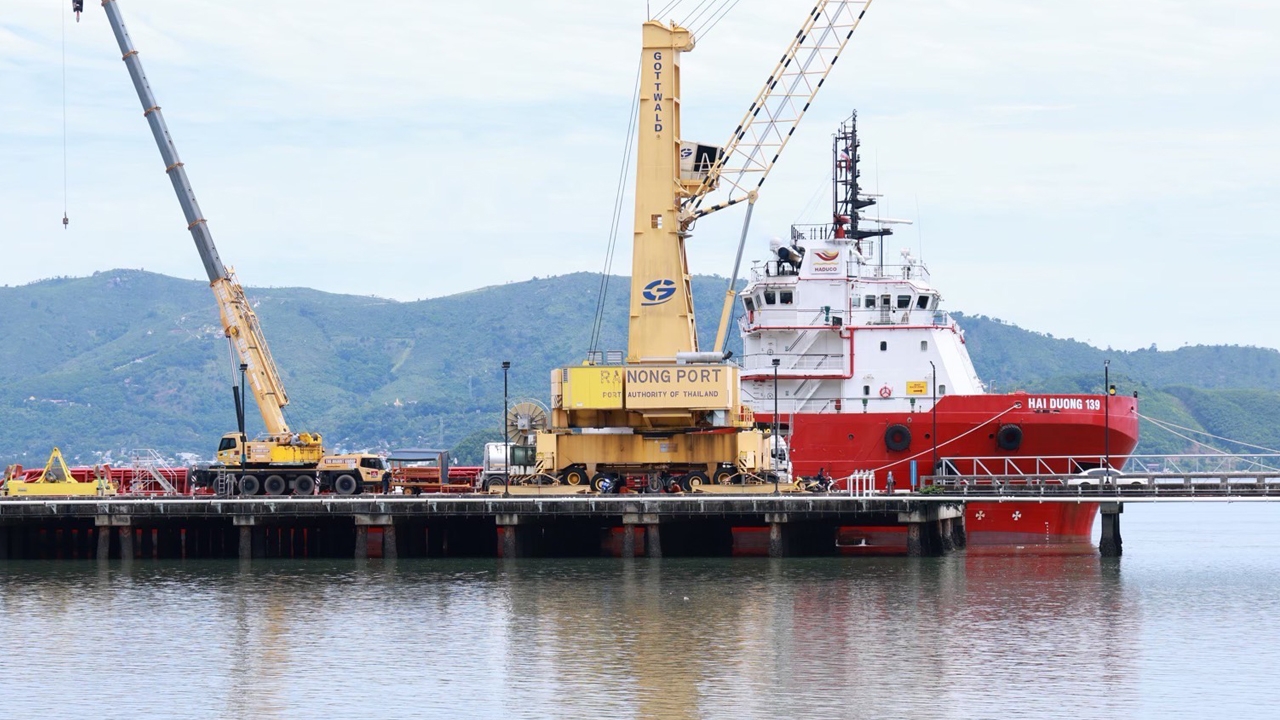
Sanphet, Deputy Minister of Transport, is promoting a new 110-kilometer double-track railway from Chumphon to Ranong Port with a budget of 27 billion baht. This project fills a missing link in Thailand’s rail system by connecting the main rail network to the Andaman Sea port. The earliest auction is expected in 2027.
Sanphet Boonyamanee, Deputy Minister of Transport, spoke about advancing the new double-track railway project from Chumphon to Ranong Port to fill a critical missing link in Thailand’s rail network, in line with the Prime Minister’s policy. He said Thailand is entering a crucial phase in infrastructure development, moving from isolated projects to integrated transportation networks—including roads, railways, ports, airports, and border checkpoints—to enhance the country’s long-term competitiveness.

Sanphet explained that current infrastructure development focuses on integrating existing investments to work efficiently together, maximizing economic value, travel, and freight transport. The new Chumphon-Ranong double-track railway is a key project that completes Thailand’s transport network by connecting the main rail line to a deep-sea port on the Andaman coast for the first time.
The Chumphon-Ranong double-track railway project details are as follows.
Sanphet added that upon completion, goods from northern, northeastern, central, and southern regions can be transported directly by rail to Ranong Port without switching to trucks for the final leg. This will reduce logistics costs, shorten transport times, increase convenience for operators, and enhance the competitiveness of Thai products in global markets.
Additionally, the project will provide Thailand with trade connectivity options on both the Gulf of Thailand and Andaman coasts. The main rail network will continue connecting important Gulf ports like Laem Chabang, Bangkok Port, and Map Ta Phut, while also linking to Ranong Port on the Andaman side, opening access to the Indian Ocean. This connection supports trade with BIMSTEC members, as well as markets in the Middle East and Africa, accommodating future global trade growth and increasing the flexibility of Thailand’s logistics system to adapt to changes in global supply chains.

Sanphet emphasized that the project’s significance lies in upgrading Thailand’s transport network to be fully integrated. When roads, railways, ports, airports, and border checkpoints operate efficiently together, Thailand will strengthen its position as a regional logistics hub, offer more freight transport options, reduce dependence on a single route, and ensure long-term economic stability.
At the local level, the project will boost the economies of Chumphon and Ranong provinces by attracting investments in warehouses, distribution centers, logistics businesses, and related industries. It will create jobs, generate income for residents, and improve access for southern agricultural, fisheries, and processed products to domestic and international markets with competitive costs.

The project promotion will follow balanced infrastructure development principles. The Office of Transport and Traffic Policy and Planning (OTP), the National Economic and Social Development Council, and related agencies will comprehensively assess the project’s economic, social, environmental aspects, and investment feasibility. They will also study whether to use the existing Ranong Port or build a new one to handle increased container volumes and larger ships. Public feedback and stakeholder participation will be prioritized to maximize benefits for the country and its people.

Regarding progress, the State Railway of Thailand has completed detailed designs and is currently submitting the Environmental Impact Assessment (EIA) report. If approved this year, bidding could open as early as 2027.
Sanphet concluded that the 110-kilometer Chumphon-Ranong railway is a strategic link that will complete Thailand’s transport network, connecting all regions to the Andaman Sea trade gateway. It will expand logistics options, support future trade and investment, link Thailand to the global economy, and lay a stable foundation for the country’s long-term growth.
Read more news " Government Policy Additional